

In mid-February 2025, local forestry workers discovered a group of people in woodland in the Beshenkovichi District of the Vitebsk Region using an all-wheel-drive lorry to tow a large metal object out of a swamp.
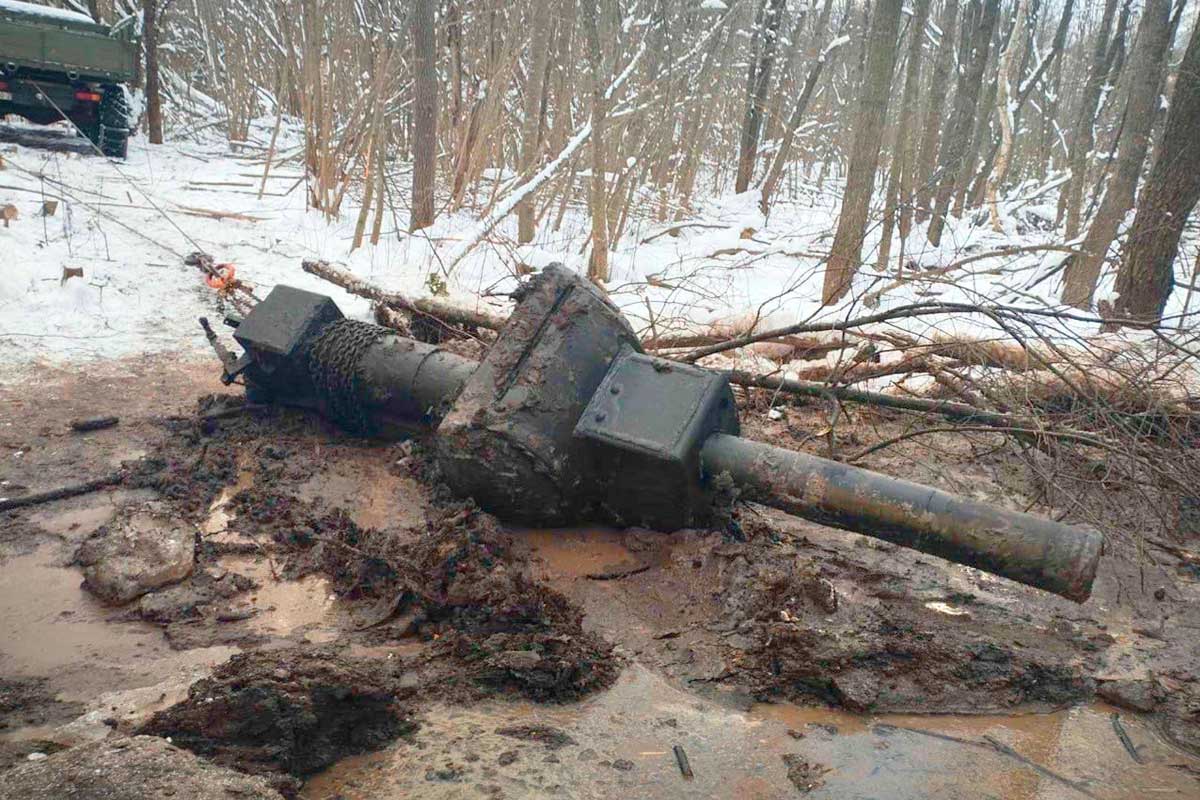
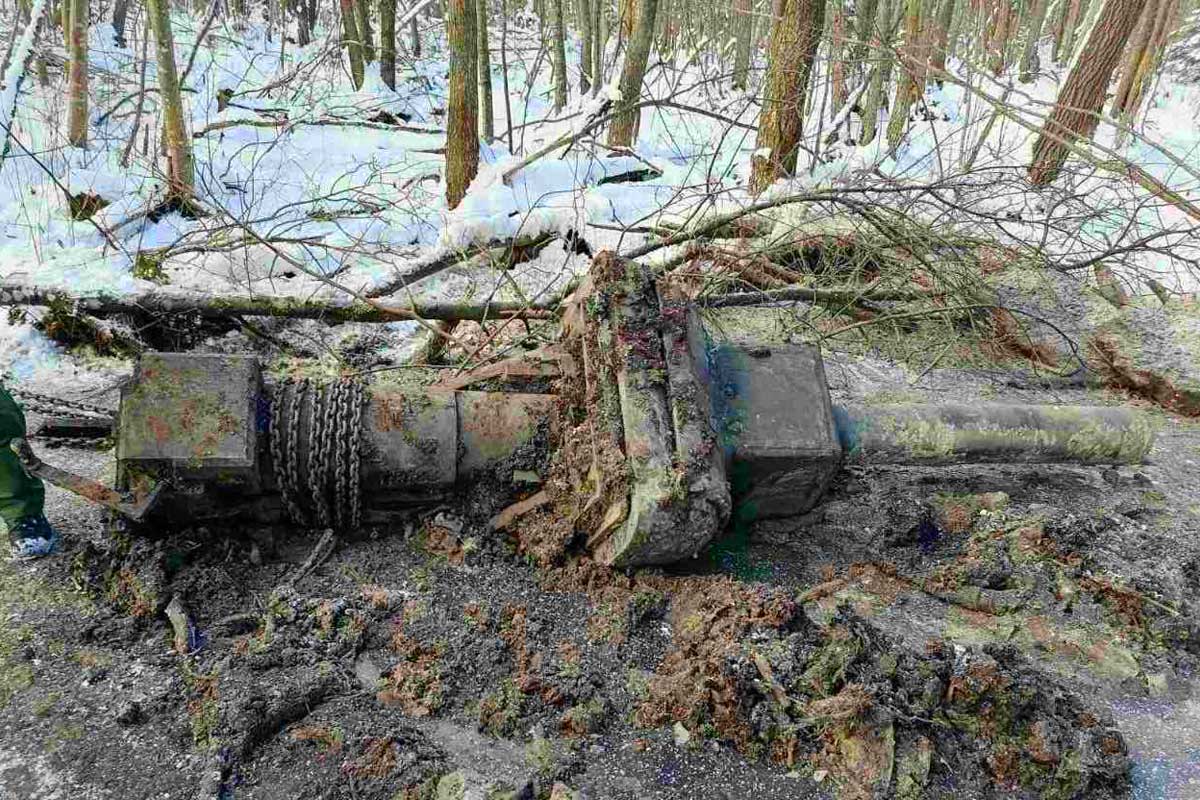
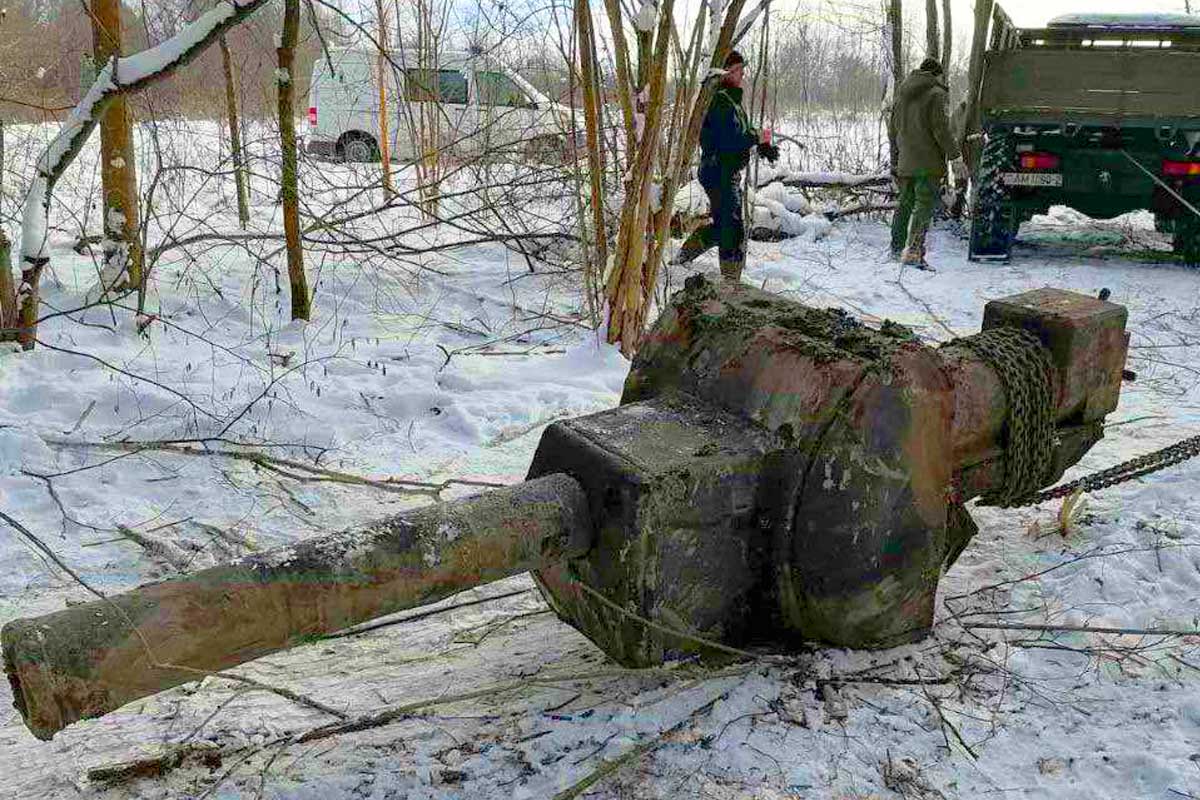
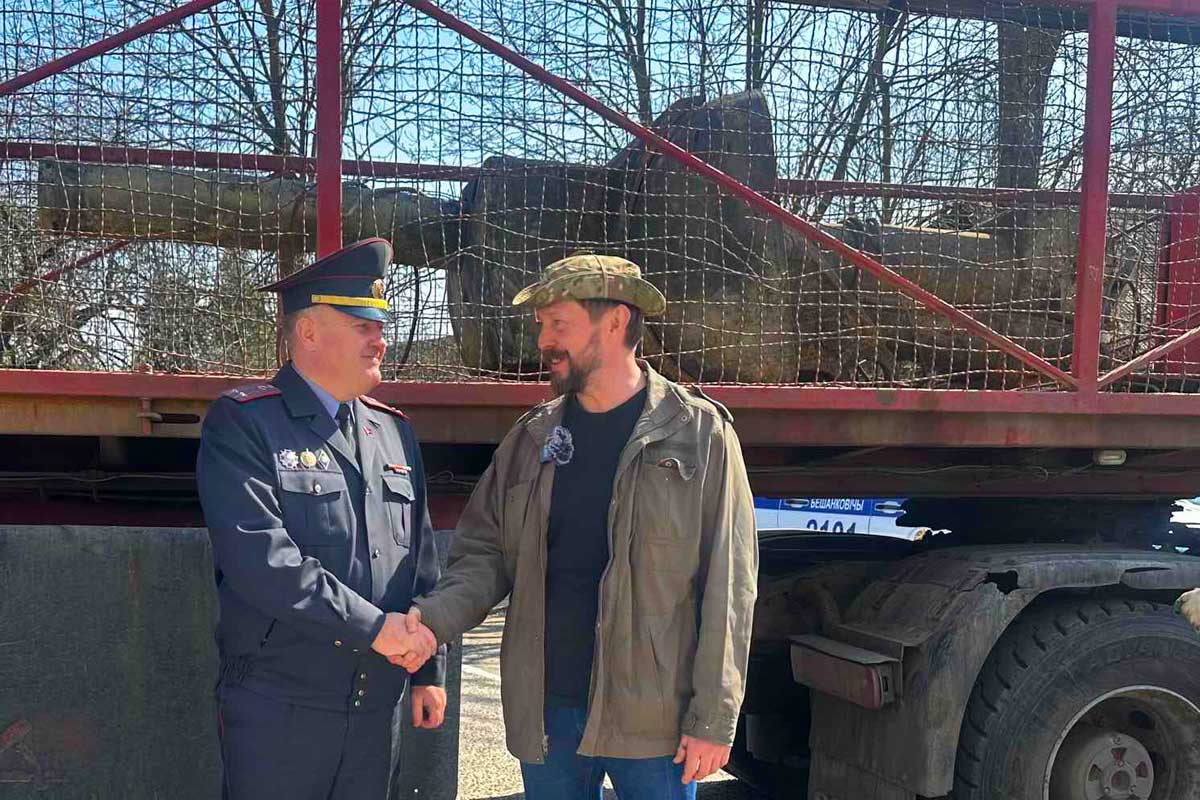
Police officers called to the scene detained the individuals, while the illegally recovered object was seized and taken to the premises of the local District Department of Internal Affairs in Beshenkovichi. It proved to be a 152 mm M1938/40 tank howitzer (M-10T), the tank-mounted version of the 152 mm M1938 M-10 field howitzer. The M-10T howitzer was fitted to KV-2 heavy tanks.
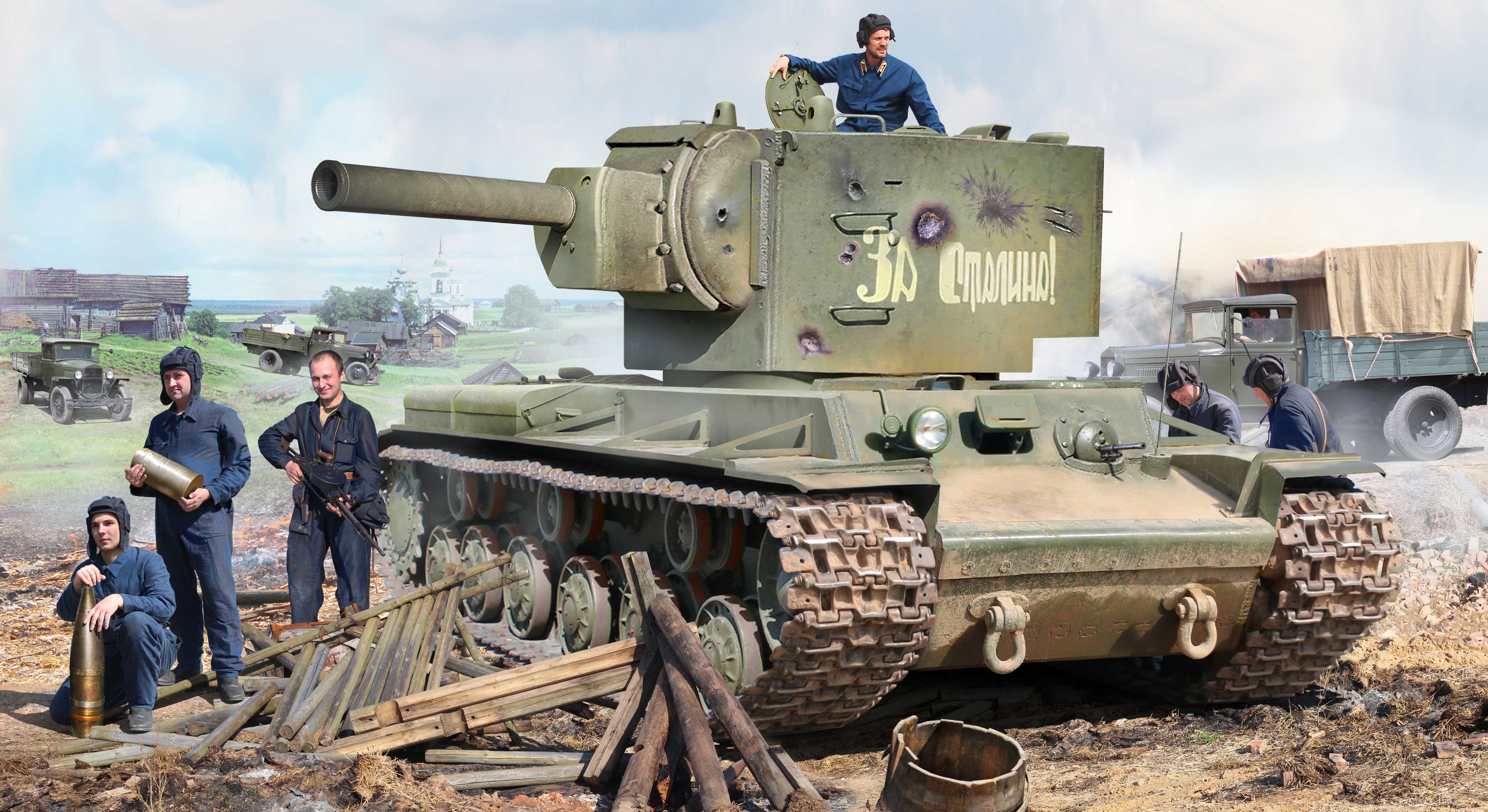
Acting in accordance with the President’s directive that everything found underground in Belarus and associated with the Great Patriotic War must be transferred to the Stalin Line Historical and Cultural Complex, Minister of Internal Affairs Police Lieutenant General Ivan Kubrakov ordered the KV-2 gun to be transferred to our complex. The transfer took place on 17 April 2025.
The gun’s serial number made it possible to identify the specific KV-2 tank and locate its service record in the archives. The record was compiled by the commander of the 2nd Company, a lieutenant whose signature alone appears on the document, and approved by Captain Kirsanov of the 1st Battalion, 28th Tank Regiment, 14th Tank Division.
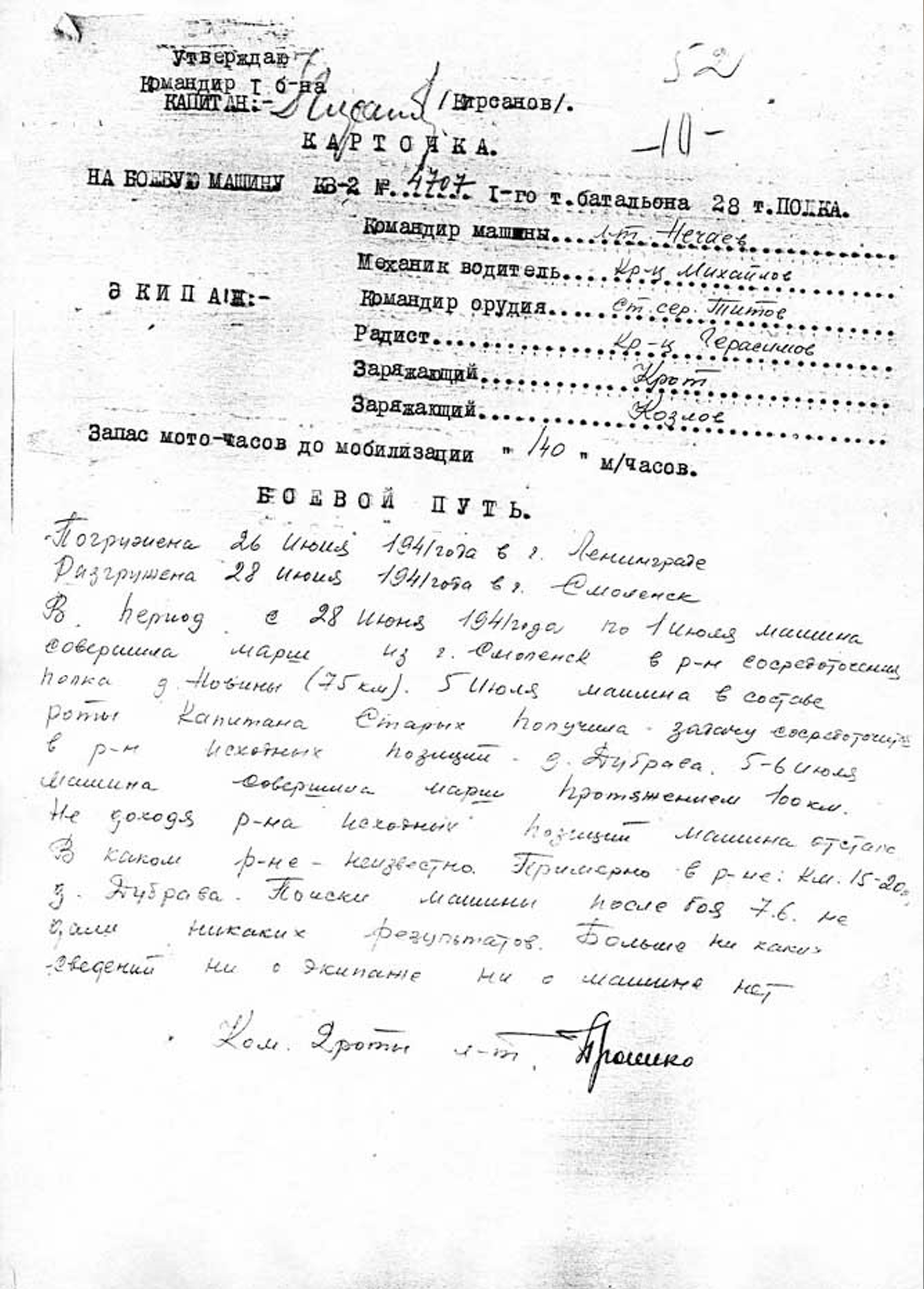
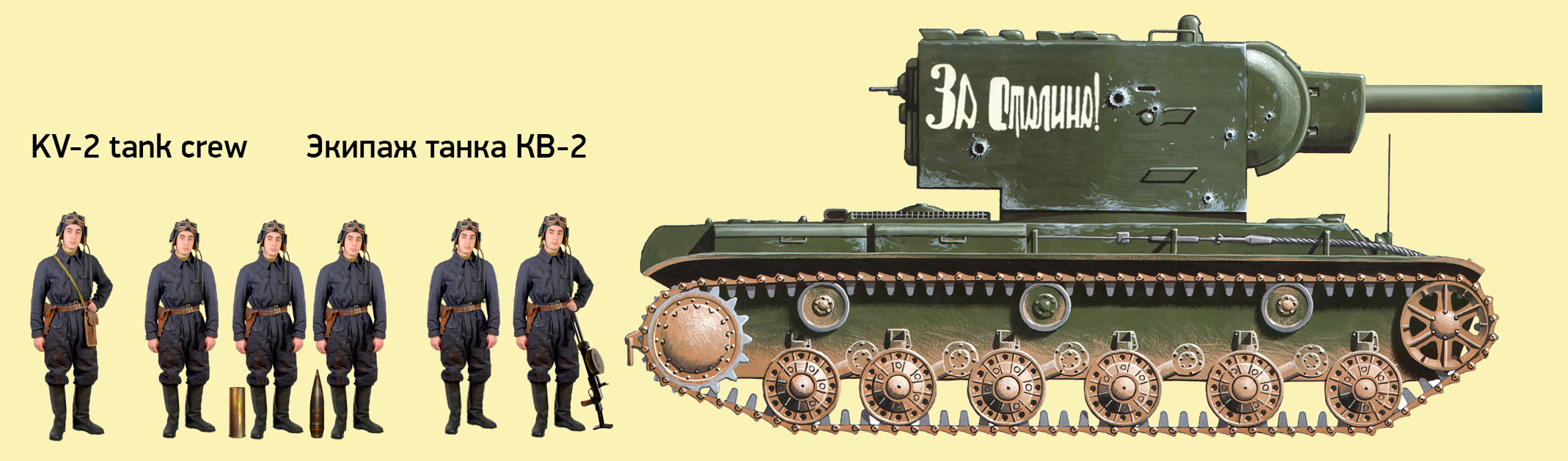
According to this document, the crew of KV-2 No. 4707 comprised tank commander Lieutenant Nechaev, driver Red Army soldier Mikhailov, gunner Senior Sergeant Titov, radio operator Red Army soldier Gerasimov, and two loaders, Krot and Kozlov.
Before mobilisation, the tank had completed 140 engine hours. On 26 June 1941, it was loaded onto a train in Leningrad for dispatch to the front. On 28 June 1941, the tank arrived in Smolensk, from where it made a 75 km march by 1 July to the regiment’s concentration area near the village of Noviny. On 5 July, as part of Captain Starykh’s company, the KV-2 was ordered to concentrate in the assembly area near the village of Dubrava (present-day Dubrovo). On 5–6 July, the tank completed a 100 km march. Before reaching the assembly area, the KV-2 fell behind. Its precise location is unknown, but it was approximately 15–20 km from the village of Dubrava. A search for the tank after the battle on 7 July proved unsuccessful. Nothing further is known about either the crew or the KV-2.
This tank’s gun was found in the Beshenkovichi District, where the 14th Tank Division of the 7th Mechanised Corps attempted to advance on 7 July 1941 during the famous Lepel counter-offensive. Forests, marshy terrain and numerous peat bogs severely hindered the advance of our tanks. Vehicles that had broken down or become hopelessly bogged down were often blown up to prevent them from falling into enemy hands. This was how another tank was destroyed in the same area: the KV-1 restored at our complex in 2016. The same fate befell this KV-2. After the war, its larger components were scrapped, while smaller parts remained scattered throughout the forest. Only its 152 mm gun survived to the present day, and was eventually excavated by illegal relic hunters. It can now be seen in the operational military vehicles hangar at the Stalin Line Historical and Cultural Complex.
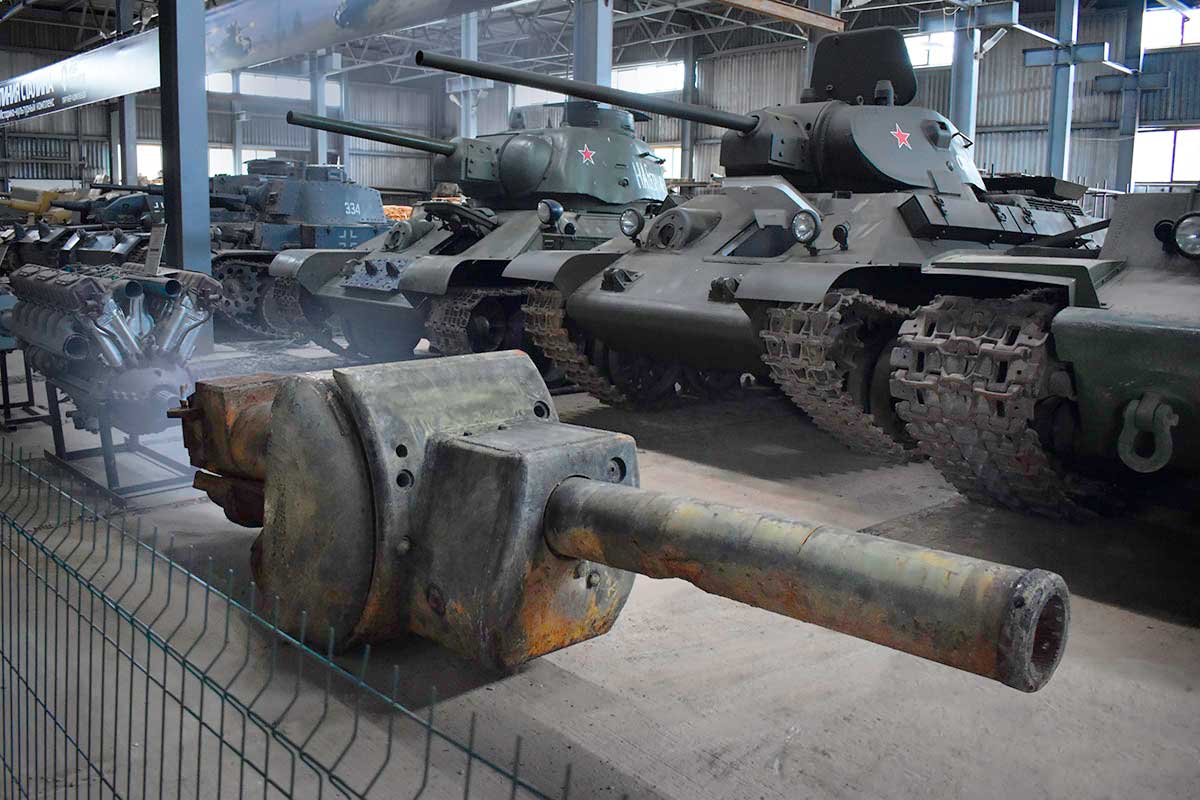
The M-10T howitzer had an elevation range of −3 to +18°. Horizontal traverse was achieved by rotating the turret, while fine aiming adjustments could be made within the gun’s own narrow horizontal traverse sector. The tank howitzer carried 36 rounds of separate-loading ammunition, with the shell and cartridge case loaded separately; the KV-2 therefore had two loaders. Because it used separate-loading ammunition, the gun’s rate of fire was only 2–3 rounds per minute. The ammunition was stowed in the turret and along both sides of the fighting compartment. The KV-2 was designed solely for fire support and therefore carried only high-explosive fragmentation shells. However, they were so destructive that they could disable any enemy tank. Amid the chaos of the first days of the war, the KV-2 had to use any available field-howitzer shells, albeit with a reduced propellant charge. This was not difficult, as the loader placed the charge into the open cartridge case himself. The tank howitzer was shorter than the field version and therefore had a shorter range: 11,300 rather than 12,500 m. However, the KV-2 was an assault tank intended to fire at visible targets rather than over long distances. As an assault tank, it had powerful 75 mm armour on all sides, while the mantlet of its 152 mm gun was an unprecedented 110 mm thick. A total of 204 KV-2 tanks were built in 1940–1941.
The M-10T had elevation angles ranging from −3 to +18°. Traverse was achieved by rotating the turret, while fine adjustment was possible within the gun’s limited traverse sector. The tank howitzer carried 36 separate-loading rounds, with the shell and cartridge case loaded separately, which was why the KV-2 required two loaders. As a result, its rate of fire was only 2–3 rounds per minute. The ammunition was stored in the turret and along both sides of the fighting compartment. The KV-2 was designed exclusively for fire support and therefore carried only high-explosive fragmentation shells. However, these were powerful enough to destroy any enemy tank. Amid the chaos at the beginning of the war, KV-2 crews had to fire any available field-howitzer shells, albeit with a reduced propellant charge. This was not difficult, as the loader placed the appropriate charge into the open cartridge case. The tank howitzer was shorter than the field version and therefore had a shorter range: 11,300 metres compared with 12,500 metres. However, as an assault tank, the KV-2 engaged targets within direct line of sight rather than firing at long range. It was protected on all sides by 75 mm armour, while its 152 mm gun mantlet was 110 mm thick—a record at the time. A total of 204 KV-2 tanks were built in 1940–1941.







 Russian
  English