
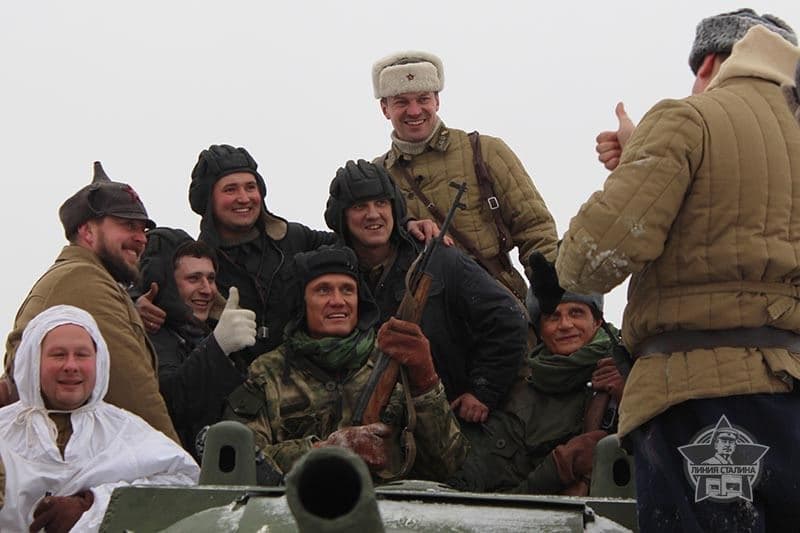
Дольф Лундгрен – актёр, кинорежиссёр, сценарист и продюсер – 11 декабря посетил историко-культурный комплекс «Линия Сталина». Гидом почётного гостя, живо интересующегося военной историей, стал наш исполнительный директор Александр Метла.
Утеплив Дольфа Лундгрена шапкой ушанкой и красноармейскими рукавицами, Александр подвёл его к карте оборонительных сооружений, построенных в СССР к 1939 году и получивших на Западе название «Линия Сталина». Здесь можно было узнать, что эта «линия» строилась на границе с Румынией, Польшей и Прибалтийскими странами, а не против немцев, как ошибочно полагают многие. Затем было посещение артиллерийского дота, где Александр рассказал Дольфу о реальных боях на Минском укрепрайоне, задержавших продвижение немцев на два дня. Здесь сам Лундгрен заметил, что задержка врага на целых два дня в те страшные дни была очень важной для Красной армии и позволяла перегруппировать её силы. И действительно – последующие бои на Полоцком укрепрайоне задержали немцев уже на две недели, а на Киевском – на два месяца! Вместе с другими боями всё это способствовало дальнейшему разгрому немцев под Москвой в декабре 1941 года.
После дота Дольфу Лундгрену предложили посетить стрелковую позицию. Здесь он с удовольствием навёл 57-мм пушку ЗИС-2 на немецкий танк и произвёл выстрел. На танке вспыхнуло яркое пламя огненного взрыва. Затем была стрельба из пулемёта Хайрама Максима и винтовки Мосина.


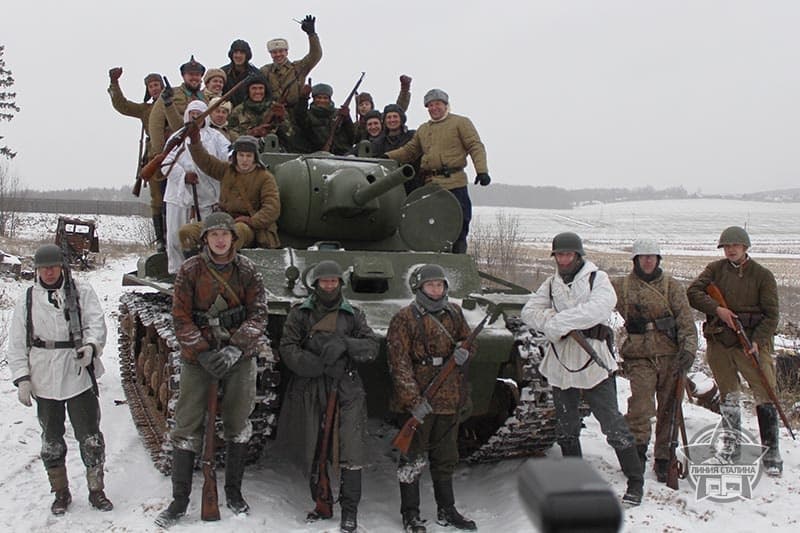
После стрельбы из охолощённого оружия за Дольфом прибыл тяжёлый танк «Клим Ворошилов». И здесь гость снова проявил знание истории, сказав, что танк КВ не так известен в мире, потому что его выпустили не в таком большом количестве как Т-34. После этого Дольфа Лундгрена вооружили самозарядным карабином Симонова, и КВ-1 повёз гостя на реконструкцию боя времён Великой Отечественной войны.




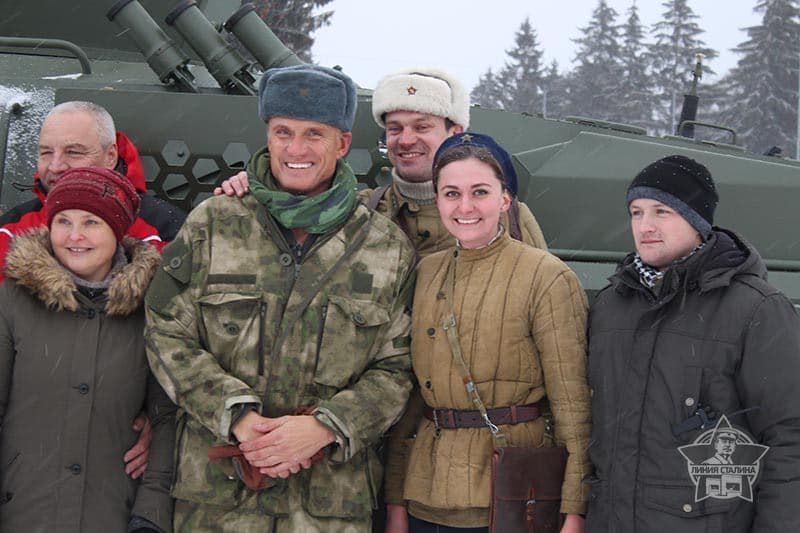
По окончании реконструкции боя Дольфу предложили прокатиться по холмам комплекса на «Каймане» – мобильном бронированном транспортном средстве, созданном на Борисовском ремзаводе под руководством главного конструктора завода — Ольги Петровой. Этот белорусский броневик и привёз нашего гостя к Деду Морозу и Снегурочке, подарившим Дольфу новогодние подарки. Затем было награждение Лундгрена медалью Зиновия Колобанова, угощение, автографы и фото на память. На прощание гость сказал, что открыл для себя белорусов – искренних и открытых людей. И, как человек, прослуживший срочную службу в шведской армии, поблагодарил наше руководство за сохранение уважительного отношения к военной истории и создание такого удивительного музея под открытым небом.


Дольф Лундгрен поделился впечатлением о посещении нашего комплекса телеканалу ОНТ.
 Russian
  English