Defenders of the Fatherland and Armed Forces of the Republic of Belarus Day

On 21 February 2026, the Stalin Line Historical and Cultural Complex will host an event marking Defenders of the Fatherland and Armed Forces of the Republic of Belarus Day.
The organisers have prepared two large-scale reenactments for residents and visitors to Belarus.

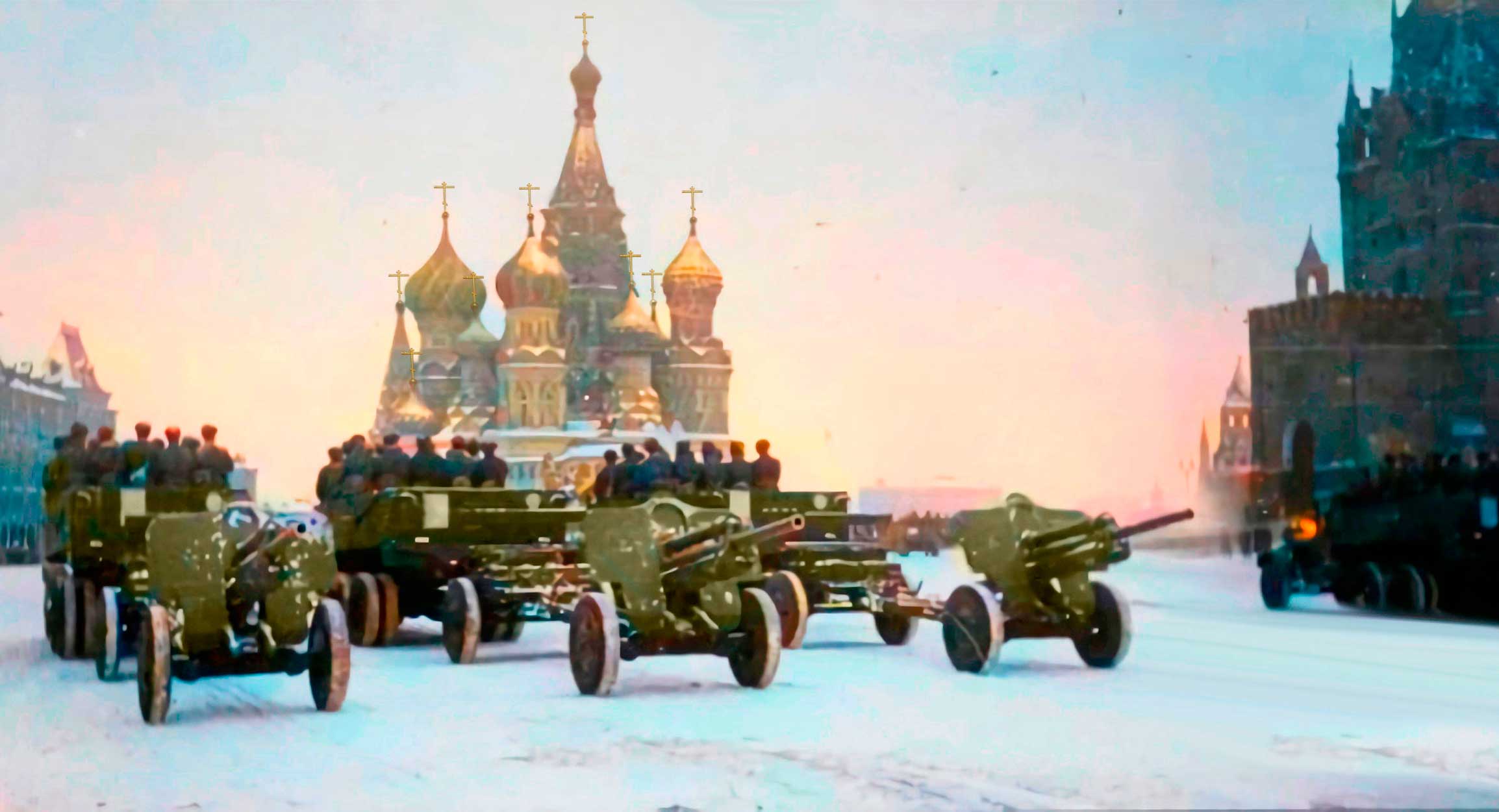
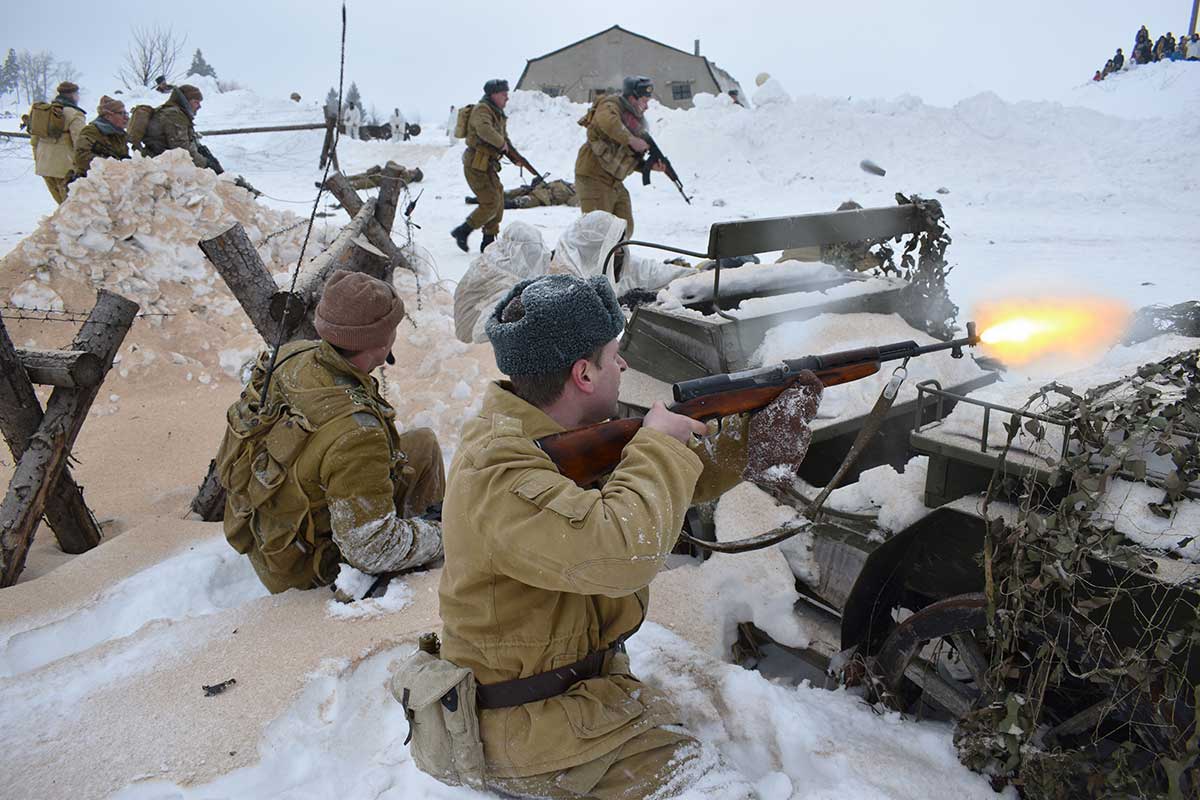
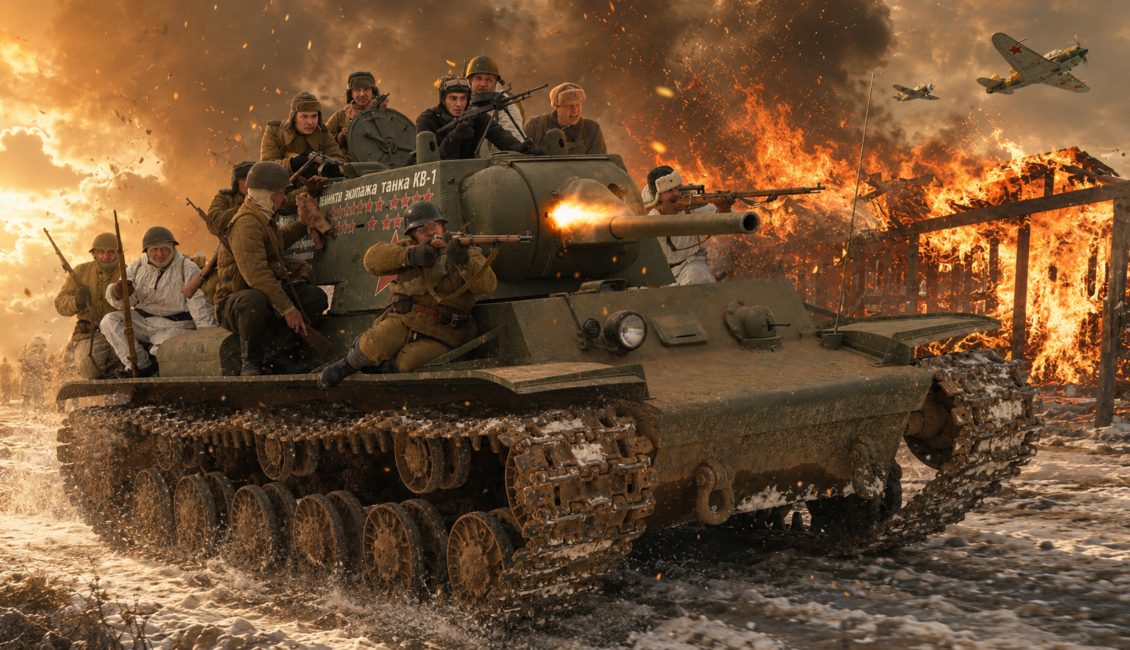
The reenactment “1942: The Battle of Moscow” is dedicated to the heroes:

  • Dmitry Lavrinenko,
  • Mikhail Agibalov,
  • Ivan Lyubushkin, Fyodor Chikhman, Yefim Dyskin and Abram Levin.

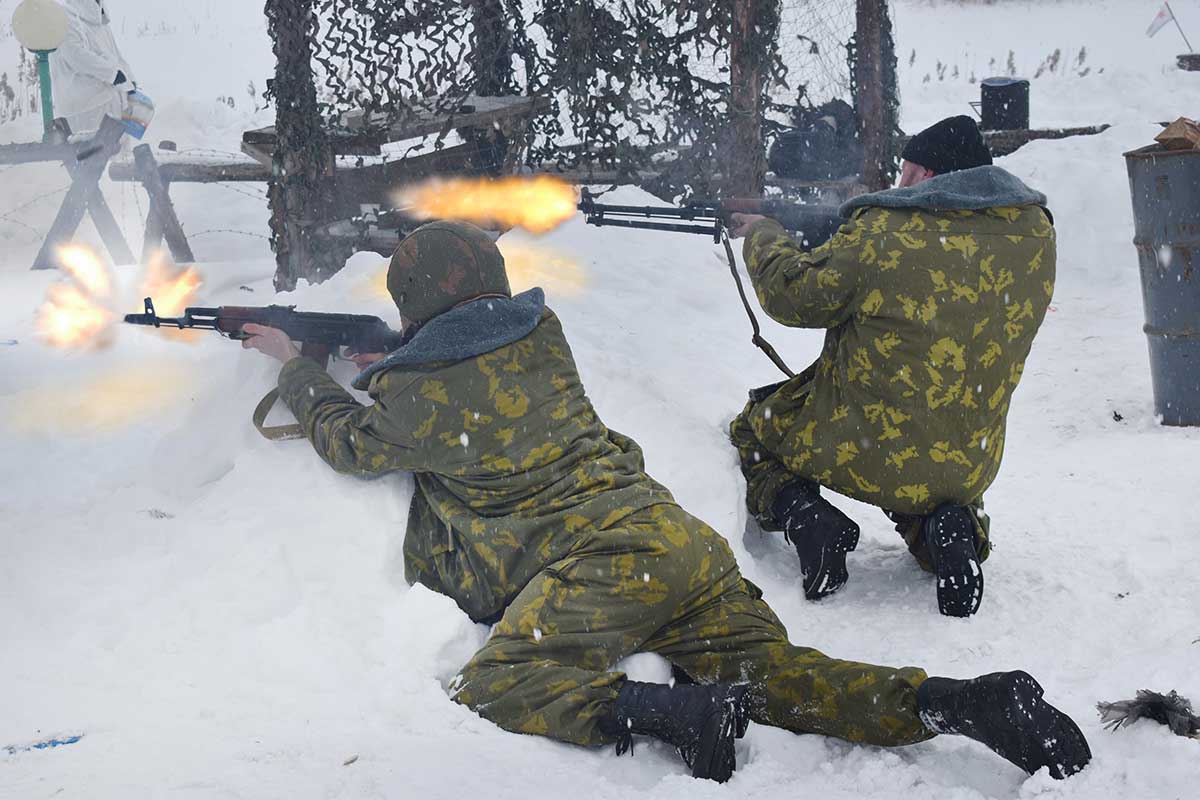
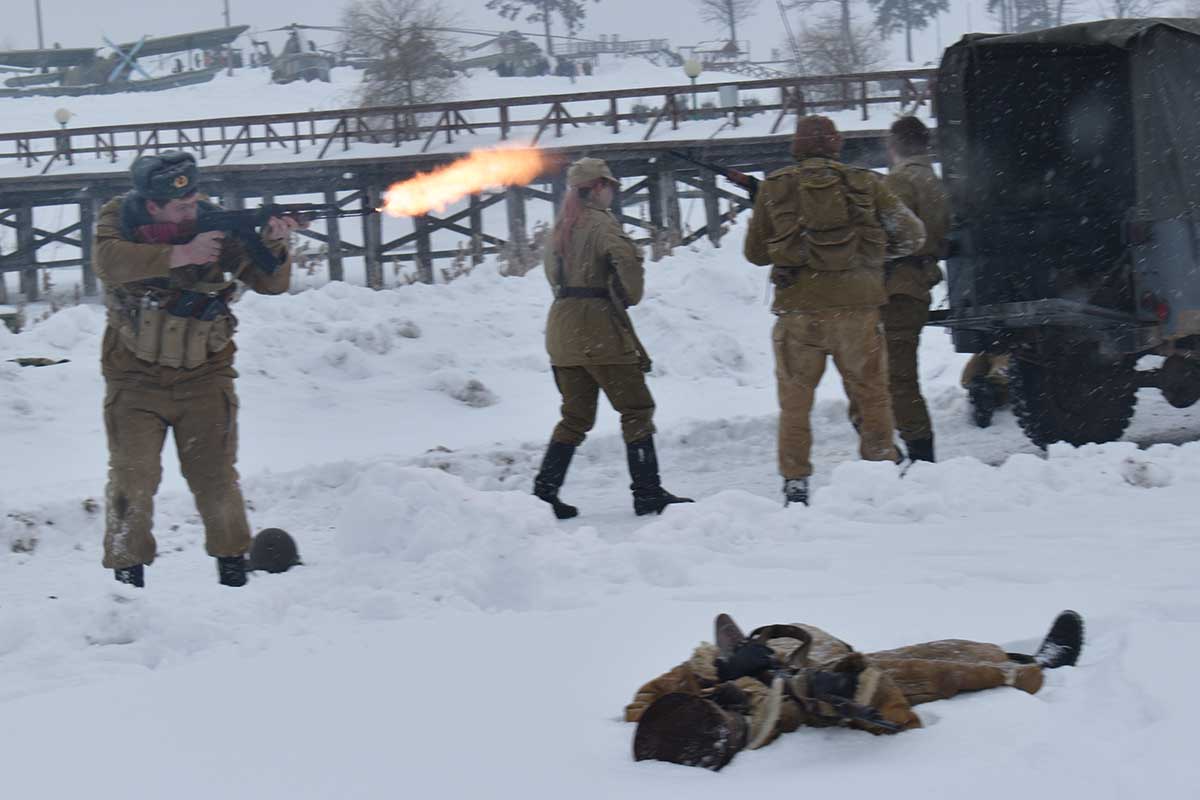
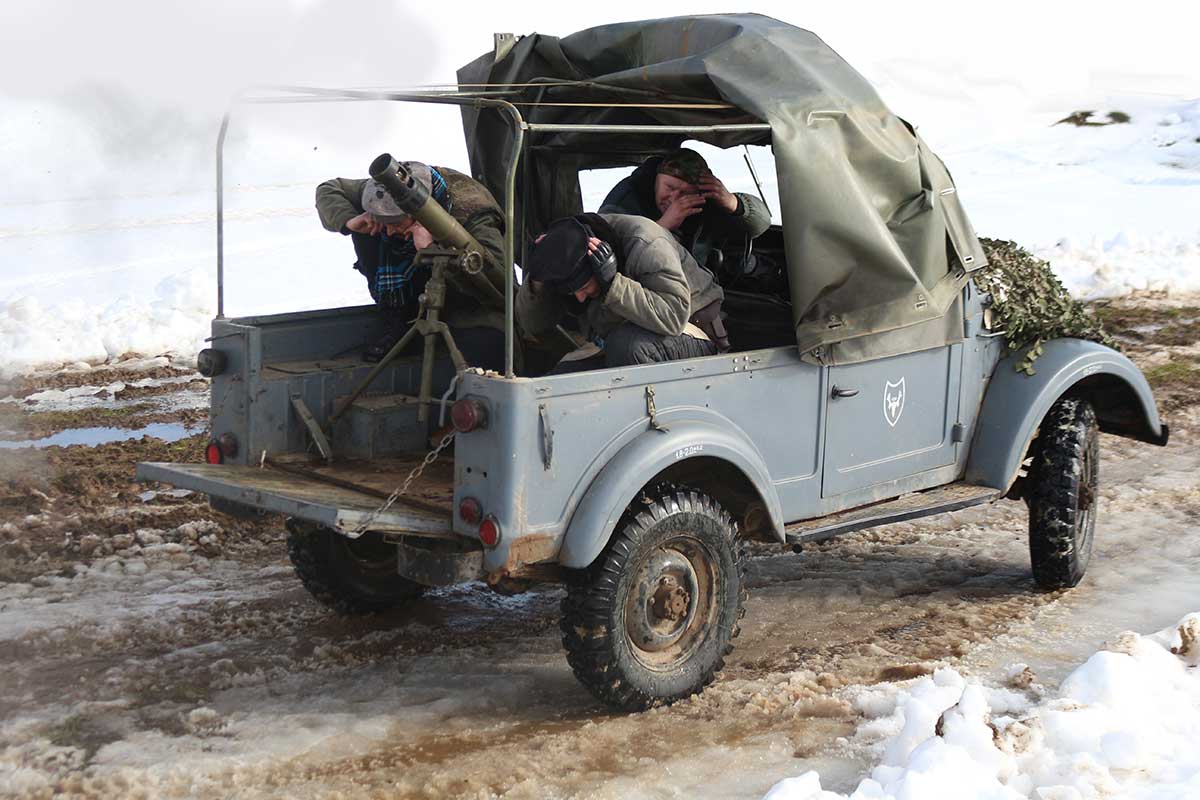
The reenactment of a battle from the Soviet–Afghan War is dedicated to the feats of the Heroes of the Soviet Union:

  • Alexander Demakov
  • Nikolai Chepik and Igor Chmurov.

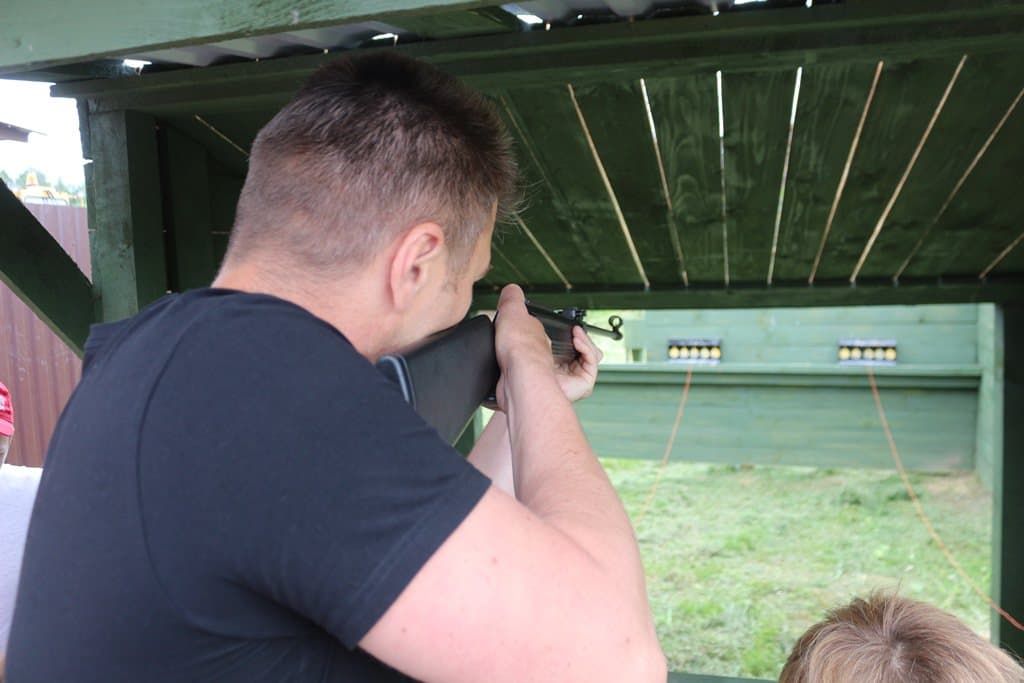
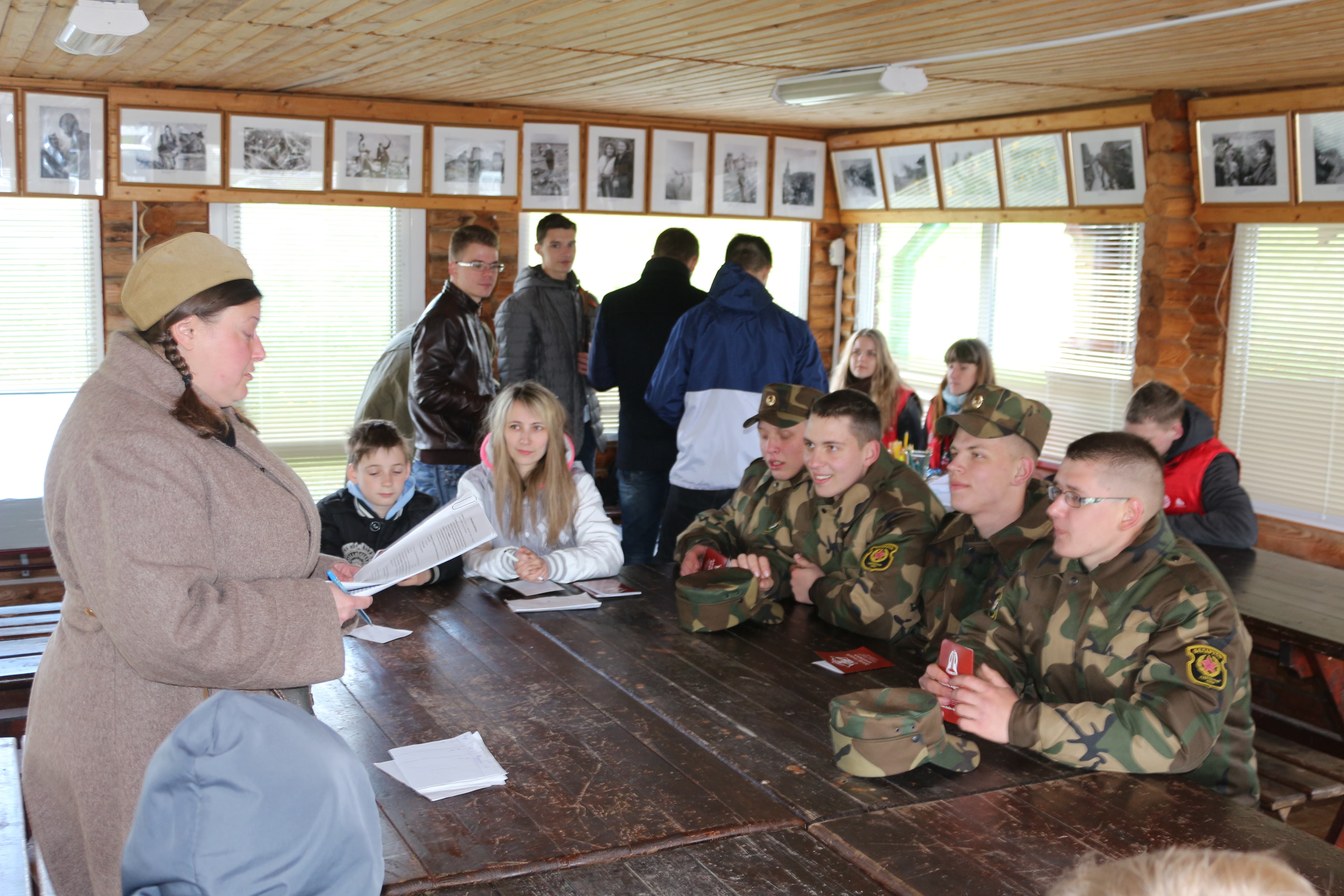
Military vehicles from the respective periods are scheduled to take part in both reenactments. In addition to the main programme, interactive areas will be open to visitors: everyone can test their knowledge in a history quiz, try airgun shooting and weapon assembly and disassembly, and take part in other workshops. The most active participants in the Ready for Labour and Defence (GTO) activities will receive certificates and commemorative prizes.

Dear visitors!  To avoid congestion at the entrance to the complex, please purchase your tickets online and arrive 2–3 hours before the reenactment begins! Visitors with electronic tickets may park cars and minibuses FREE OF CHARGE, subject to availability!!!

Among all tickets purchased through the website, 10 tank ride certificates will be awarded in a prize draw. All tickets purchased before 20:00 on 20 February will be entered into the prize draw. The results, including the winning ticket numbers, will be published in posts on the VKontakte and Instagram social media accounts after 20:00 on 20 February. Each winner will receive a tank ride certificate by email at the address provided when purchasing the ticket.

Event Details
  • Start Date
    February 21, 2026

Opening of guided-tour and interactive areas to visitors:

  • “Stalin Line” Guided Tour Route
  • “Our Armoured Train” Exhibition
  • Operational Military Vehicle Display
  • Photo Area
  • Shooting from a tank and gun**
  • Blank-Firing Weapons Shooting**

Ready for Labour and Defence (GTO) These are interactive entertainment areas.

Everyone taking part in the Stalin Line GTO Challenge Area can enter the prize draw.

To enter the prize draw, you must:

  • Complete all GTO areas and receive a score for each one
  • Arrive at the specified time for the announcement of the prize-draw results
  • Certificates and prizes will be awarded exclusively to participants who attend the prize-giving ceremony.

Main GTO areas:

  • Airgun Shooting

  • Weapon Assembly and Disassembly

  • Scout Trail

  • Historical Quiz

  • Grenade Throwing

  • Artillery School

The School for Training Service Dog Instructors was established on 24 January 1995 at the Smorgon Border Guard Training Detachment in the settlement of Devyatni, Smorgon District, Grodno Region.

Apple Calendar

In November 2002, the Service Dog Instructor Training School was reorganised as the Canine Centre.

Today, the Canine Training Centre is a training unit of the border service. It provides initial, refresher and advanced training for dog handlers and trains service dogs for various duties, including tracking (following a person’s scent trail), sentry duties, specialist searches (detecting narcotic drugs and psychotropic substances, weapons, ammunition and explosives), guard duties (protecting facilities), as well as breeding and raising service dog breeds.

Today, the Canine Training Centre of the border service is recognised as one of the best not only among the CIS countries, but also in Eastern Europe.

On 9 January 1939, in accordance with Order No. 4 issued by People's Commissar for Defence of the USSR and Marshal of the Soviet Union K. Voroshilov, the Red Army Song and Dance Ensemble of the Belarusian Special Military District was formed in Smolensk. Its successor is the state institution “Academic Song and Dance Ensemble of the Armed Forces of the Republic of Belarus”. The ensemble was founded by Alexander Fyodorovich Usachev, an Honoured Artist of the BSSR, who also served as its first artistic director.
In 1940, the ensemble moved from Smolensk to Minsk following the relocation of the District Headquarters.
During the Great Patriotic War, the ensemble served with the Western Front, giving concerts both behind the lines and at the front. During the war, 19 performers were awarded orders, 25 received the Medals “For Courage” and “For Battle Merit”, and four became recipients of the Order of Glory. The ensemble celebrated victory in Königsberg.
In March 1992, the ensemble was renamed the Song and Dance Ensemble of the Armed Forces of the Republic of Belarus.
In recognition of its outstanding creative achievements, the ensemble was awarded the Certificate of Honour of the Presidium of the Supreme Soviet of the BSSR four times and, in 1988, the Red Banner of the Military Council of the Red Banner Belarusian Military District.
By Resolution No. 48 of the Ministry of Culture of the Republic of Belarus, dated 6 August 2018, the State Institution “Academic Song and Dance Ensemble of the Armed Forces of the Republic of Belarus” was awarded the title of “Honoured Ensemble of the Republic of Belarus”.
On 9 January 2019, the Ensemble celebrated its 80th anniversary.

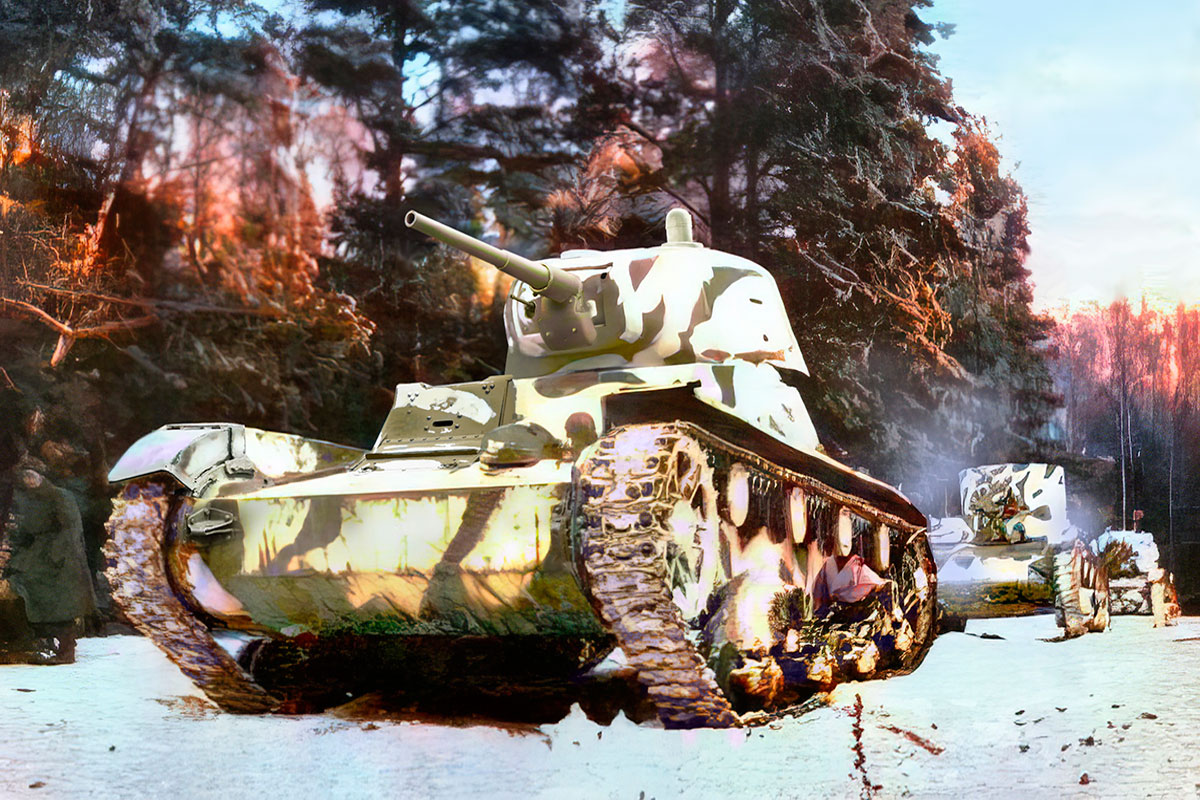
On 30 September 1941, with Moscow 300 km away, the Germans launched Operation Typhoon. The German plan was to encircle the Soviet capital with armoured spearheads advancing from the north through Kalinin and from the south through Tula. On 6 October, the Germans were stopped near the village of Pervy Voin by Mikhail Katukov’s tank crews. In a single engagement, Ivan Lyubushkin knocked out nine German tanks with his T-34!

General Heinz Guderian, commander of a German Panzer Army, wrote of that day: “For the first time, the marked superiority of the Russian T-34 tanks became apparent. We suffered such heavy losses that the planned rapid advance on Tula had to be postponed.” As a result of the heroic resistance of the Red Army troops, the Germans never captured Tula.

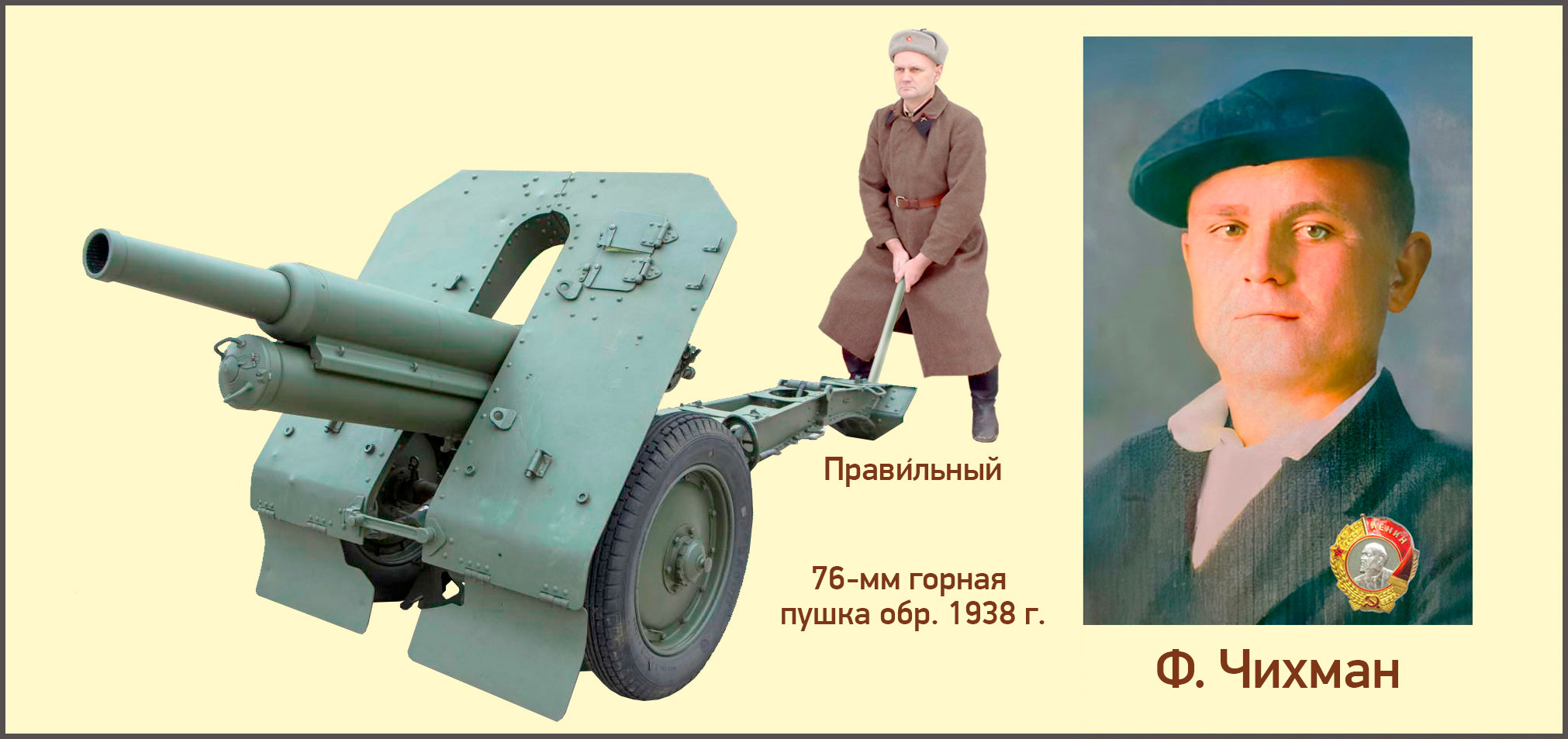
On 14 October, near Borodino Field, 76 mm mountain guns had to be used against German tanks. They were poorly suited to this role: because of the short barrel and short cartridge case, the 76 mm projectile had such a low muzzle velocity that it could not penetrate the frontal armour of ANY German medium tank or the StuG III assault gun—not even that of the captured Czech LT-38. The crews therefore had to fire at the tanks’ sides, which was not always possible in battle. Moreover, the mountain gun’s single-trail carriage limited its horizontal traverse to just 10°. Engaging tanks therefore required the entire gun to be turned. Each crew included a man assigned specifically to this task, who swung the gun round using the handspike. With one such gun, Fyodor Chikhman and his crew disabled four tanks. The rest of the gun crew were then killed, but Fyodor disabled another three tanks. When a shell fragment tore off Chikhman’s right arm, the hero found the strength to use his surviving left hand to turn the gun further with the handspike, return to the sight, complete the laying of the gun and fire one final shot. For disabling eight tanks in a single engagement, 19-year-old Fyodor Zakharovich Chikhman was awarded the Order of Lenin.

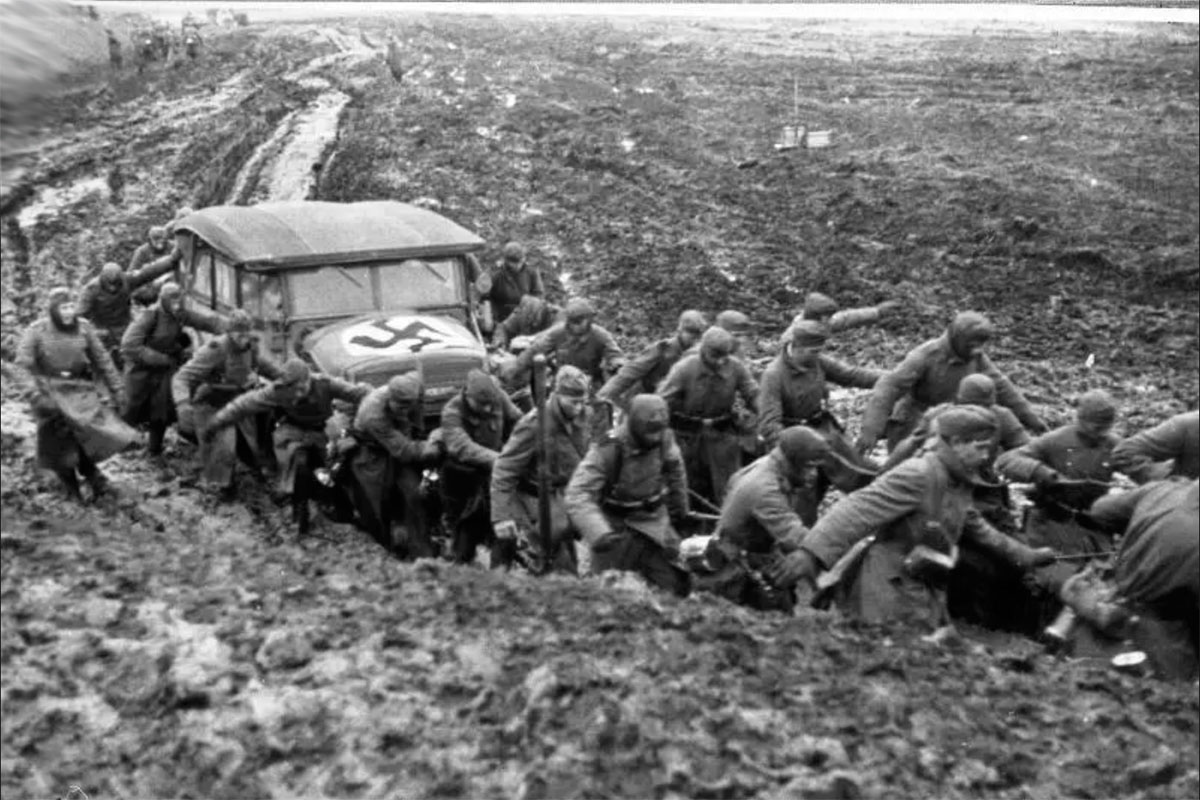
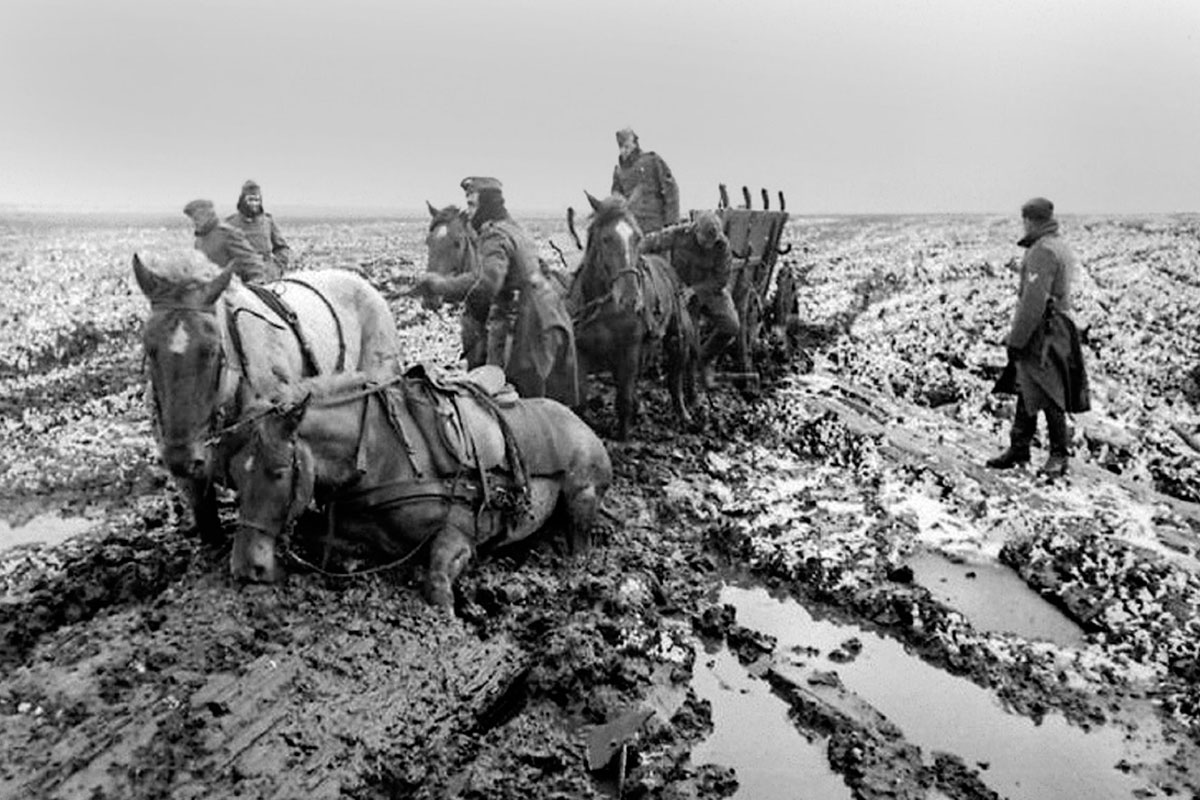
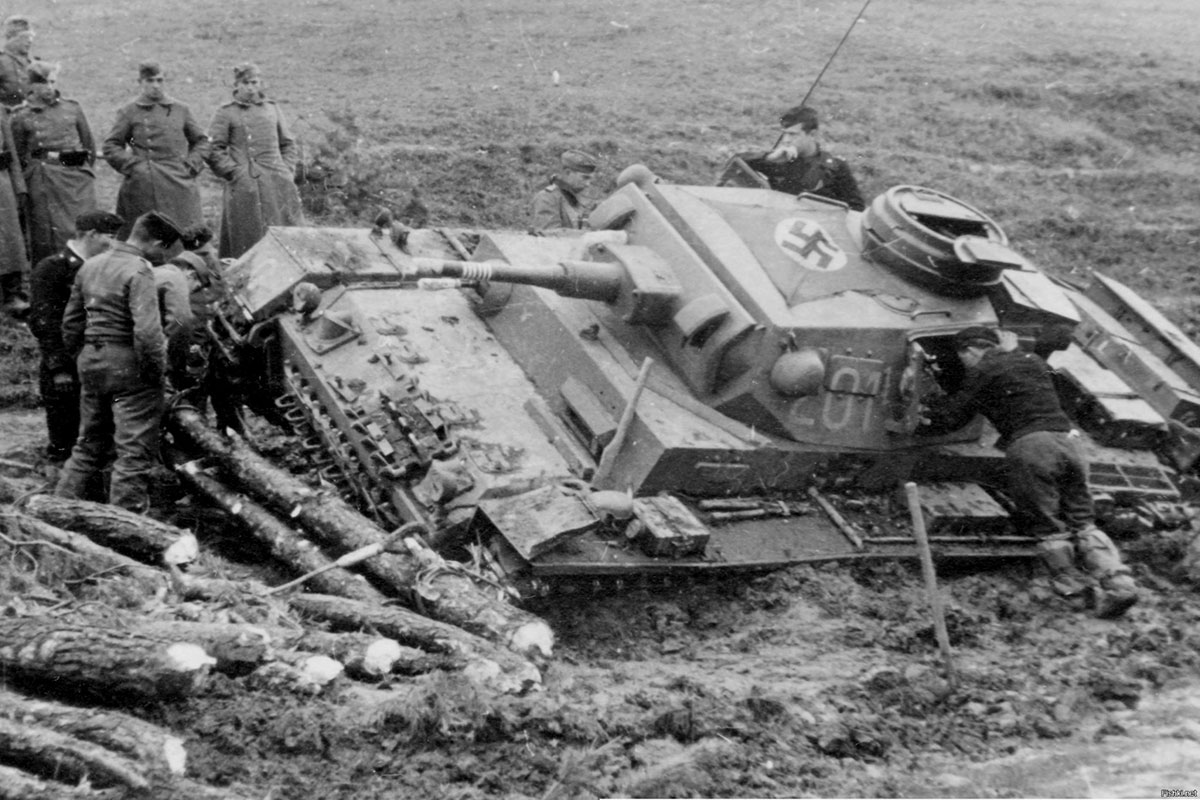
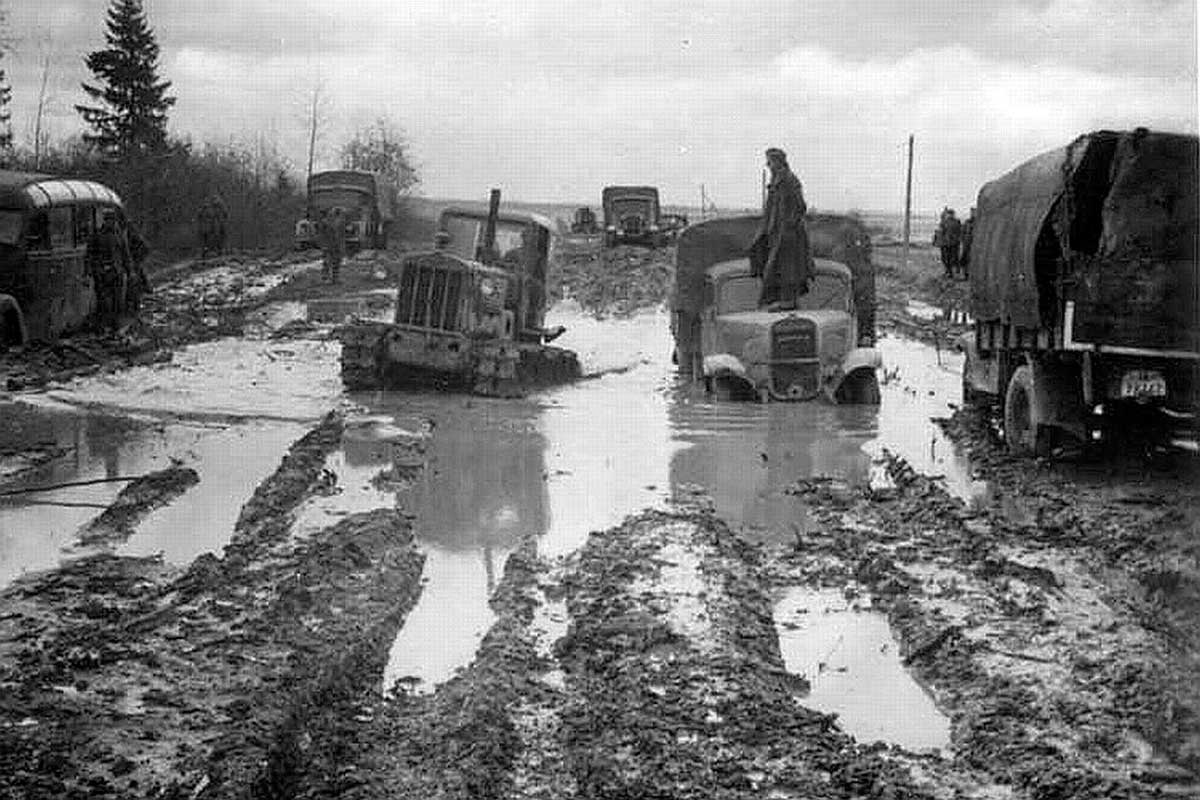
The rains began on 15 October. Not a trace remained of the dry Indian summer weather that had so favoured the German advance. Sleet gave way to rain, and the autumn mud became so severe that aircraft could not take off, while tanks sinking into the mire managed no more than 7 km a day. On 30 October, the Germans halted 100–150 km from Moscow and remained there for a full two weeks.

This pause allowed our leadership to transfer substantial forces from the Far East and Siberia to defend Moscow.

On 7 November 1941, the leader of our country, Joseph Stalin, held the traditional parade in Moscow marking the 24th anniversary of the October Revolution. The troops taking part marched directly from the parade to the front. The event instilled in the Soviet people confidence that ‘our cause is just, and the enemy will be defeated!’

A slight frost set in on 15 November, and the Wehrmacht’s tanks resumed their advance towards the capital. On 16 November, soldiers of General Ivan Panfilov’s division disabled up to 15 enemy tanks. The journalist Alexander Krivitsky decided to write an article about the fighting at the Dubosekovo railway halt, where Captain Pavel Gundilovich’s company had fought. After obtaining from Gundilovich the names of the soldiers who had been killed or were missing—28 in all—Krivitsky wrote an article about the ‘Panfilov Men’ entitled ‘The 28 Fallen Heroes’. Among them was Political Commissar Vasily Klochkov. Before repelling an enemy tank attack, he called out to his men: ‘Comrades, it seems we shall have to die here for the glory of the Motherland. Let the Motherland know how we fight and how we defend Moscow. Moscow is behind us; we have nowhere to retreat!’ The journalist shortened this to: ‘Russia is vast, but there is nowhere to retreat. Moscow is behind us!’ Krivitsky’s article caused a sensation throughout the country, and the shortened phrase became famous. The 28 ‘Panfilov Men’ were subsequently awarded the title Hero of the Soviet Union posthumously.

On 17 November 1941, during fighting on the Volokolamsk axis, a 37 mm anti-aircraft gun crew (commander: Sergeant Semyon Plokhikh; left gunlayer: Red Army soldier Ivan Gusev; right gunlayer, who also operated the gun's firing pedal: Yefim Dyskin; ammunition bearer: Polonitsyn; regimental commissar: Senior Political Officer F. Kh. Bocharov) knocked out four enemy tanks. When four members of the crew were killed, the wounded Dyskin, with 14 shell fragments lodged in his back, continued fighting and single-handedly knocked out another three tanks! Seven tanks knocked out in a single engagement was an absolute record for a 37 mm anti-aircraft gun, particularly as it had no protective shield, required two gunlayers to aim it, and presented a very large and conspicuous target to the enemy. The last German tank fired at Dyskin, and Fima's wounds were so severe that the hero, showing no signs of life, was presumed dead. For the heroism he displayed in destroying seven enemy tanks, 18-year-old Yefim Dyskin was consequently awarded the Gold Star of Hero of the Soviet Union posthumously. But Fima survived, trained as a military doctor and lived to the age of 89!

Soviet resistance intensified to such an extent that by 4 December, when the spearhead units of the Wehrmacht could already see the domes of Moscow's churches through their binoculars, the German offensive had completely ground to a halt. On 5 December, despite having no numerical superiority in tanks, manpower or artillery, our troops went on the attack. The Soviet counter-offensive had begun; by 20 April 1942, it had driven the Germans back 100–250 km from the capital.

On 22 February 1942, at the height of our offensive, 23-year-old Private Abram Levin performed a heroic feat by blocking the embrasure of a German pillbox with his body. The day before, he had written to his mother: ‘Mother, do not cry. In time, you will understand that your son did the right thing. There are millions like me in our army, and we are duty-bound to defend our Motherland.’ Levin became the twelfth Red Army soldier to make such a sacrifice. The first was Political Officer Alexander Pankratov, who shielded his comrades from enemy machine-gun fire with his own body on 24 August 1941. Alexander Matrosov, after whom this feat would subsequently be named, was the forty-fifth to do so, performing the feat on 27 February 1943.

The defeat of Hitler's forces outside Moscow was the Wehrmacht's first defeat of the Second World War. The Soviet Guards were also born in these battles. Mikhail Katukov's tank brigade, which distinguished itself on the southern approaches to Moscow, was the first to be awarded Guards status. It was in this unit that the star of our army's most successful tank ace, 27-year-old Dmitry Lavrinenko, shone all too briefly. In just two and a half months of fighting, he knocked out 52 German tanks. His young life was cut short by a fragment from a German mortar bomb on 18 December 1941.

Soviet and German military vehicles will take part in the ‘Battle of Moscow’ reenactment.

During the nearly ten years of civil war in Afghanistan, which began with the Saur (“April”) Revolution in 1978, around 30,000 of our fellow countrymen served with the Limited Contingent of Soviet Forces from 1979 to 1989. Deployed at the request of the socialist government of the Democratic Republic of Afghanistan to fight the radical Islamic opposition, they underwent a harsh test of courage and heroism. Their service in that distant country was a severe ordeal. A total of 771 natives of Belarus lost their lives in the performance of their internationalist duty. They fulfilled that duty honourably and to the end.

In late November 1986, intelligence reports indicated that armed opposition units intended to launch a rocket attack on the town of Pyandzh, where a Border Detachment was stationed, over the New Year. The command decided to clear the Afghan villages along the border in order to thwart the operation planned by the mujahideen. The operation was to be carried out by Motor Manoeuvre Groups (MMGs) and Air Assault Manoeuvre Groups (DShMGs) of the KGB Border Troops of the USSR.

Under pressure from the numerically superior border troops, the mujahideen began a panicked retreat, during which they encountered one of the Pyandzh Border Detachment’s outlying posts.

In accordance with the reform plan for the Armed Forces of the Republic of Belarus, and to improve the security of military facilities belonging to Armed Forces units and institutions, the 1st Military School for Junior Specialists (Service Dog Training) was established in 1993. Now the Armed Forces Canine Centre, it is based in Krupki, Minsk Region. Its official date of establishment is 16 November 1993, when the first school order was issued.

In 1995, recognising the importance and potential for the development of military working dog training, a decision was made to relocate the Armed Forces Canine Centre to the settlement of Kolodishchi, Minsk District.

Since the centre was established, it has trained more than three thousand service dogs and over three thousand military working dog specialists.

Today, the Armed Forces Canine Centre is a military training unit responsible for training military working dog specialists and service dogs for a variety of roles, including mine detection, search and rescue, tracking, the detection of weapons, narcotics and explosives, guard duties, patrol work and others.

The centre devotes considerable attention to breeding and dog shows. More than 500 dogs and puppies have taken part in national and international shows.

The centre’s dogs hold titles including International Champion, Candidate for International Champion, Champion of Belarus, Candidate for Champion of Belarus, class winner and FCI group winner.

The Canine Centre plays an active role in the military-patriotic education of schoolchildren and in enhancing the prestige of military service. To this end, the centre’s personnel give demonstrations, conduct informative guided tours and take part in other civic and patriotic events.

Since the centre was established, there has not been a single breach of any facility guarded by service dogs trained there.

* The organisers reserve the right to amend the programme due to weather, technical or other circumstances.
** Additional charges apply
*** weather permitting

The Stalin Line Historical and Cultural Complex is located at kilometre 31 of the P28 road (Minsk–Molodechno), 20 km from the Minsk Ring Road.

For visitors travelling without a car:

Shared minibuses on the Minsk–Radoshkovichi (Minsk–Sosnovy Bor) route depart every 30 minutes from the stop at 19 Bobruiskaya Street, opposite the Tsentralny Bus Station. Alight at the Stalin Line stop.

Shared minibuses to Molodechno depart every 20 minutes from the stop at 9 Bobruiskaya Street, near the junction with Leningradskaya Street and across the road from the Minsk–Molodechno railway services. Alight at the Stalin Line stop.

Three designated car parks with a total capacity of 1,500 vehicles are available for visitors travelling by car.

Directions to the Stalin Line Historical and Cultural Complex are available here.

The Stalin Line Historical and Cultural Complex is located at kilometre 31 of the P28 road (Minsk–Molodechno), 20 km from the Minsk Ring Road.

For visitors travelling without a car:

Shared minibuses on the Minsk–Radoshkovichi (Minsk–Sosnovy Bor) route depart every 30 minutes from the stop at 19 Bobruiskaya Street, opposite the Tsentralny Bus Station. Alight at the Stalin Line stop.

Shared minibuses to Molodechno depart every 20 minutes from the stop at 9 Bobruiskaya Street, near the junction with Leningradskaya Street and across the road from the Minsk–Molodechno railway services. Alight at the Stalin Line stop.

Three designated car parks with a total capacity of 1,500 vehicles are available for visitors travelling by car.

Directions to the Stalin Line Historical and Cultural Complex are available here.

Dear visitors! To avoid traffic congestion at the entrance to the complex, please purchase electronic tickets and arrive 2–3 hours before the reenactment begins.

Admission tickets may be purchased online or from the complex’s ticket offices on the day of the event.

There is no limit on the number of tickets available. Please note that a ticket grants admission to the complex but does not entitle the holder to a seat in the grandstand for the reenactment. Grandstand seats cannot be reserved or purchased.

Once electronic tickets have been purchased and paid for, PDF copies will be sent to the email address provided during registration. The tickets must be presented at the entrance to the complex, either printed or on a mobile device. The unique QR code on each ticket must be clearly visible. If you have paid for your tickets but have not received them by email, please also check your spam folder and then use our Telegram bot. The bot will instantly find your order using the email address provided when you made your purchase and send you all your tickets as PDF files.

Admission prices:

  • Adults – 30.0 Belarusian roubles;
  • Students with valid student ID – 25.0 Belarusian roubles;
  • Schoolchildren – 15.0 Belarusian roubles;
  • Children aged 6 and under do not require a ticket and may attend the event free of charge when accompanied by an adult.

Discounts:

  • For large families, upon presentation of a large-family certificate, children’s tickets cost 10 roubles and are available only from the complex’s ticket offices.
  • Free admission:

    • Orphans (on presentation of valid identification)
    • People with Group I or II disabilities and those accompanying them
    • Veterans of the Soviet–Afghan War and the Great Patriotic War
    • Conscripts

    Dear visitors! To avoid traffic congestion at the entrance to the complex, please purchase electronic tickets and arrive 2–3 hours before the reenactment begins.

    After payment, e-tickets are automatically sent as PDF files to the email address provided during registration.

    What to do:

    • Check your inbox.

    • Be sure to check your spam folder.

    • Make sure that the email address was entered correctly.

    If you cannot find the email, please use our Telegram bot. The bot will instantly find your order using the email address provided when you made the purchase and resend the tickets as PDF files.

    At the entrance, you must present your ticket:

    • as a printout
      or

    • on the screen of a mobile device

    The unique QR code must be clearly visible and available for scanning.

    Parking for cars and minibuses is free for e-ticket holders, subject to availability.

    When purchasing tickets at the complex ticket offices:

    • Car or minibus – 3.0 BYN per day
    • Coach parking costs BYN 4.0 per day.

    Dear visitors! To avoid traffic congestion at the entrance to the complex, please purchase electronic tickets and arrive 2–3 hours before the reenactment begins.

    Visitors with electronic tickets may park a car or minibus free of charge, subject to availability.

    We recommend arriving early, as parking spaces can fill up quickly on major event days.

    No, grandstand seats cannot be purchased or reserved in advance.

    Seating is on a first-come, first-served basis:
    those who arrive first can watch the performance from the grandstand.

    We recommend arriving early so that you can find a good seat without rushing.

    To avoid congestion when entering the complex, we recommend:

    • purchasing electronic tickets in advance;

    • arriving 2–3 hours before the reenactment begins.

    This will give you enough time to:

    • pass through the entry checks without rushing,

    • find a good seat,

    • park conveniently.

    Yes, there are several cafés and food outlets within the complex.

    On major event days, additional mobile food outlets offer hot meals, drinks and snacks.

    Visitors can also purchase traditional soldiers’ porridge at the complex. It forms part of the atmosphere of military-history events and is especially popular with visitors attending reenactments.

    We recommend arriving early to avoid queues during peak visitor times.

    Yes, the complex is suitable for families.

    There is a children’s playground where children can enjoy active play in a safe environment.

    For the most active youngsters, there is also an interactive Ready for Labour and Defence (GTO) activity zone at Stalin Line.

    Everyone taking part in the GTO activity zone can enter the prize draw.

    To enter the prize draw, you must:

    1. Complete all the GTO zones and receive a score for each one.

    2. Be present at the specified time for the announcement of the results.

    Certificates and prizes will be awarded exclusively to participants who are present at the prize-giving ceremony.

    Animals are permitted within the complex.

    Please note, however, that reenactments and demonstrations involve extremely loud gunfire, explosions and operating military vehicles. This may cause severe stress to dogs and other animals.

    We ask owners to consider their pets’ sensitivity to loud noises and assess any potential risks to their health and behaviour in advance.

    The owner bears full responsibility for the animal’s welfare and behaviour.

    If you:

    • purchased a ticket for the wrong event;

    • made an error when purchasing your ticket;

    • were unable to attend the event;

    • made an error when entering your details during purchase;

    • or have any other questions about tickets,

    please email:

    bilet@stalin-line.by

    In your email, please provide:

    • your full name,

    • the date and name of the event,

    • the email address used for the purchase,

    • a description of the problem.

    The support team will review your enquiry and contact you to resolve the issue.

    Event Details
    • Start Date
      February 21, 2026
    Sponsors