
The idea of creating such a memorial to those who confronted the enemy on the Stalin Line, and to the people who prepared their country’s defences, originated with the “Memory of Afghanistan” Charitable Foundation for Assistance to Internationalist Veterans: Alexander Mikhailovich Metla, Alexander Yuryevich Bazarnov, Sergei Nikolayevich Knyaz and Boris Adolfovich Liyets. This initiative was supported by senior government officials in the early 2000s: Viktor Vladimirovich Sheiman, State Secretary of the Security Council of the Republic of Belarus; Nikolai Fyodorovich Domashkevich, Chairman of the Minsk Regional Executive Committee; and Leonid Semyonovich Maltsev, Minister of Defence of the Republic of Belarus. The museum was built through a community construction initiative involving public organisations, businesses with various forms of ownership and ordinary citizens. However, most of the work was carried out by the engineer troops under the constant personal supervision of Colonel Anatoly Antonovich Gritsuk, Deputy Head of the Engineer Troops Directorate of the General Staff of the Armed Forces.
In 2005, on the foundation’s initiative, the Stalin Line Historical and Cultural Complex was established. Under a Decree of the President of the Republic of Belarus, it was entrusted to the foundation for its maintenance and further development without the use of public funds. It is now a division of the “Memory of Afghanistan” Foundation.
The Stalin Line Historical and Cultural Complex is, in effect, an open-air military history museum. Its historical core comprises permanent fortified firing positions (pillboxes) of the Minsk Fortified Region dating from the 1930s. The region formed part of a system of fortified regions constructed in the late 1920s and early 1930s along the western border of the USSR as it existed until 1939. By analogy with the well-known Maginot Line, Mannerheim Line and others, this system became unofficially known as the Stalin Line.
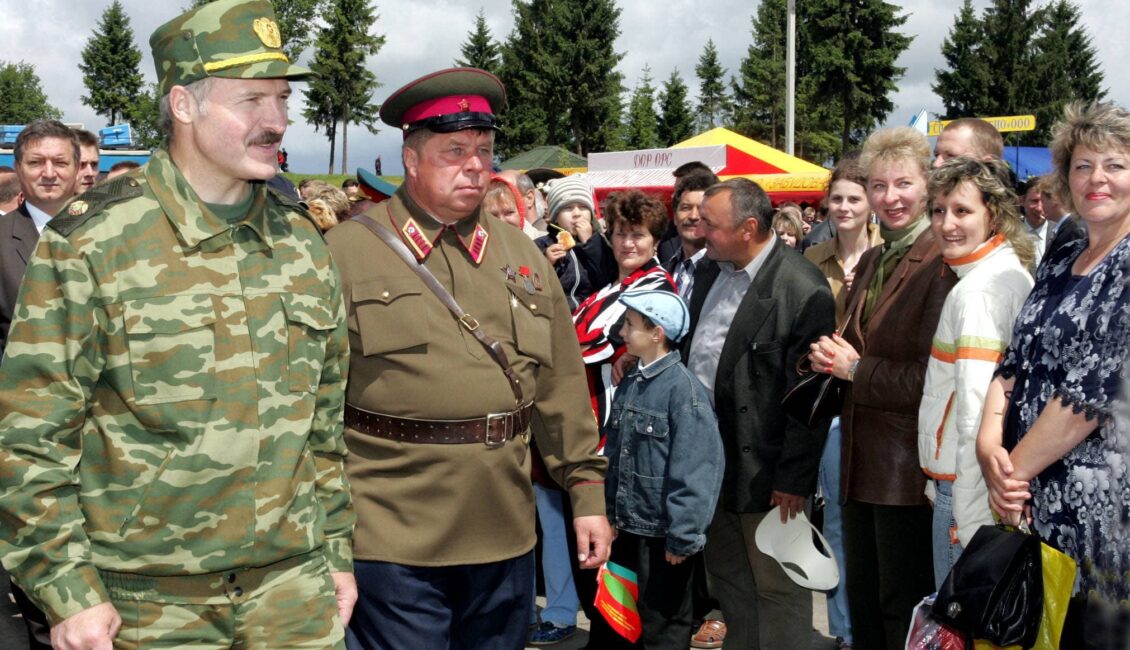
The complex was officially opened on 30 June 2005 in the presence of the country’s President, A. G. Lukashenko, senior government officials, veterans of the Great Patriotic War and more than ten thousand spectators who attended the large-scale “Invasion” military theatrical performance.
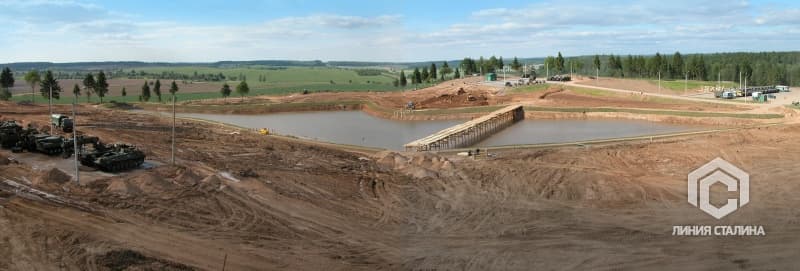
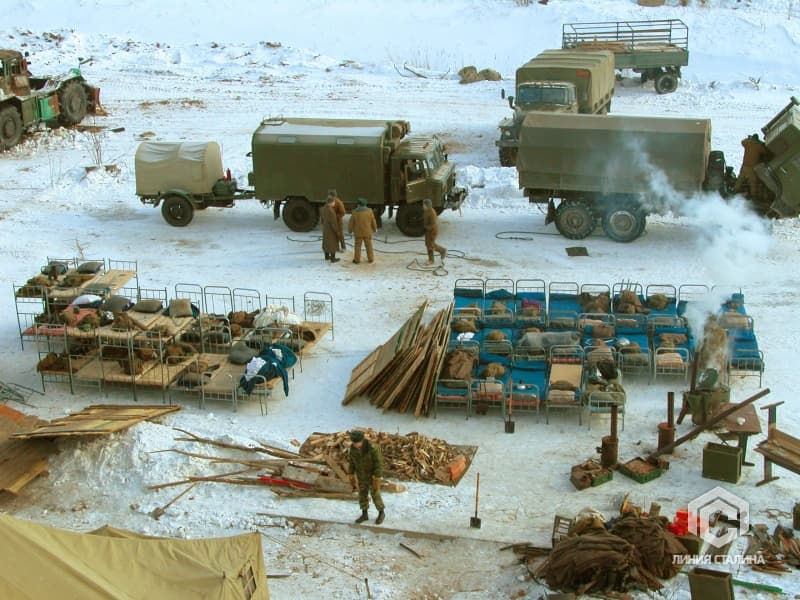
Today, the 31.7-hectare site features not only examples of field fortifications—four pillboxes, a timber-and-earth firing position, dugouts, trenches, foxholes, anti-tank ditches and other types of military engineering obstacle—but also four display areas featuring weapons and military equipment from the Great Patriotic War and the post-war period. An artificial lake features a pontoon crossing and a low-water military bridge built by Belarusian military engineers from pre-war plans. The museum’s collection currently includes more than 170 major exhibits, excluding small arms, military uniforms and equipment, and various documents.
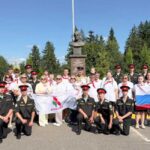
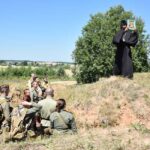
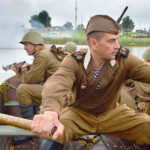
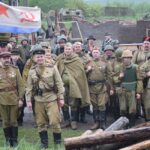
Since its establishment, the Historical and Cultural Complex has welcomed more than one million visitors from Belarus and countries both near and far. It should be noted that Stalin Line is not merely a museum, but a true historical and cultural complex. In addition to regular guided tours, it frequently hosts theatrical reenactments of ‘combat operations’ from the Great Patriotic War, conscripts’ days, ceremonies honouring veterans and members of the Belarusian Armed Forces, professional celebrations for various security and law-enforcement agencies, and youth and international events. Visitors can also simply enjoy their leisure time here. Alongside learning about history and exploring military vehicles and weapons, they can sample soldiers’ porridge at the ‘At the Halt’ Café, take a boat or quad-bike ride, test their accuracy and steadiness by firing deactivated historical weapons, stroll along paved paths and breathe the fresh, clean air of the Belarusian countryside. The Stalin Line Historical and Cultural Complex is located 20 km from Minsk in the direction of Molodechno, between the villages of Loshany and Goroshki.








 Russian
  English