
On 22 March 1943, police captain Hans Woellke was travelling towards Minsk. In 1936, he had become Olympic champion in the shot put and was personally acquainted with Hitler. Hans Woellke was accompanied by two lorries carrying a platoon of policemen from the 118th Schutzmannschaft Battalion (Ukrainian Schutzmannschaft).
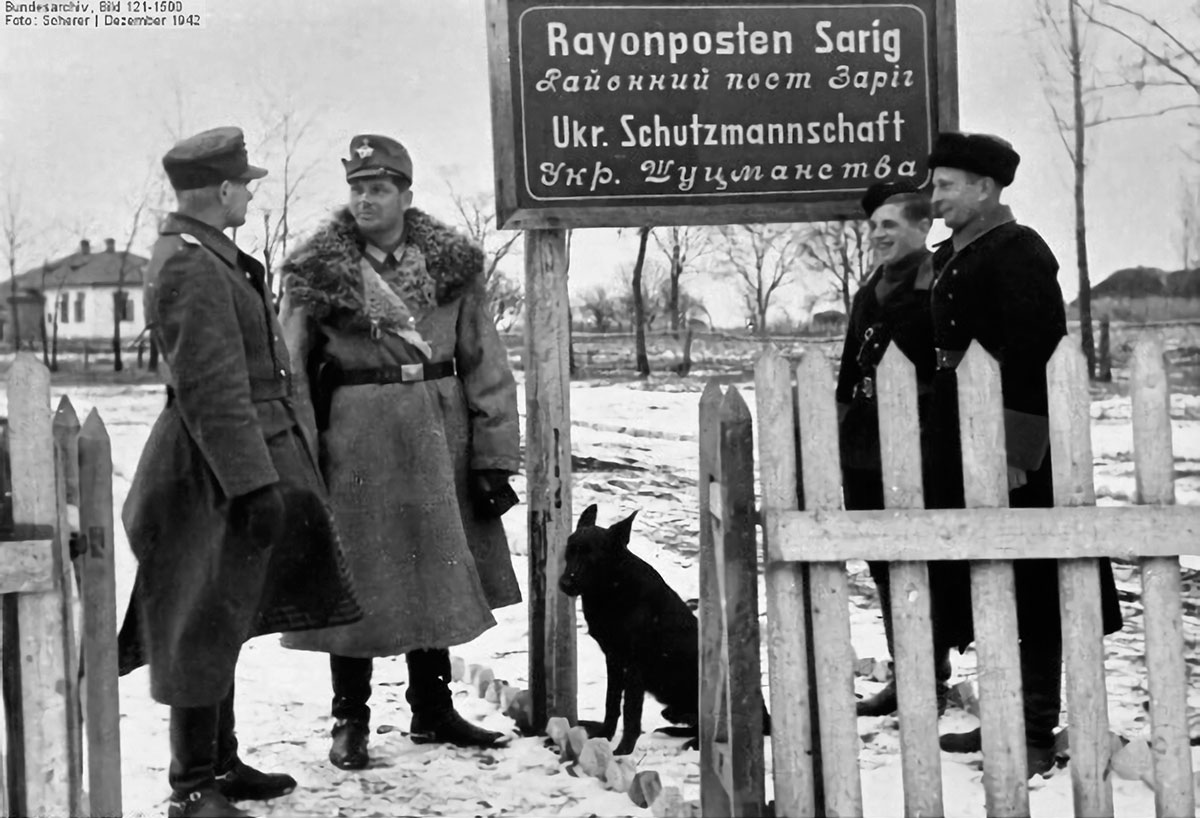
District Post of the Schutzmannschaft Battalion
When the convoy saw women from the village of Kozyri cutting down trees in the forest, its members asked them about the partisans. The women replied that they had not seen anyone. The convoy continued on its way, but before it had travelled even 300 m, it was ambushed by partisans. Hans Woellke and two policemen were killed in the ensuing exchange of fire. Afterwards, the police platoon commander, Vasyl Meleshko, and his subordinates committed a war crime by shooting 26 women forestry workers.

The 26 Women Shot in the Forest
The tracks leading away from the partisan ambush led to the village of Khatyn. A punitive detachment was sent there under the command of German Major Erich Körner, whose orders were translated by Iosif Lukovich, a Belarusian traitor and collaborator. The punitive detachment consisted of 81 policemen from the 118th Schutzmannschaft Battalion under the command of Konstantin Smovsky and 42 SS men from the Ukrainian company of the SS Sonderbattalion Dirlewanger under the command of Ivan Melnichenko.
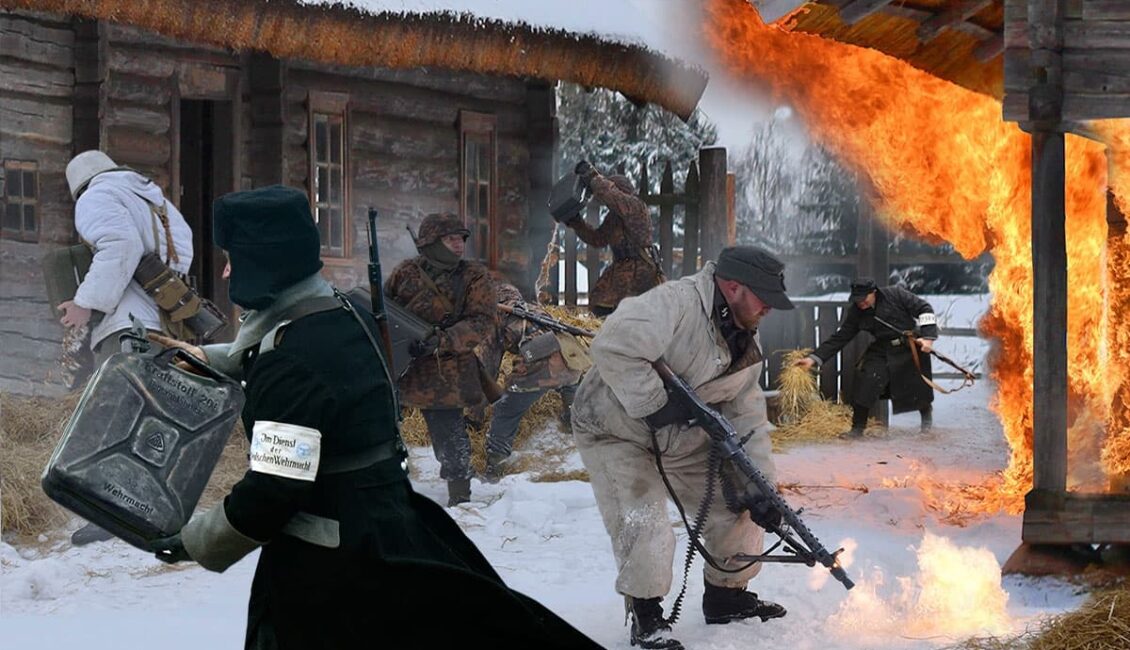
On Erich Körner's orders and under the direct supervision of Grigory Vasyura, chief of staff of the 118th Police Battalion, the policemen and SS men committed another war crime. They rounded up the entire population of Khatyn and locked them in a collective farm barn, which the interpreter, Iosif Lukovich, then set alight. When the flames engulfed the barn, the people began breaking down the door. The punitive forces opened fire on them. In total, 149 people were killed in Khatyn, including 75 children.

149 Crosses Commemorating Those Killed in Khatyn
The US authorities did not extradite Konstantin Smovsky to our country. This was despite the fact that, while commanding the 118th Battalion, he was responsible not only for the destruction of Khatyn's inhabitants. As the Swedish historian Per Anders Rudling notes in his book “Terror and Local Collaboration in Occupied Belarus”, Smovsky was involved in a ruthless campaign of Nazi terror whose victims also included residents of the villages of Chmelevichi, Dalkovichi, Koteli, Zarechye, Bobrovo, Uborok, Makovye, Osov and Novaya Vileyka. In March 1945, Smovsky joined the leadership of the Ukrainian National Army, which had been formed in Germany and fought on Hitler's side. As a result, Konstantin Smovsky is honoured in Ukraine not as a war criminal, but as a Ukrainian military figure, a colonel in the Army of the Ukrainian People's Republic and a cornet general of the “Union of Ukrainian Veterans”.
At the same time, the option to edit the article about Smovsky on the “free” Wikipedia has been blocked.
The Canadian authorities gave refuge to Vladimir Katriuk, who fired a machine gun at the burning residents of Khatyn. He lived until 2014, when his followers in Ukraine burned 42 people to death in Odesa and beat four more city residents to death with iron bars.
In total, during the occupation, punitive forces burned homes in 10,961 villages across Belarus. They also killed 1,845,155 civilians.
Punitive forces from Germany, Austria, Hungary, Italy, Romania, Slovakia, the Czech lands, Finland and France took part in the killing of civilians within our republic.

They were assisted by traitors and collaborators from among Soviet citizens of Armenian, Belarusian, Jewish, Latvian, Lithuanian, Ossetian, Polish, Russian, Tatar, Ukrainian, Estonian and other nationalities, recruited from the local population, nationalist organisations or prisoners of war.

Map of Villages Where Punitive Forces Burned Homes
 Russian
  English