
The occasion was officially celebrated at the Stalin Line Historical and Cultural Complex on Saturday, 17 November 2018.
Staff at this open-air museum joined forces with the “Memory of Afghanistan” Charitable Foundation and personnel from the Ministry of Defence of the Republic of Belarus to stage a major event attended by several thousand people.
Missile Troops and Artillery Day is celebrated in Belarus on 19 November.

Smerch Multiple Launch Rocket System

9P129M Self-Propelled Launcher

BM-21

BM-21A
The organisers prepared an extensive cultural and entertainment programme for visitors. Belarusians and international visitors viewed an exhibition of modern military equipment in service with the Belarusian Armed Forces: a 9A52 “Smerch” multiple launch rocket system, a 9P129M self-propelled launcher from the 9K79 “Tochka” tactical missile system, BM-21 and BM-21A multiple launch rocket systems, as well as two howitzers: a 122 mm D-30 and a 152 mm 2A65 “Msta-B”.

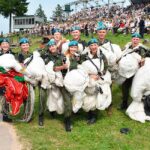
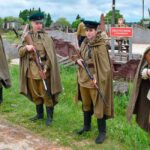
Belarusian Reenactors from the “Abarontsy Aichyny” Military-Historical Club

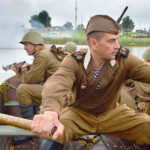
Reenactors from the “Red Star” Public Association, Kyiv
Reenactors from the “Red Star” Public Association, Kyiv. The Military Academy of the Republic of Belarus and the 120th Guards Rogachev Mechanised Brigade provided the equipment especially for this display. All the exhibits were deployed in firing positions.

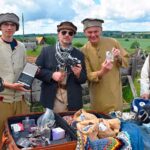
Anatoly Morozov Came from Riga

Military Reenactors from the “Za Rodinu” Military-Historical Club, Czech Republic
In addition to viewing the military equipment, visitors could explore the guided-tour and interactive areas and take part in various sporting competitions and other activities.

PzKpfw 38 Tank

PzKpfw III Tank
REENACTMENT OF THE “BATTLE OF STALINGRAD”
The celebration commemorated the Red Army counter-offensive at Stalingrad, Operation Uranus. It began on 19 November 1942, and artillery played a major role in its success and the defeat of the enemy. The Soviet leadership therefore chose this date for the annual celebration. These events of almost 80 years ago formed the basis for the final military-historical reenactment of the year.

Sturmgeschütz Assault Gun

BTR-40

BMW R71 Motorcycle
Such open-air “battles” bring together people of different ages and nationalities. Military reenactors from the Republic of Belarus, Ukraine, Latvia, the Czech Republic and Russia gathered for this performance.. Several dozen people took part alongside Belarusian Armed Forces personnel in the five-part performance, which lasted 30 minutes.

Military Reenactor Dmitry Osmolovsky
To give the action on the field a greater sense of scale, armoured and wheeled vehicles from the Stalin Line Historical and Cultural Complex were used. The “German” side fielded PzKpfw 38 and PzKpfw III tanks and a Sturmgeschütz assault gun. They were supported by a BTR-40 and a BMW R71 motorcycle.

KV-1 Tank

ZiS-5 Lorry
“We applied markings to the German armoured vehicles corresponding to the 6th Panzer Regiment of the Wehrmacht’s 3rd Panzer Division. This was a training unit of the German Army,” explained Dmitry Osmolovsky, a Stalin Line Historical and Cultural Complex staff member and senior reserve officer.

GAZ-67 Vehicle

Spectators
The Red Army troops received fire support from a KV-1 and several guns towed by two vehicles: a ZiS-5 lorry nicknamed “Zakhar” and a GAZ-67 off-road vehicle. The latter had not taken part in reenactments for some time and had undergone a major overhaul. It was completely rebuilt, its bodywork was restored, new seats made to surviving drawings were installed, and it was fully equipped to represent a Soviet SMERSH military counter-intelligence vehicle of the 1940s.

The Red Army Prepares to Repel the German Offensive

Assault on the Red Army Positions

The German Offensive Begins
The spectators gathered in the stands were first shown the fourth and final German assault on the city. It ended in failure, forcing the Wehrmacht onto the defensive. The reenactors then recreated the famous Red Army offensive. The fighting was accompanied by sustained gunfire from every type of weapon and pyrotechnic explosions. This enveloped the battlefield in a dense haze.
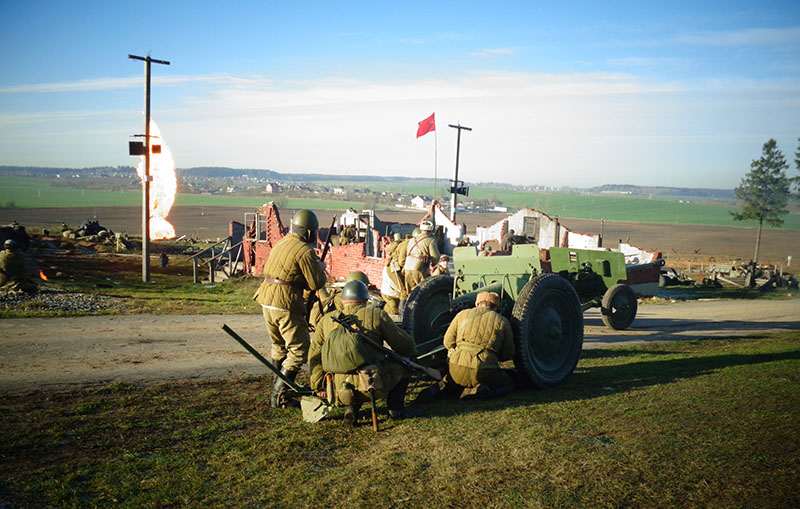
Red Army Artillery Fires on the Enemy

Red Army Reinforcements Arrive
In keeping with tradition, the participants formed up beside the battlefield after the reenactment and were greeted with applause from the spectators. The organisers then presented certificates to all the military-history clubs that had taken part in the event.

PzKpfw 38 Knocked Out

Duel with a German PzKpfw 38 Tank

The Red Army Offensive
During the official awards ceremony, one of the reenactors proposed to his girlfriend. She accepted to cheers and applause from everyone present.

Knocked-Out German PzKpfw III Tank

The Battle Is Over. The Enemy Is Defeated
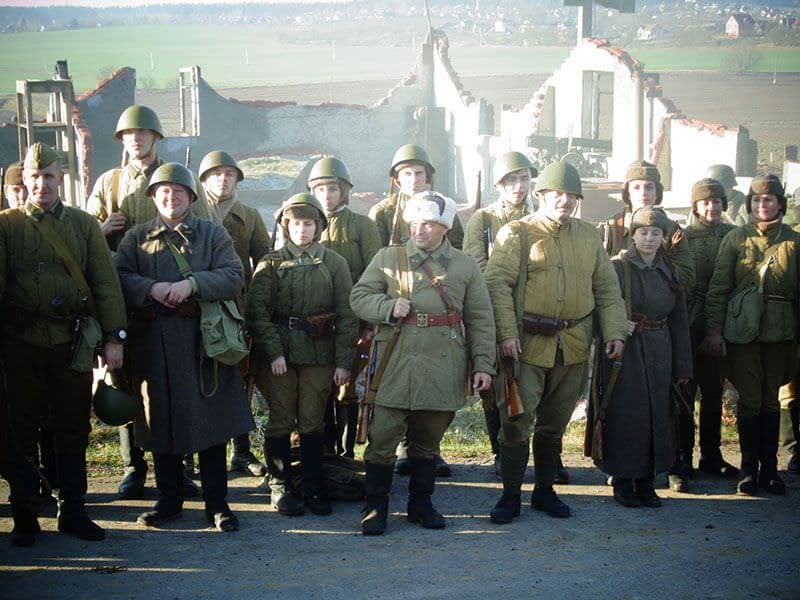
The Traditional Formation of Participants after the Reenactment. In turn, representatives of the “Za Rodinu” Military-Historical Club from the Czech Republic presented their Belarusian hosts with gifts: PPSh paintball guns.

Presentation of Certificates

Gifts from the Czech Participants to Their Belarusian Hosts

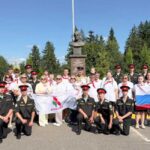
Commemorative Group Photograph
The celebrations concluded with a colourful fireworks display and a group photograph as a souvenir. Visitors were able to ride in the military vehicles as they returned to the vehicle park.

A Marriage Proposal

The Proposal Is Happily Accepted
P.s. The celebration of Missile Forces and Artillery Day, held on 17 November, will long be remembered by everyone who attended.

Visitors enjoying military vehicle rides during the celebrations.
According to Dmitry Osmolovsky, the management of the Stalin Line Historical and Cultural Complex—and Executive Director Alexander Metla in particular—decided to expand the range of operational vehicles taking part in military-historical reenactments. Work began on restoring a German Opel passenger car manufactured in 1938. It was in a deplorable condition, and the decision was made to restore it in time for 9 May the following year.

AT-P
The semi-armoured AT-P artillery tractor, a veteran of reenacted “battles”, may also return to service at the same time. It was one of the first vehicles used by reenactors in combat displays at the Historical and Cultural Complex. This particular vehicle had not been operational for several years.

Opel Passenger Car
This vehicle and its “colleagues” also appeared in the three-part Soviet film “The Long Miles of War”, based on works by the writer Vasil Bykov. The tractors portrayed German armoured vehicles.
Yuri VLODAVSKY
Photograph by the author
Source https://adt.by/
The author wishes to thank Maxim Kanafin, a member of staff at the Stalin Line Historical and Cultural Complex, for his assistance in preparing this article.
 Russian
  English