
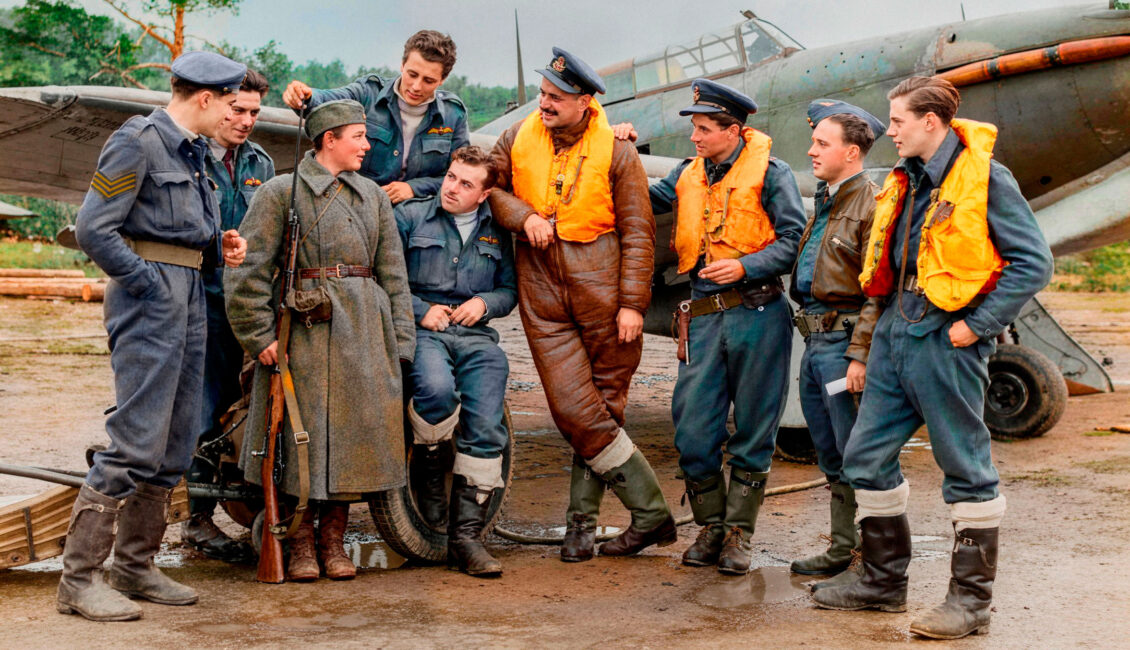
Autumn 2026 marks the 85th anniversary of Operation Benedict. This little-known chapter in the history of co-operation between Soviet and British airmen in the fight against Nazi Germany began in autumn 1941, when two British fighter squadrons of the Royal Air Force (RAF) were sent to the USSR to the settlement of Vaenga (present-day Severomorsk).. They formed No. 151 Wing RAF, commanded by Wing Commander Henry Neville Gynes Ramsbottom-Isherwood.
No. 151 Wing was tasked with providing fighter cover for the Soviet Northern Fleet’s bombers, preparing Soviet pilots to fly British Hurricane fighters, training ground crews to maintain them, and defending Murmansk and the ports receiving the first Allied Arctic convoys carrying aid.
Before the First World War, Russia had only one northern port, at Arkhangelsk, but it froze over in winter. The port and city of Murmansk were therefore founded on 1 September 1915. This was Russia’s only ice-free northern port, enabling military supplies from Britain to be delivered during the winter. A railway to the port was built at the same time.
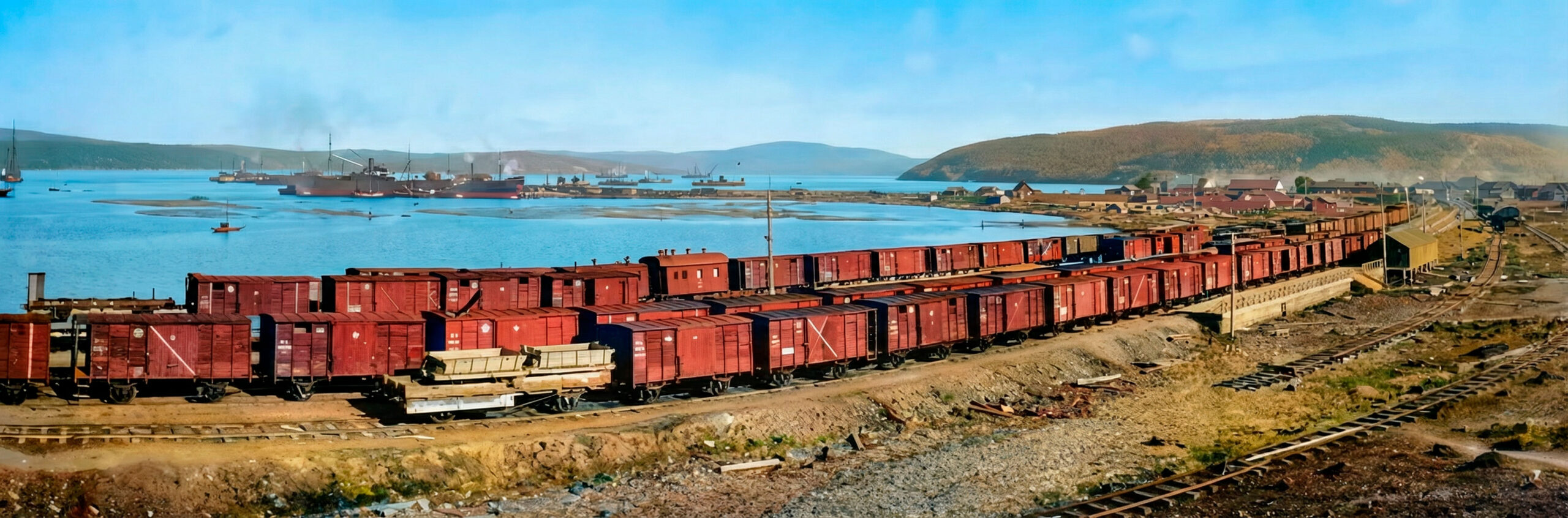
Port of Murmansk
At the outbreak of the Great Patriotic War, Britain once again became an ally of our country. To prevent the British from providing military aid to the Soviet Union, Hitler ordered the 130,000-strong German Army of Norway to capture Murmansk within a few days. However, determined resistance by the Red Army and strikes by Soviet aircraft thwarted these plans.
On 31 August 1941, the first British convoy arrived in Arkhangelsk. The passage was made in secrecy and without loss, as German intelligence failed to detect the convoy’s ships. The British delivered to the USSR 3,800 depth charges and magnetic mines, 10,000 tonnes of rubber, 1,500 tonnes of boots for soldiers, tin, wool, and a wide range of other supplies, equipment and military materiel, as well as an auxiliary vessel loaded with fuel and, most importantly, 15 partially disassembled Hurricane fighters.
Once the crates had been unloaded, it became clear that some essential tools needed to assemble the aircraft were missing.
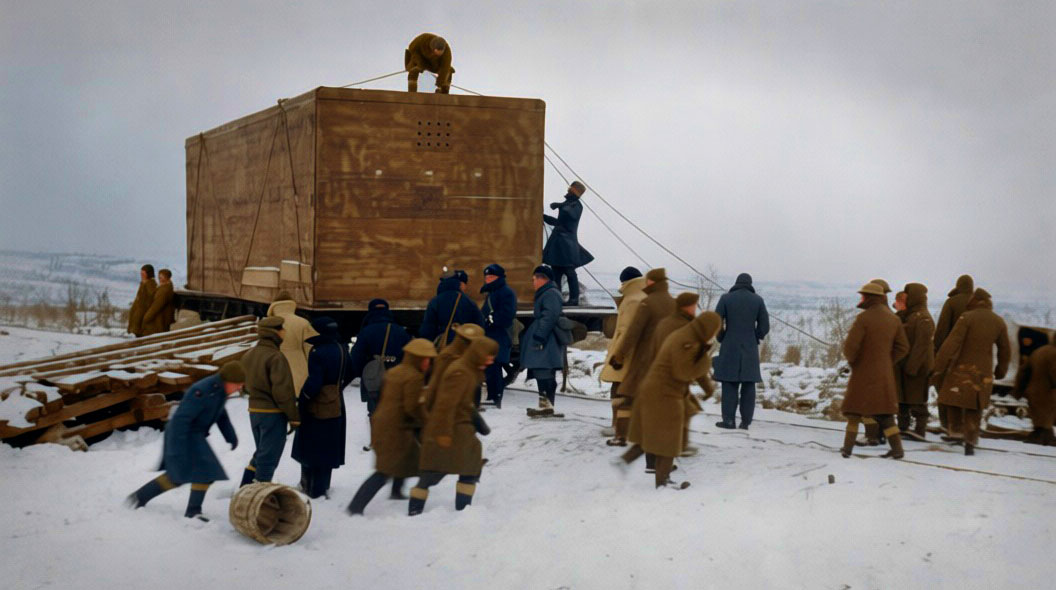
One of the crates containing a disassembled Hurricane Mk IIB fighter
However, the Russian workers at the Krasnaya Kuznitsa factory quickly made them in a single night from sketches drawn by Victor Albert Gittins, the chief engineer of No. 151 Wing, who was responsible for maintaining the Hurricanes.
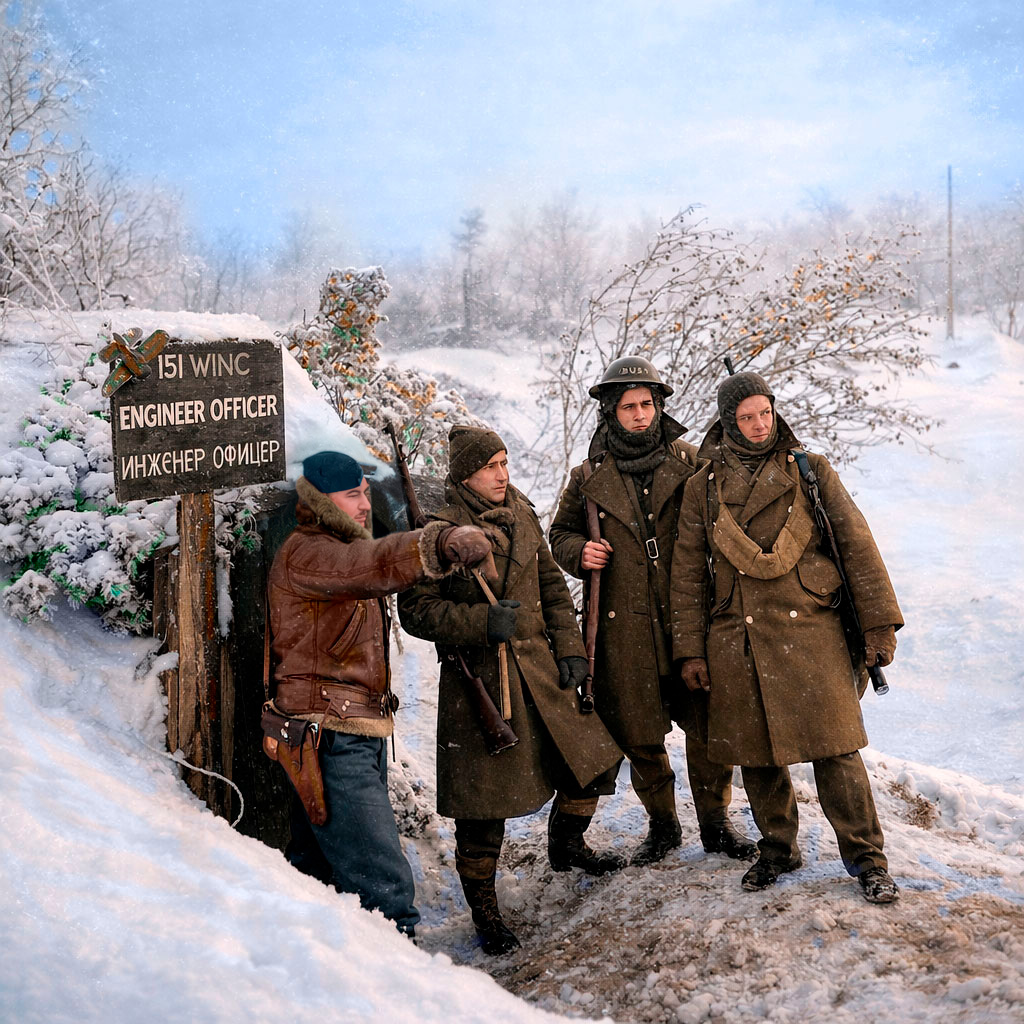
Flight Lieutenant Victor Gittins, beside a dugout, gives instructions to the sentries
Soviet military personnel, including the Northern Fleet Air Force command, closely observed the assembly of the fighters. Once the aircraft were ready, test flights began.
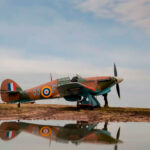
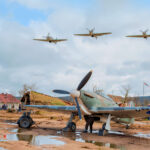
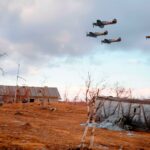
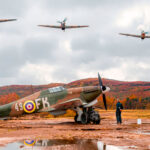
According to the British, each day of testing ended with a lavish feast: the Russians insisted that every glass be drained, and by nightfall the British were slipping beneath the tables. Despite this, they still managed to impress the Russians with their flying skills the following morning. According to British accounts, the local residents thought that the pilots flew so daringly because they were either drunk or mad. Fifteen Hurricanes were assembled and tested in nine days. At the farewell party, the British ate caviar straight from the tins with spoons, and every one of them even drank a full glass of vodka!
A further 24 fighters arrived on 6 September aboard the aircraft carrier Argus, from which they flew to Vaenga airfield, the base of the Northern Fleet Air Force’s 72nd Composite Aviation Regiment.
-
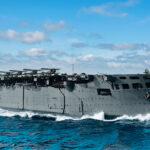
- Aircraft Carrier “Argus”
-
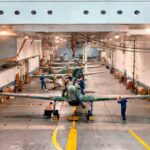
- Aircraft inside the Aircraft Carrier
-
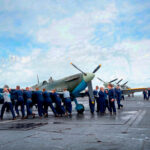
- Aircraft on the Carrier’s Flight Deck
The airfield at the settlement of Vaenga, 25 km from Murmansk, consisted of a large, well-compacted strip of sand.
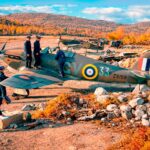
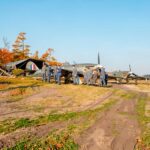
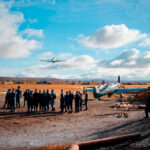
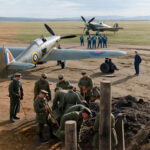
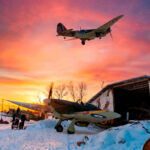
The Russians built makeshift shelters for the 39 fighters in just one day. Each consisted of a shallow depression in the ground covered by a roof of birch trunks and turf. The British were astonished: in Britain, such work would have taken weeks!
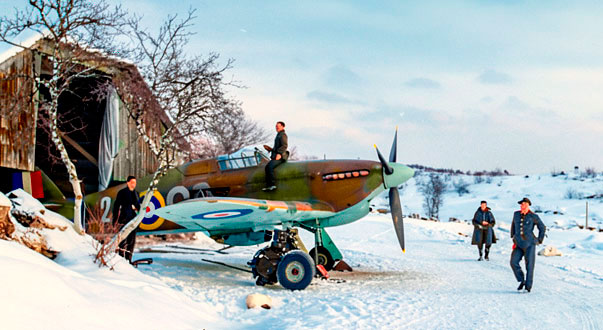
To the left of the aircraft, one of the wooden hangars built in a single day for each Hurricane can clearly be seen.
The British air wing was placed under the command of General Alexander Alexeyevich Kuznetsov, commander of Soviet naval aviation in the Northern Fleet. Kuznetsov took command of the Northern Fleet’s aviation arm when he was only 35 years old. At 36, he became a general. Despite his youth, under his command the Northern Fleet’s aviation arm successfully underwent its baptism of fire in the 1939–1940 Finnish War and, following Germany’s attack on the Soviet Union, made an enormous contribution to thwarting the German plan to capture Murmansk.
‘A fine sailor, a talented organiser and an outstanding pilot, he commanded the respect of his subordinates and knew how to kindle their enthusiasm and inspire them to acts of valour.’ This was the assessment of General Kuznetsov given by Admiral Vasily Platonov, who knew him well.
-
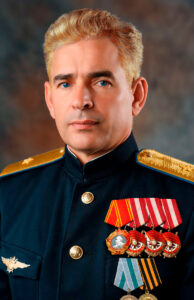
- Commander of the Northern Fleet Air Force, General Alexander Alexeyevich Kuznetsov
-
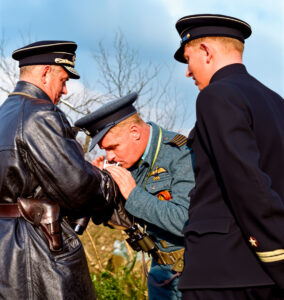
- General Kuznetsov Lights Lieutenant Colonel Henry Neville Gynes Ramsbottom-Isherwood’s Cigarette
Kuznetsov’s Northern Fleet airmen were of the same calibre. They sought to compensate for the small number and obsolescence of their I-16 fighters through courage and bravery, skill and audacity. Among them was the leading Soviet ace, Major Boris Feoktistovich Safonov, commander of the 78th Aviation Regiment.
-
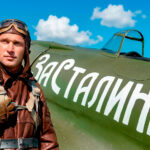
- Boris Safonov beside an I-16 fighter
-
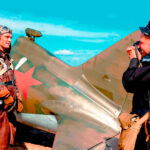
- Boris Safonov being photographed by photojournalist Yevgeny Khaldei
-
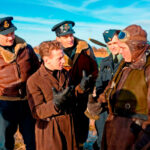
- British pilots talking to Boris Safonov
-
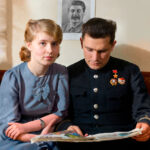
- Boris Safonov with his wife, Yevgenia Valentinovna, after he was awarded the Gold Star of a Hero on 16 September 1941
Flying an I-16, which was considerably slower even than German bombers, Safonov shot down 11 enemy aircraft in just two months of combat. Seven of them were bombers, which were virtually impossible to damage seriously with the I-16’s machine guns. Safonov therefore first killed the bomber’s gunner and then the pilots themselves.
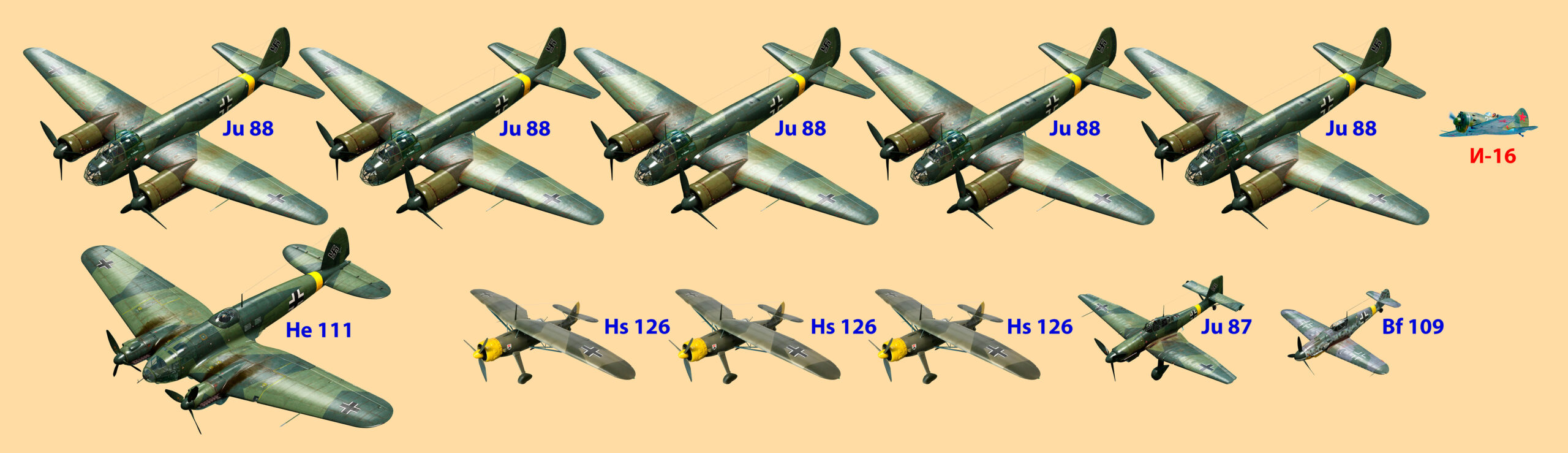
Aircraft shot down by Safonov before the arrival of the British: 5 Ju 88s, 1 He 111, 3 Hs 126s, 1 Ju 87 and 1 Bf 109. The aircraft are shown in their correct proportions relative to one another
The British No. 151 Wing comprised a headquarters staff of 350 personnel and two squadrons: No. 81 Squadron, commanded by Anthony Rook, and No. 134 Squadron, commanded by Anthony Miller. Each had around 130 personnel, including at least 30 pilots. The British were to fight the enemy alongside Boris Safonov’s aviation regiment. Between sorties, they were to train Soviet pilots to fly Hurricane aircraft and technicians to maintain them, as Britain was preparing to supply Hurricanes to the USSR to alleviate the shortage of aircraft.
-
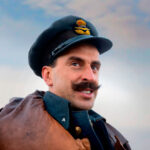
- Anthony Rook, Commander of No. 81 Squadron
-
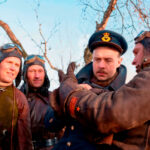
- No. 134 Squadron Commander Anthony Miller listens to Boris Safonov alongside Soviet pilots
-
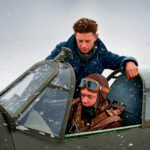
- No. 134 Squadron Commander Anthony Miller listens to Boris Safonov alongside Soviet pilots
-
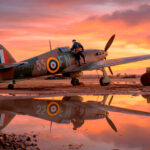
- A Hurricane at sunset
The pilots’ barracks were housed in a brick building, with beds as the only furniture. Some of the personnel were quartered in dugouts. Heating was provided by small wood-burning stoves. There was no running water, and the toilet was outside. Conditions were Spartan, to say the least.
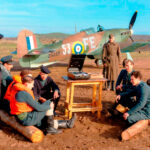
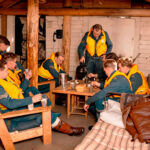
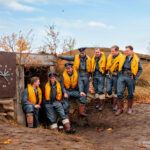
However, as pilot Tim Elkington recalled, the Russians made up for all these hardships with their warm welcome and human kindness. He also remembered that the food in Russia was better than at home. Few people today realise that the war with Germany caused serious food shortages in Britain, while the Russians supplied the British pilots with champagne, chocolate, ham, caviar and smoked salmon.
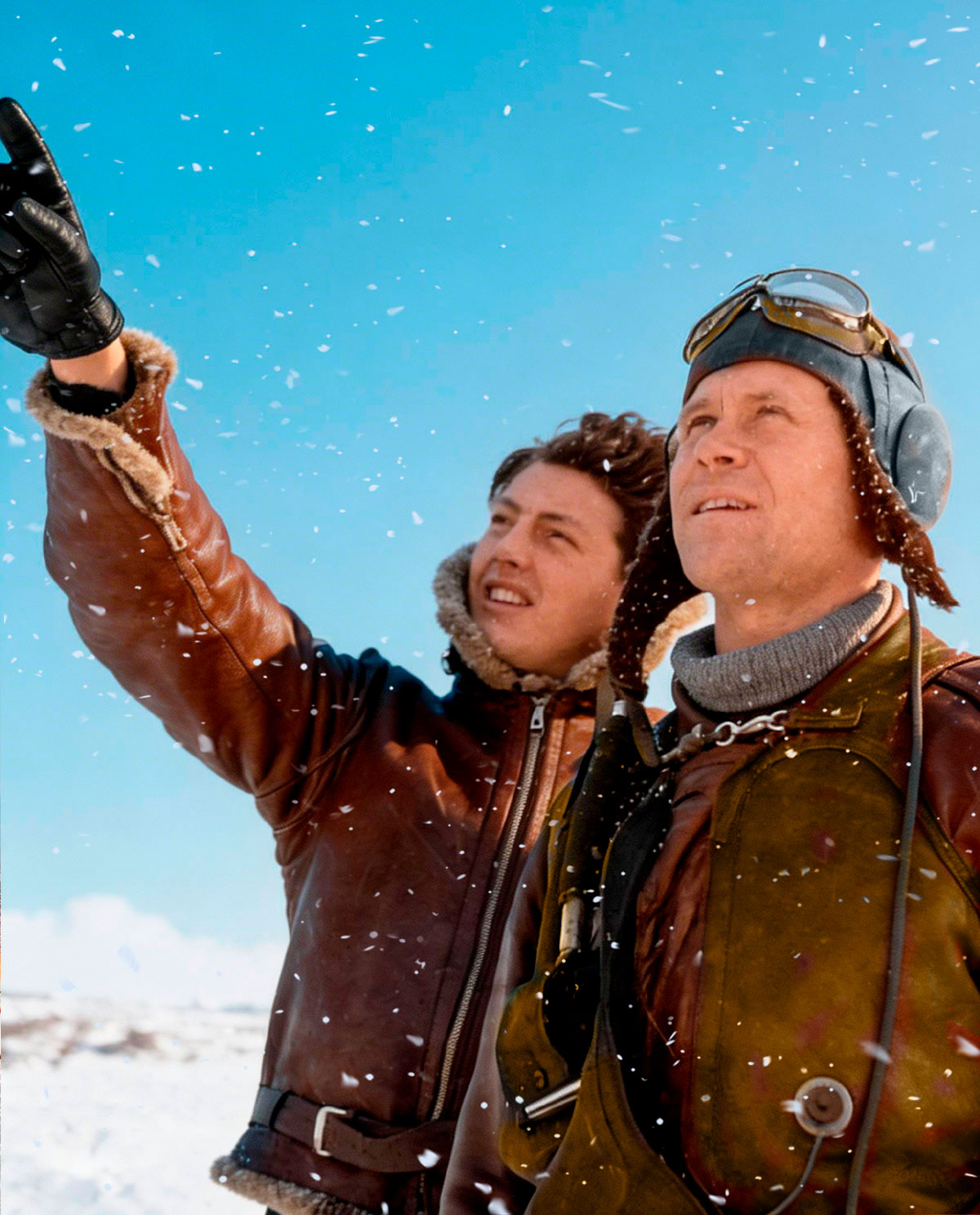
Tim Elkington and V. Rodin, a flight commander in the 72nd Composite Aviation Regiment.
The officers were accommodated in a two-storey brick building that looked more like a country house. The headquarters was also based there. Because of its red brick, the British jokingly nicknamed the building the ‘Kremlin’. They did physical exercises in the mornings and played football whenever possible. Then they took to the skies on combat missions.
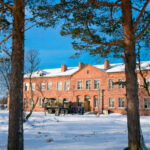
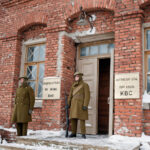
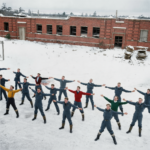
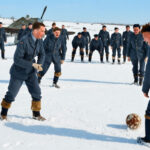
The arrival of the British air wing doubled the strength of the Soviet Northern Fleet Air Force. The first familiarisation flight took place on 11 September.
On 12 September 1941, following the first snowfall of the approaching Russian winter, Flight Sergeant Charlton Haw led a patrol of five Hurricane fighters escorting Soviet SB bombers.
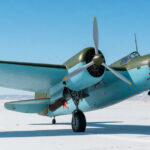
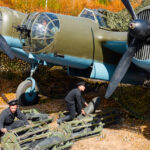
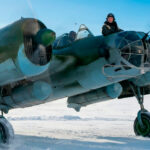
Soviet SB high-speed bomber
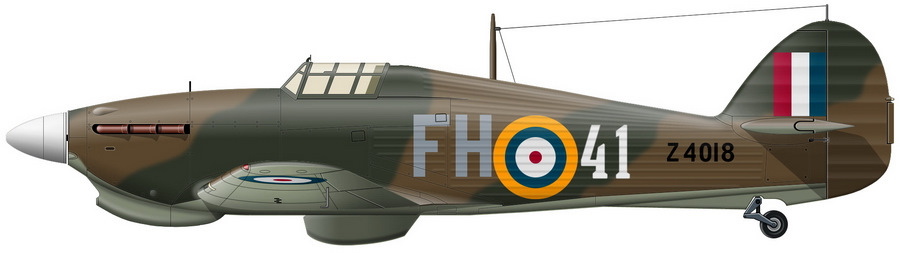
Charlton Haw’s Hurricane with Soviet number 41
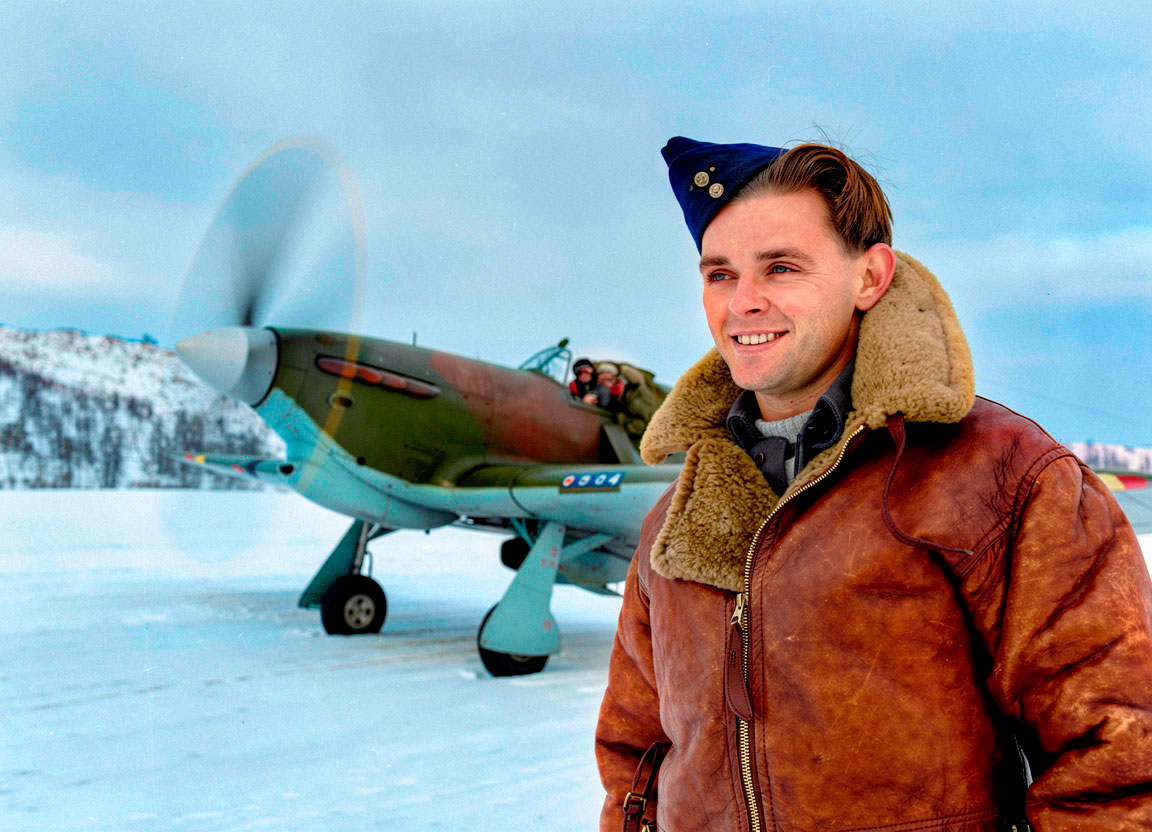
81 Squadron Patrol Leader Charlton Haw
West of Murmansk, the British encountered five Messerschmitt Bf 109 fighters escorting a Henschel Hs 126 reconnaissance aircraft. Charlton Haw immediately opened fire on the lead German fighter. After a ten-second burst, the blazing Bf 109 rolled onto its back and crashed into the ground. At the same moment, another Bf 109 swept in to attack Charlton. However, Canadian James Walker, covering Charlton Haw from behind, spotted the German in time and shot him down with two bursts.
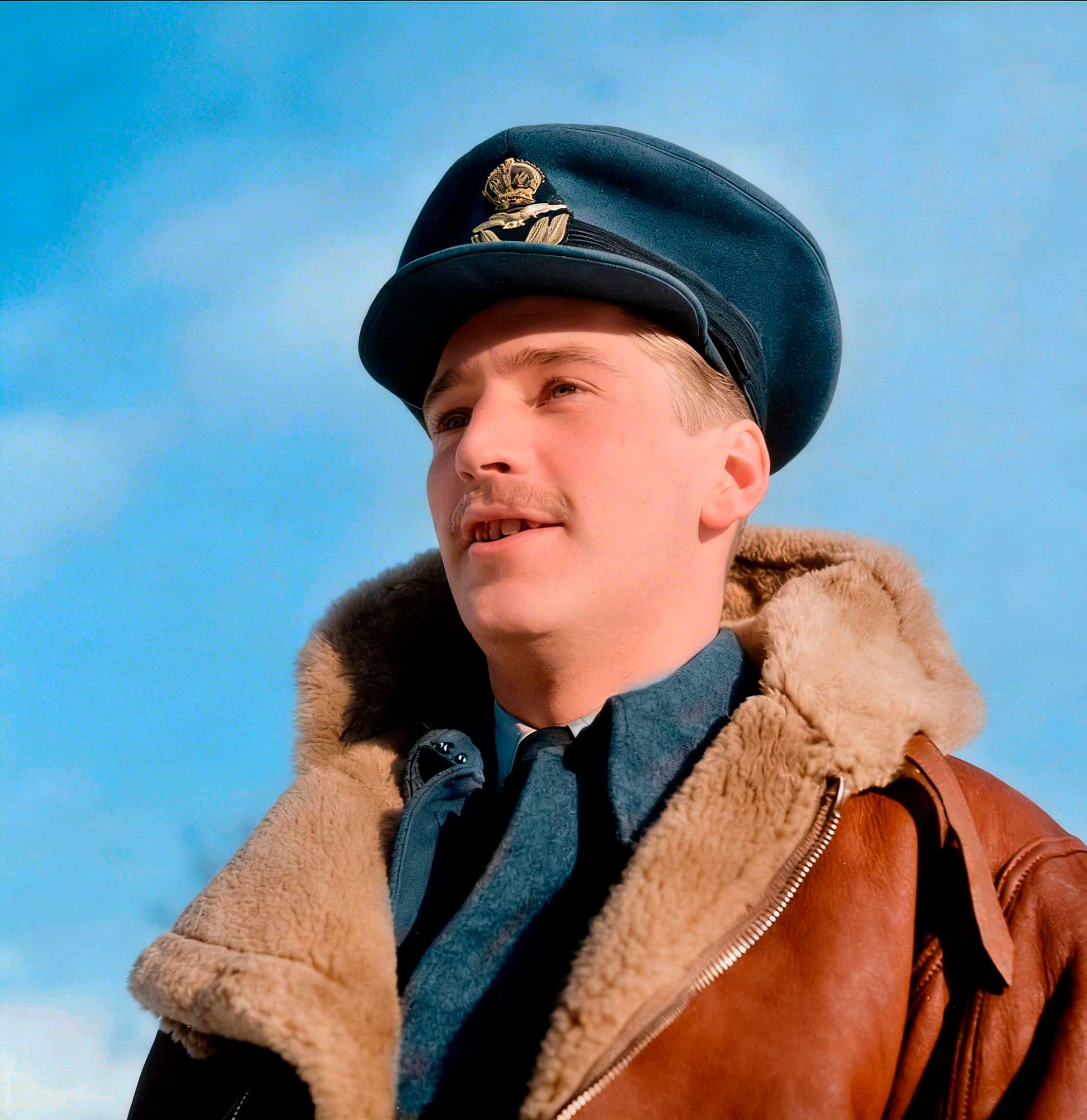
Canadian James Walker, who shot down the German attacking Charlton Haw
Meanwhile, Sergeant Kenneth Wade caught the Hs 126 in his sights and opened fire. The German tried to escape, but Wade caught up with him and fired another long burst. Trailing a plume of white smoke, the Hs 126 plunged downwards and disappeared from Wade’s view.
Kenneth Wade then turned his attention to a Hurricane and a Bf 109 circling one another as they tried to gain a firing position. Wade dived on the German, fired a burst and broke sharply away. On his second pass, Kenneth forced the enemy aircraft to descend and fly along the riverbed. As the German pilot took no evasive action, Wade was able to take careful aim and open fire again. Trailing smoke, the Bf 109 sideslipped to the left and crashed into the riverbank.
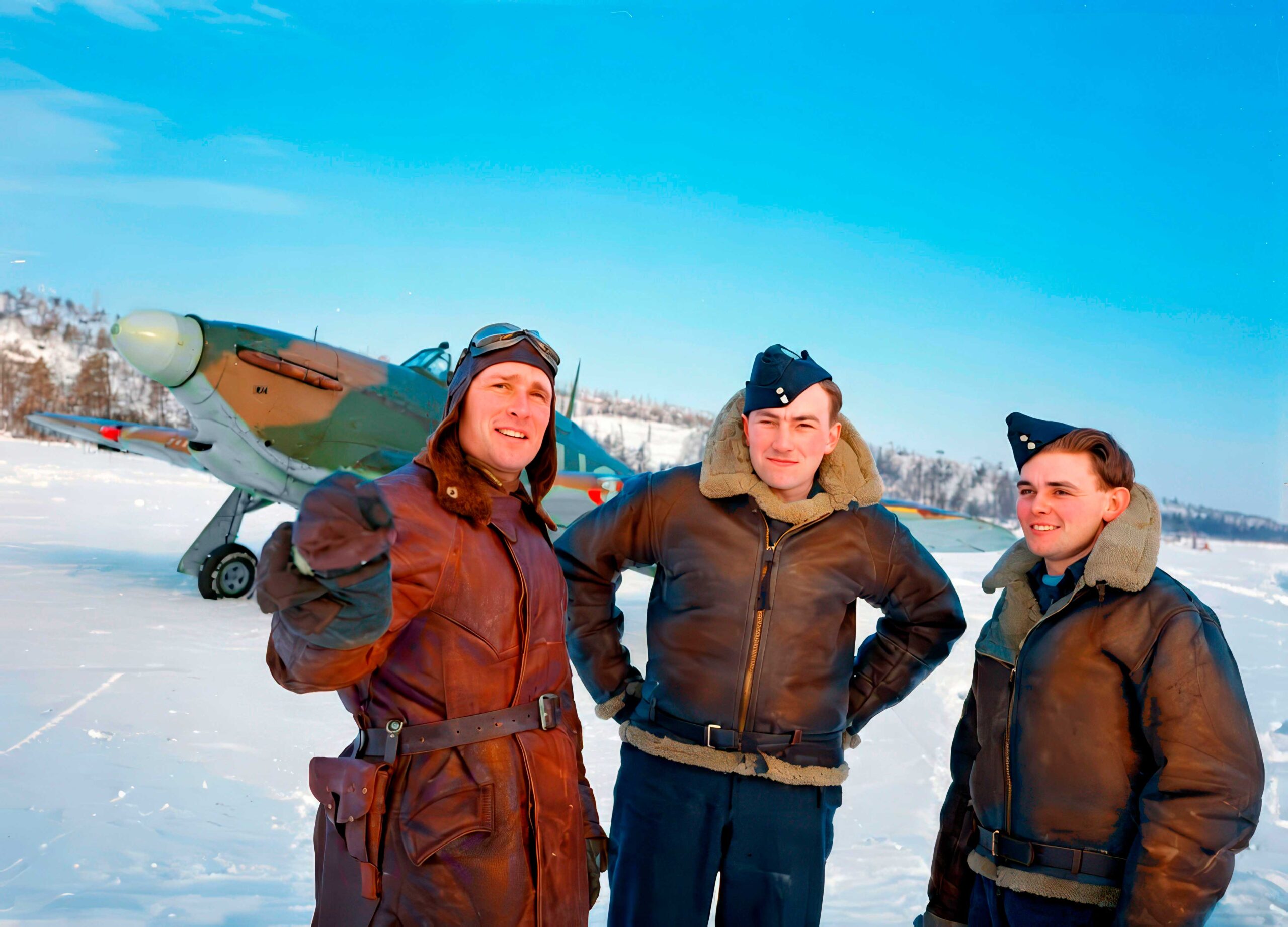
Boris Safonov with Kenneth Wode and Charlton Haw
Meanwhile, Charlton Haw spotted smoke coming from the aircraft of his friend, Sergeant Norman Smith (Norman Henry Smith), and rushed towards him. Flying alongside, Charlton saw that Norman’s aircraft was riddled with holes from hits by a German 20 mm cannon, while his friend was desperately trying to open the jammed cockpit canopy. Unable to help him, Charlton could only watch in horror as Norman’s aircraft continued to lose altitude before crashing into the ground…

Footage from Valdis Pelšs’s film “Polar Brotherhood”
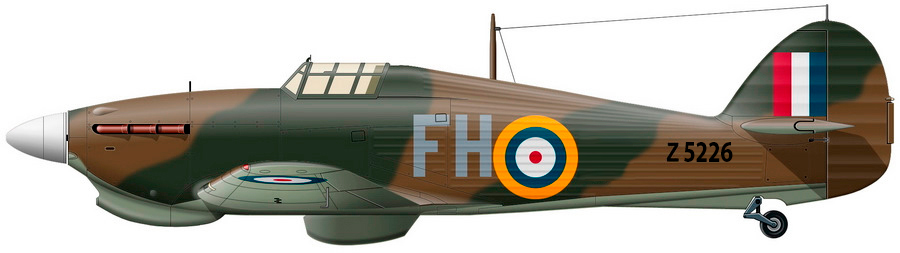
The Hurricane flown by the fallen Norman Smith had not yet received its Soviet identification number, which would have been painted in large white numerals
The outcome of the British pilots’ first engagement in the skies over the Soviet Union was three Bf 109 fighters shot down and possibly one Hs 126 reconnaissance aircraft. This was an outstanding result, given that the Hurricane, like the Soviet I-16 fighter, was inferior to the German Bf 109 in every respect. Only the death of the young Norman Smith cast a shadow over this victory.
On 13 September, other pilots who had been assembling fighters in Arkhangelsk arrived at the airfield. Smith was buried that same day. His coffin was draped with a British flag made by Soviet servicemen on their own initiative. Local residents also attended the funeral ceremony and bowed their heads in memory of the British pilot who had lost his life.
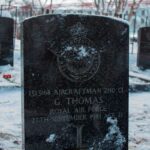
In addition to Smith, the British lost two ground crew technicians, John Ridley and Glanville Thomas. In dry weather, the sandy airfield at Vaenga posed no problems for British aircraft. During rain, however, the surface became uneven, causing the Hurricanes to bounce and pitch nose-down during take-off, breaking their propellers. To help the aircraft take off normally, technicians would climb onto the tail and jump off during the take-off run. On 27 September 1941, Ridley and Thomas failed to jump clear of a Hurricane’s tail, and the pilot, Vic Berg, did not notice and took off. When the aircraft left the ground, the technicians on the tail upset the Hurricane’s centre of gravity, causing its nose to rise sharply. Airflow over the wings was disrupted, the aircraft lost lift, and the fighter crashed to the ground from a height of 20 metres.
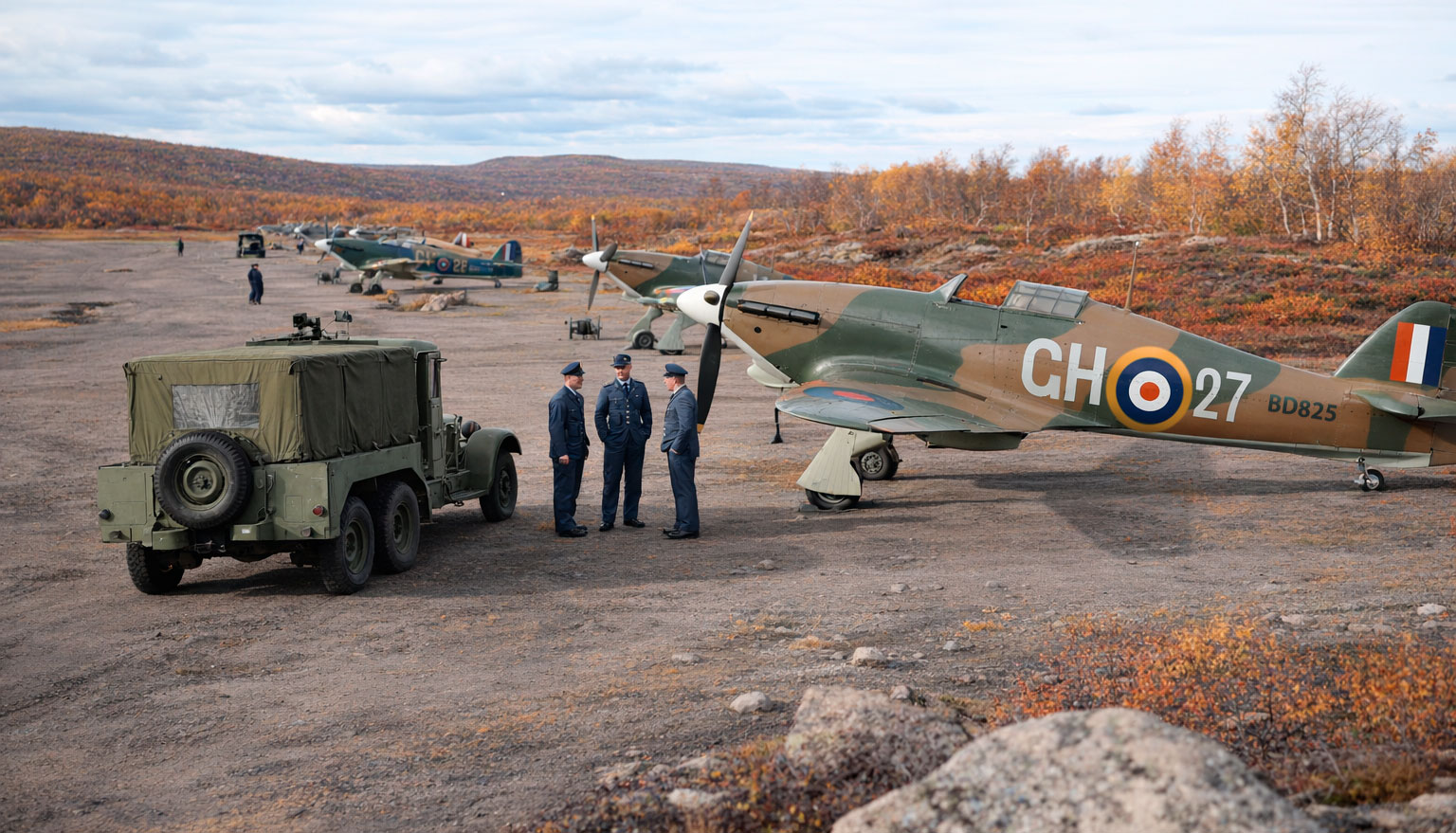
Vic Berg’s Hurricane before the crash
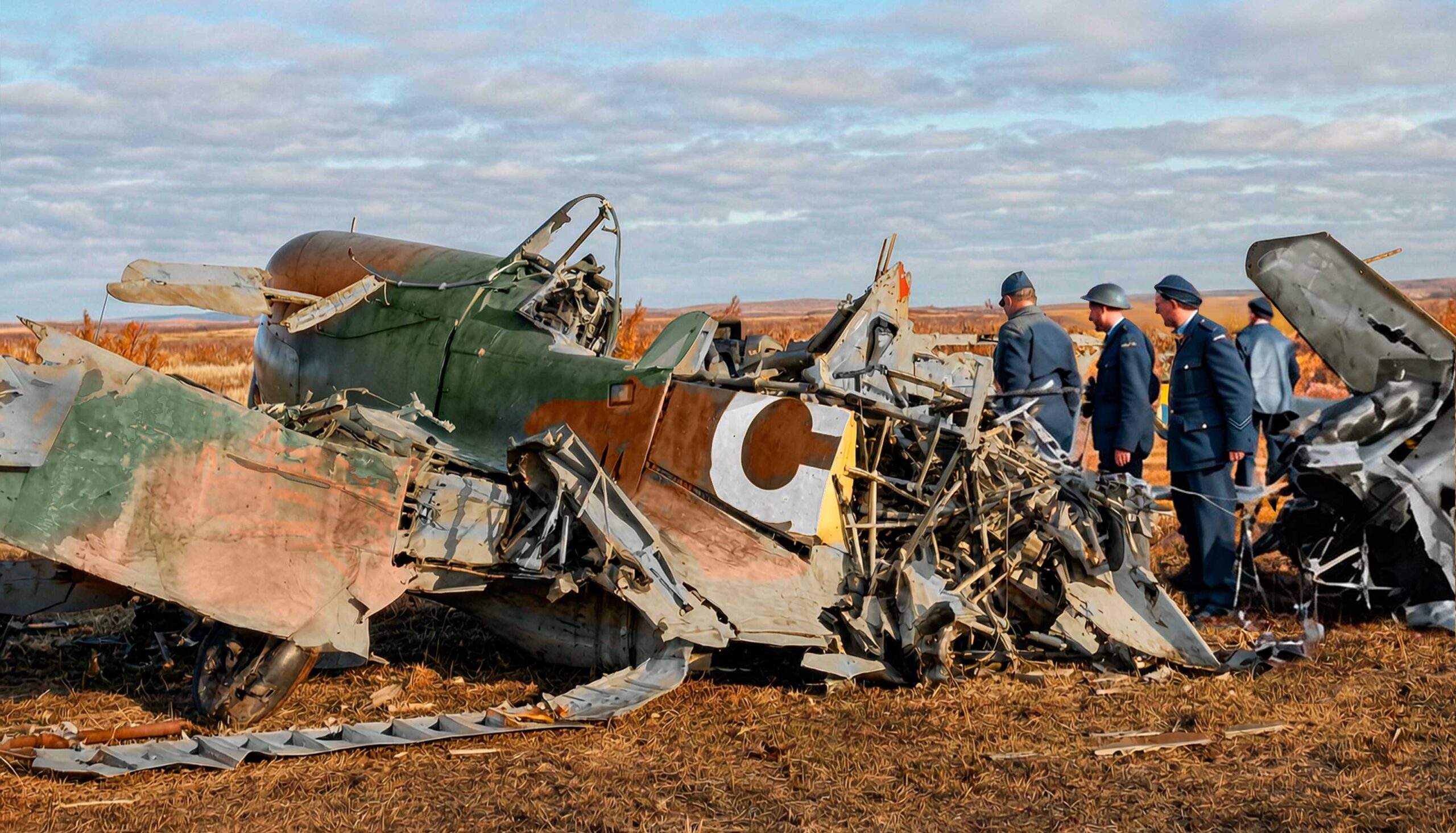
The wreckage of Vic Berg’s aircraft after the tragedy
Vic Berg suffered severe injuries in the crash but survived, while Ridley and Thomas, who had been clinging to the tail, were killed.
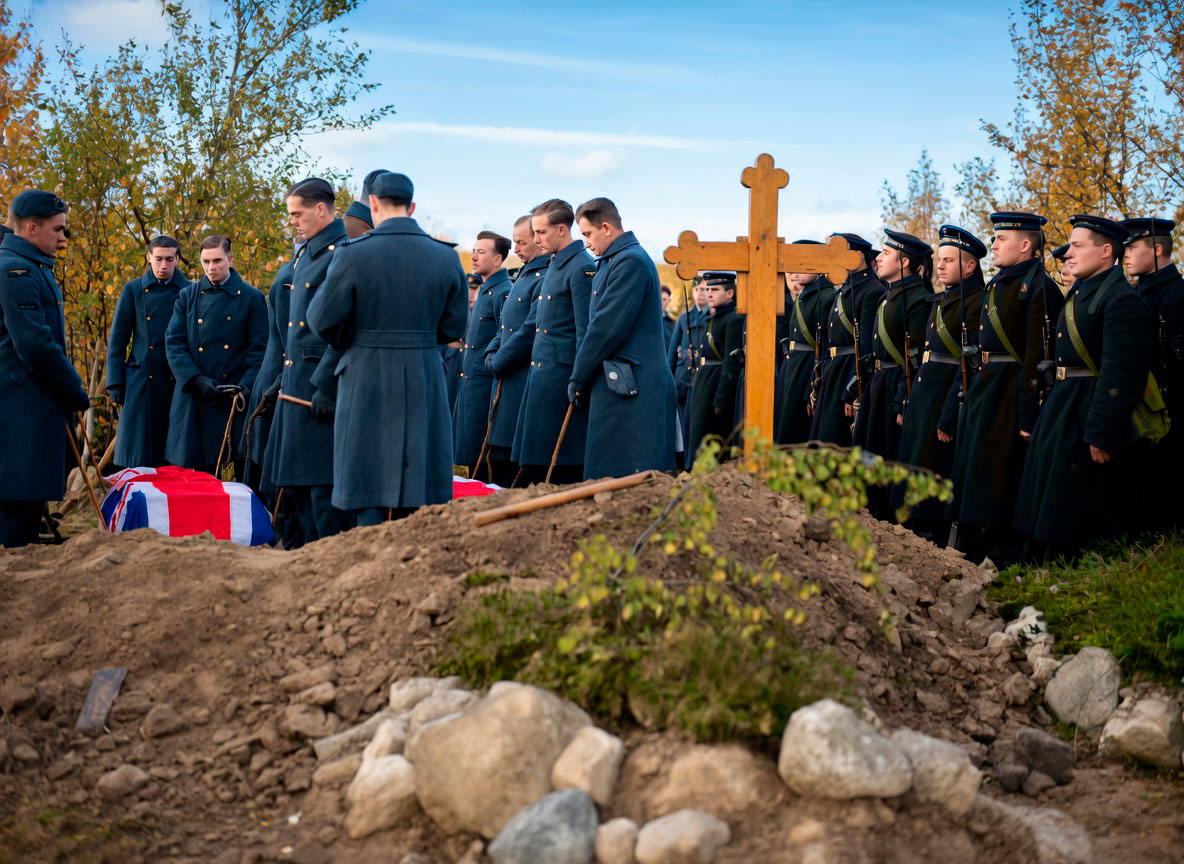
The Burial of British Servicemen on Soviet Soil
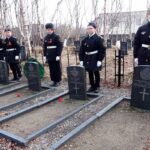
The technicians were buried beside the pilot Smith. After Operation Benedict ended and No. 151 Wing returned home, the joint struggle against Nazi Germany continued. British Lancaster bombers would take off from Soviet airfields to strike German ships. In September 1944, they severely damaged the German battleship Tirpitz — the ‘King of the Oceans’, which had terrorised Allied shipping and the Arctic convoys. Tirpitz was laid up for repairs and finally destroyed by the British in November 1944.
British convoys continued to deliver military supplies to the USSR until the end of the war, with airmen providing escort. Other British servicemen were subsequently buried alongside the fallen members of No. 151 Wing. Today, five Britons, one Canadian and two other servicemen whose names could not be established lie buried in Severomorsk. In the Soviet Arctic, they gave their young lives ‘for their friends’, in accordance with Christ’s commandment. The British heroes are therefore not only honoured in Russia, but also commemorated among the defenders of the Arctic in a specially built chapel dedicated to Alexander Nevsky and Dmitry Donskoy. The chapel and the graves of the British servicemen can be visited at the Northern Fleet Memorial Cemetery in Severomorsk.
On 17 September 1941, the British achieved another success while protecting a formation of Soviet twin-engined Pe-2 dive bombers from German fighters.
-
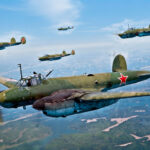
- Soviet Pe-2 dive bombers
-
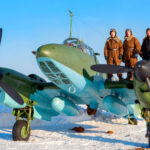
- The crew of a Pe-2 dive bomber
-
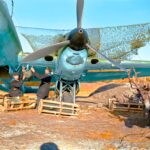
- Bombs delivered by reindeer being loaded onto a Pe-2
-
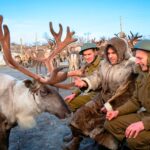
- A reindeer herder tells the British servicemen about his reindeer
The commander of No. 81 Squadron, Anthony Rook, was leading a formation of seven Hurricanes when he spotted two German Messerschmitt Bf 109 fighters preparing to attack the Pe-2 bombers. Rook engaged one of them and fired a short burst that struck the Bf 109’s radiator. The German fighter nevertheless continued to fight. Rook expended all his ammunition and broke off, leaving Sergeant Sims and Sergeant Anson to finish it off. Bursts from their Hurricanes tore the Bf 109 apart, sending it crashing to the ground. Charlton Haw, avenging his fallen friend Smith, shot down the second Bf 109. Six more German fighters then appeared. However, after the pilot Bush shot one of them down, the remaining Bf 109s used their superior speed to break off the engagement. Three victories without loss — a triumph for No. 81 Squadron!
On 26 September, 12 Hurricanes from No. 81 Squadron escorted four Soviet bombers during a raid on Petsamo. A group of German Messerschmitt Bf 109 fighters attempted to disrupt the raid. The Hurricanes immediately went on the attack to protect the Soviet bombers. Sergeant Vic Reed was the first to hit a German fighter in a head-on attack, sending the blazing Bf 109 crashing to the ground. Basil Martin Bush’s Hurricane was attacked by two Bf 109s, but John MacLean Edmiston and Arthur Holmes saved Bush by destroying both German fighters with accurate fire.
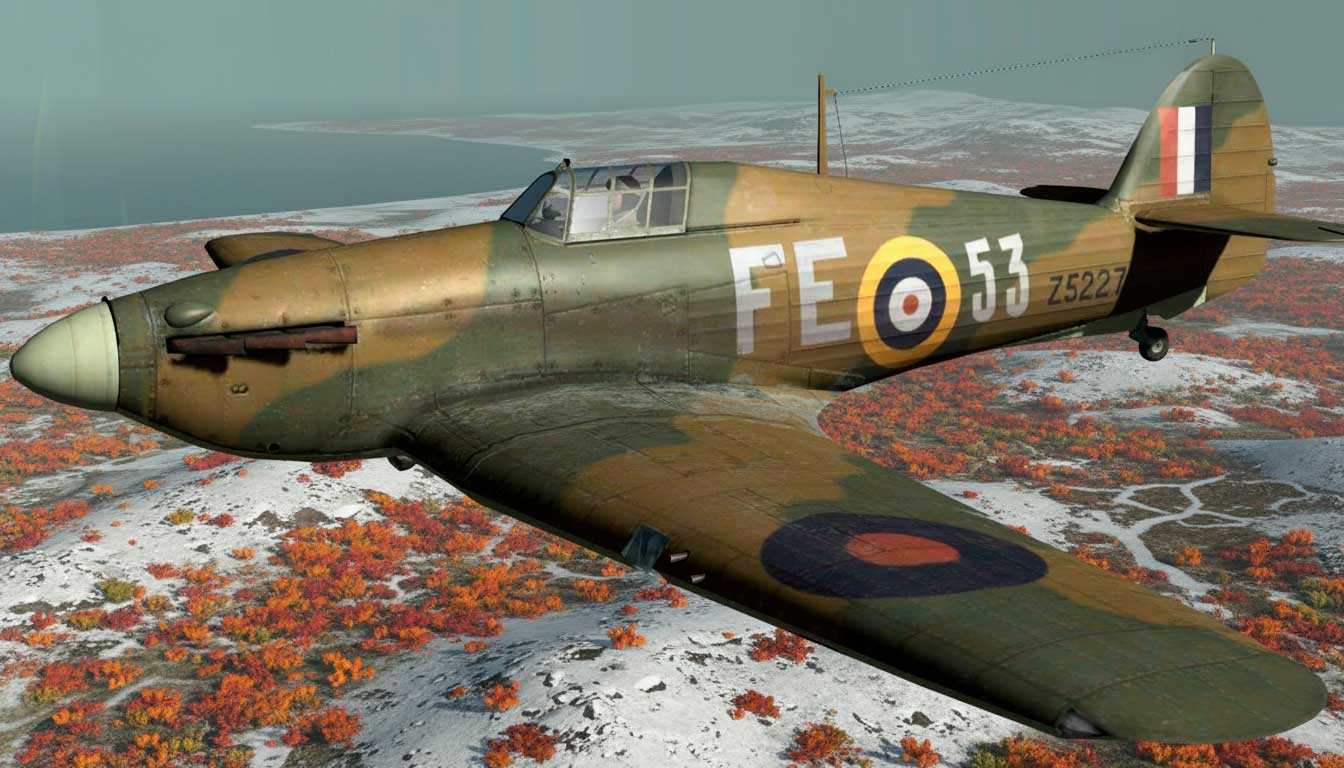
The Hurricane flown by John Edmiston, whose call sign was “Scottie”
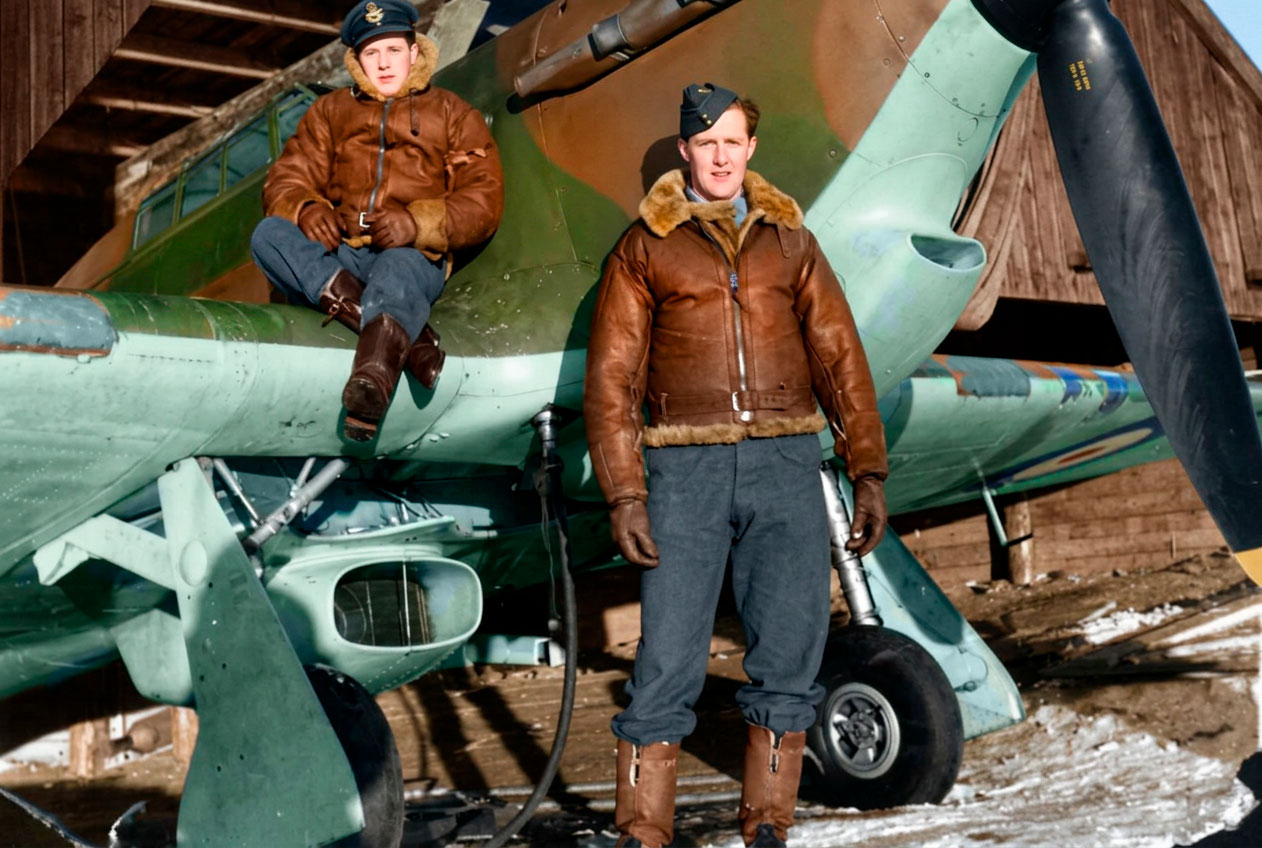
John Edmiston on the left, with pilot Sheldon on the right
The following day, during another operation escorting Soviet Pe-2 dive bombers and Pe-2FT heavy bombers, the British once again successfully protected the Russians from the Germans. In the ensuing air battle, Howe claimed his third victory and Edmiston his second.
27 September 1941 was marred by the deaths of the British technicians Ridley and Thomas, who were unable to jump clear of the aircraft’s tail in time, but it also brought a victory for Michael Rook, the tallest pilot in the Royal Air Force at 199 cm and a cousin of No. 81 Squadron’s commanding officer, Anthony Rook. That day, Michael Rook shot down a German Messerschmitt Bf 109 fighter.
Between combat sorties, the British trained Soviet pilots. Despite his busy schedule, General Kuznetsov, commander of the Northern Fleet's air arm, was the first to undergo training. He became the first Soviet pilot to take off in a Hurricane, on 25 September 1941. Kuznetsov's instructor was 27-year-old Basil Bush, who had already shot down Messerschmitt Bf 110 and Bf 109 aircraft.
-
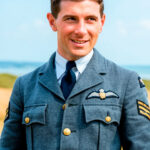
- Flight Lieutenant Basil Bush
-
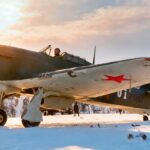
- Red stars were painted on Kuznetsov’s Hurricane in place of the British markings
The Soviet pilots thought they would have no difficulty mastering the foreign aircraft. However, the Hurricane was not the best aircraft and had its shortcomings, which took some getting used to. Even Safonov damaged the flaps during one landing.
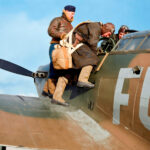
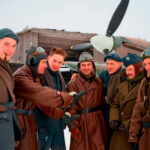
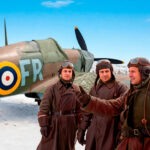
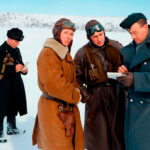
The British airmen were astonished by the bravery of the Soviet pilots, who flew even during severe snowstorms. Pilot Carter later wrote: “Safonov was the same — he seemed completely fearless. He was either very, very good, or he was… mad!”
-
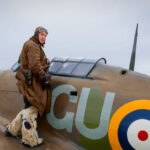
- Boris Safonov in a Hurricane
-
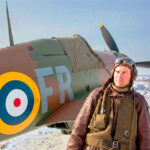
- Captain Vasily Petrovich Rodin, Deputy Commander of the 2nd Fighter Squadron, 78th Aviation Regiment, Northern Fleet Air Force, beside Anthony Rook’s Hurricane
At the same time, the Soviet command also noted the bravery of the British: “They came here to fight, and they fight like true soldiers — selflessly and with discipline. Once they get into battle, they fight alongside the Soviet eagles as equals!”
Every Soviet bomber escorted by British fighters always returned home without loss. The bomber pilots were so pleased with the British that, during combat sorties, they felt so completely safe that they did not even look around.
During the Soviet pilots’ training, the British got to know them better and began holding parties together.
Pilot Ray Holmes described one of these parties as follows: ‘The Russians drink in their own way. They pour an inch of neat vodka into a glass (no water!), click their heels, raise the glass to you with the toast “Za zda-ro-vye”, drain it and fill it again. If you merely take a sip or drink only half, you are a weakling. This offends them, and they walk away.’
The consequences of the party described by Holmes were serious. Those British servicemen who managed to leave early crawled back to their quarters unaided. The Russians carried the rest back themselves.
The weather showed no sign of improving, so the British decided to hold a return party. The Soviet servicemen arrived by bus. They were served whisky diluted with water. The festivities did not get going until one of the hosts decided to play a joke: he filled all the water containers used to dilute the whisky with gin. In the end, they managed to get the Russians drunk. At the end of the evening, the British pushed the Soviet servicemen through one door of the bus and caught them as they fell out of the other. Everyone had a good time, Holmes wrote.
When the severe cold set in, the British began wearing Russian sheepskin coats, ushanka hats and felt boots.
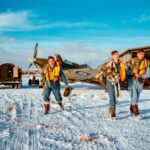
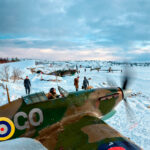
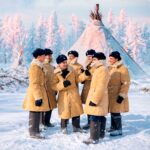
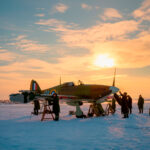
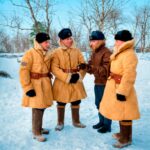
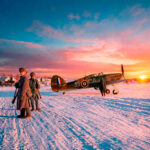
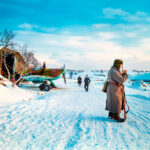
The Soviet servicemen were quick learners. The Russian mechanics were examined by Gittins, the British engineer responsible for maintaining the Hurricanes, who set extremely exacting standards. They had studied the British aircraft for only a few weeks, working through an interpreter. Despite the short training period, the Soviet technicians grasped everything remarkably quickly. In the end, they passed the examination with a score of 80%—an unprecedented result in Britain after such a short training period.
On 6 October, the sky cleared sufficiently for flying to resume for the first time in a week. Taking advantage of the fine weather, the Germans decided to destroy the British aircraft at the airfield in Vaenga. They sent a force of 14 Junkers Ju 88 bombers from a northern base in Norway. However, the German escort fighters had not yet arrived when the bombing of Vaenga airfield began, so the Ju 88s had to operate without fighter cover.
The British pilots of No. 134 Squadron launched an attack on the German bombers. Neil Cameron attacked the leading Ju 88, firing a long burst from below and behind the aircraft. The German bomber’s starboard engine caught fire, and Cameron turned sharply and opened fire on a second bomber, but without effect. Cameron then gained speed and made a head-on attack on a third Ju 88, setting both engines ablaze. Cameron’s wingman, Rex Furneaux, set fire to the port engine of another Ju 88 after several attacks. Hook set its starboard engine ablaze, and the burning German bomber plunged towards the ground. A. J. Gould also damaged another Ju 88.
Another group of British pilots managed to take off only after the bombing of their airfield had begun. Tim Elkington trained his sights on the tail of a Ju 88 heading back towards Norway and fired two long bursts. Pieces were torn from the German bomber’s tail. At that moment, Barnes opened fire on its starboard engine. The German bomber’s gunner forced Barnes to break off his attack, but the gunner was killed during the third attack, and the smoking bomber disappeared from the view of Elkington and Barnes.
No. 81 Squadron also inflicted damage on the enemy bombers. Sergeant C. Bishop, together with two other Hurricanes, shot down another Ju 88. Alan McGregor and Jimmy Walker each set a bomber on fire, but the Germans managed to feign a dive and evade pursuit.
The German bombers hurriedly dropped their bombs and turned back. The British gave chase. During this engagement, the commander of No. 81 Squadron, Squadron Leader Anthony Rook, became so engrossed in the pursuit that he broke away from his comrades. He then encountered a group of five German fighters that had arrived too late to escort their bombers. Rook shot down one of them, but stood no chance against the other four. Suddenly, however, the Germans vanished as if swept away by the wind. MiGs led by Captain Kukhorenko had emerged from the clouds to assist Rook. Kukhorenko would later receive a British award.
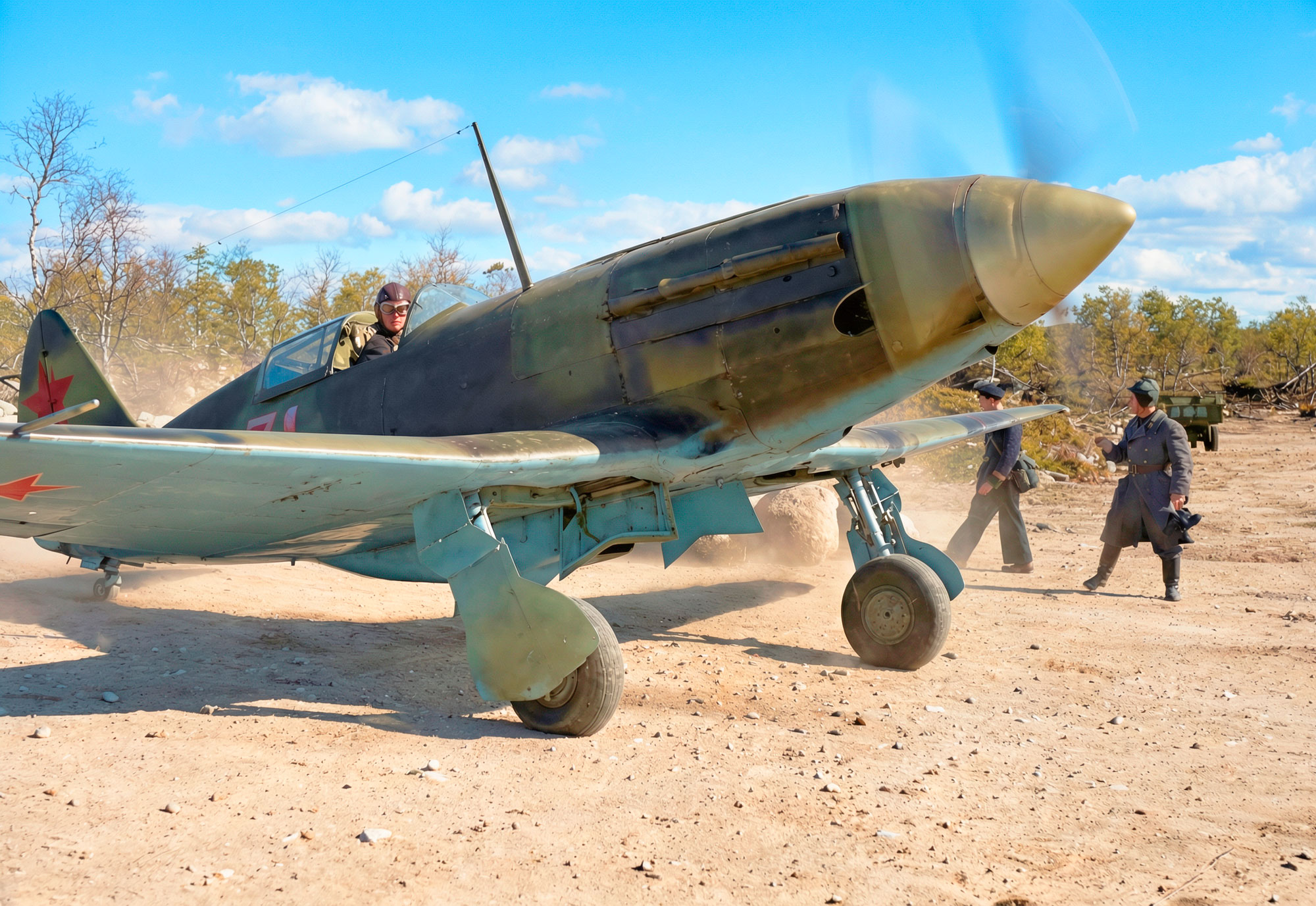
Soviet MiG-3 Interceptor in the Soviet Arctic
In total, the pilots of No. 151 Wing were confirmed to have destroyed one fighter and two bombers; they probably shot down another three aircraft and damaged six. British losses amounted to four Hurricanes damaged in the bombing and one wounded ground crewman. This gave rise to lively discussion that night.
On 8 October 1941, No. 151 Wing flew its final combat sortie.
The British fought in the skies over the Soviet Arctic only from 12 September to 8 October — less than a month. Yet during this brief mission, they shot down 15 German aircraft. British combat losses amounted to just one Hurricane, flown by Norman Smith.
-
- One of the Last Sorties of the British 151 Wing
-
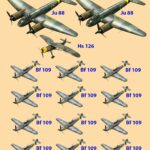
- 2 Junkers Ju 88 Bombers, a Henschel Hs 126 Reconnaissance Aircraft and 12 Messerschmitt Bf 109 Fighters Shot Down by the British in Less Than a Month of Combat
Comparing the victories achieved by Boris Safonov and the British pilots raises the question of why Safonov shot down more bombers, while the British destroyed more fighters. This was because they had different missions. The primary task of the fighters under Safonov’s command was to destroy the enemy bombers advancing on Murmansk. The British pilots’ main task was to protect Soviet bombers from German fighters. They accomplished this mission successfully, protecting ALL the Soviet bombers while shooting down many German fighters.
Both the Soviet I-16 fighter and the British Hurricane were armed only with machine guns, which made it very difficult to shoot down large, robust aircraft such as bombers. Boris Safonov therefore devised a tactic of killing the bomber’s gunners and pilots, after which the aircraft would crash. The British took a different approach. During the Battle of Britain, they supported one another by concentrating their machine-gun fire and attempting to set both engines of a bomber alight. With their engines burning, German bombers had no chance of making it back: they either made forced landings in England, where their crews were captured, or crashed into the sea. A damaged bomber could not fly back across the English Channel with both engines on fire. The British also used this tactic of firing at the engines of German bombers in the Soviet Arctic. Here, however, there was no English Channel, and damaged German bombers merely had to cross the front line to reach safety. They therefore often managed to reach their own airfields in Norway or Finland. Moreover, pilots of damaged German aircraft often managed to extinguish the flames by diving sharply and, in any event, disappeared from the view of the fighters attacking them. During the British pilots’ final engagement in the Soviet Arctic, they set the engines of 11 German bombers alight, but only two of these crashed and burnt out on Soviet territory. The other nine burning aircraft simply disappeared from the British pilots’ view. According to German records, they returned to base.
The official handover of the 36 surviving Hurricanes of No. 151 Wing, Royal Air Force, to Soviet pilots of the Northern Fleet took place on 22 October 1941. The Hurricanes were assigned to the 78th Fighter Aviation Regiment under the command of Hero of the Soviet Union Boris Safonov.
The white Soviet and black British serial numbers were retained on the aircraft, while the identification markings and squadron code letters were painted over in green and red stars were applied.

On the left is Sergeant Crewe’s Hurricane; on the right is the same aircraft after it was handed over to Lieutenant D. F. Amosov.
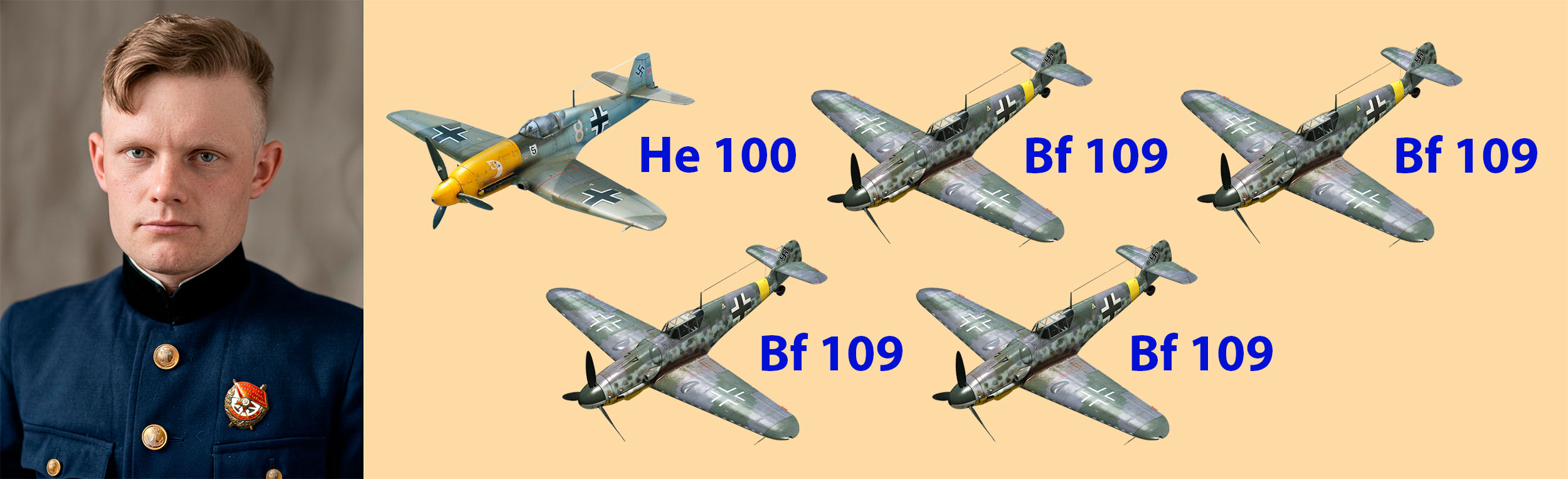
Dmitry Fyodorovich Amosov and the five German fighters he shot down in a Hurricane, including the rare Heinkel He 100 fighter, which was presented in the Soviet Union as the He 113
On 23 October, a party was held for the British to mark the end of the operation. According to eyewitnesses, the whisky and gin flowed freely.
On 25 October, Soviet pilots flying Hurricanes attacked 15 Ju 88s that were bombing Soviet troop positions. That day, Senior Lieutenant Daniil Sinev became the first Soviet pilot to shoot down a German aircraft in a Hurricane.
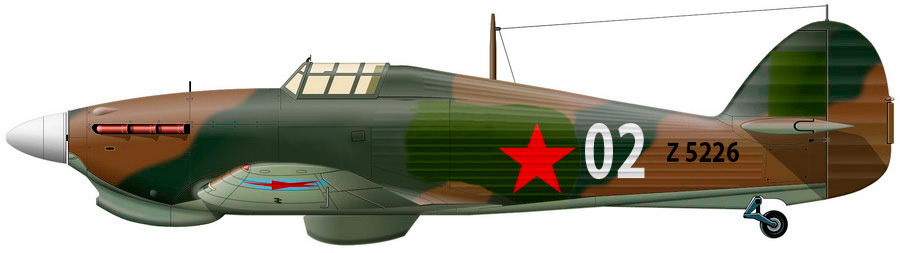
Daniil Sinev’s Hurricane, bearing the Soviet number 02
On 24 November, most of the British departed Murmansk for home. The icebreaker Lenin led the convoy, while 12 Hurricanes under the command of Hero of the Soviet Union Boris Safonov provided air cover. By that time, the personal tally of the leading Soviet ace had increased by a further five aircraft, shot down in a Soviet I-16 fighter. Safonov would shoot down German aircraft in a Hurricane after the onset of the polar night: a Messerschmitt Bf 109 fighter on 17 December 1941 and a Heinkel He 111 bomber on 31 December.
-
- Boris Safonov beside a Hurricane
-
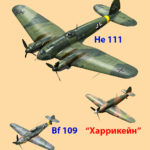
- German Aircraft Shot Down by Safonov in a Hurricane
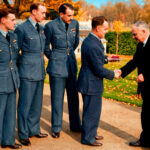
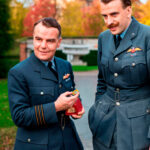
Following Operation Benedict, on 27 November 1941 the Soviet Union decided to award four British pilots the Order of Lenin, a high Soviet decoration. They were Colonel Henry Neville Gynes Ramsbottom-Isherwood, commander of No. 151 Wing; Anthony Rook and Anthony Miller, commanders of its two squadrons; and Charlton Haw, the pilot credited with the highest number of enemy aircraft shot down.
-
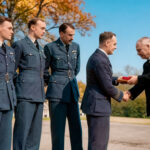
- Charlton Haw, Anthony Miller, Anthony Rook and Henry Neville Gynes Ramsbottom-Isherwood Being Decorated by the Soviet Ambassador
-
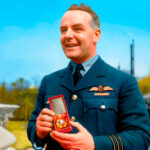
- Colonel Henry Neville Gynes Ramsbottom-Isherwood, commander of No. 151 Wing, displays his Order of Lenin
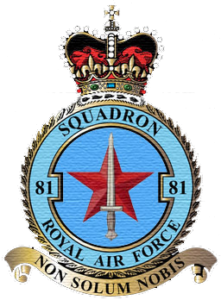
The last participants in Operation Benedict left the Soviet Union in December 1941. The mission undertaken by the pilots of No. 151 Wing received extensive press coverage. A red star bearing the motto “Not for ourselves alone” (Non solum nobis) was added to the emblem of No. 81 Squadron, while a red iron gauntlet was added to that of No. 134 Squadron.
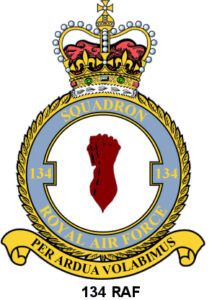
Operation Benedict may appear to have been of little significance, but it marked the beginning of cooperation between the Soviet and British air forces.
Following Daniil Sinev’s success, other Soviet pilots also began shooting down enemy aircraft in Hurricanes. Senior Lieutenant Viktor Alagurov likewise shot down a bomber; Lieutenant Vasily Kravchenko downed a Ju 52 transport aircraft carrying a sabotage group; and Sergeant Major Pyotr Semenenko shot down a Bf 109 fighter.
-
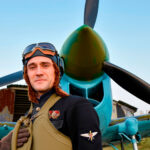
- Viktor Nikiforovich Alagurov shot down three aircraft individually and eight as part of a group
-
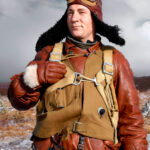
- Pyotr Makarovich Semenenko shot down ten aircraft in an I-16 and one in a Hurricane
-
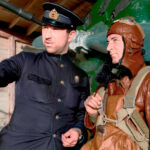
- Battalion Commissar P. A. Redkov talks with Petro Semenenko
-
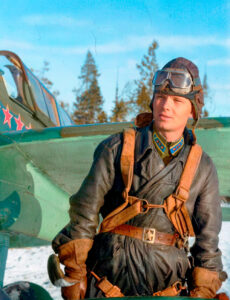
- A Soviet Northern Fleet aviation pilot in the Soviet Arctic
Alexei Ignatyevich Nikolayenkov achieved the greatest number of victories in a Hurricane: 12. Over the course of more than 30 engagements, he would shoot down a total of 30 enemy aircraft — 8 individually and 22 shared — for which he would be awarded the Gold Star of Hero of the Soviet Union. He was only 23 years old when he was killed.
-
- Alexei Ignatievich Nikolaenkov beside an aircraft in February 1942
-
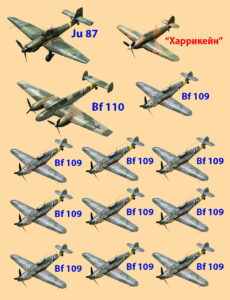
- Enemy aircraft shot down by Nikolaenkov while flying a Hurricane: one Ju 87 individually and a further 11 jointly
Pyotr Georgievich Sbignev was one of the Soviet pilots who each achieved 11 victories flying the Hurricane. His victories included aircraft that were particularly difficult to shoot down: a Ju 88 bomber, three robust Ju 87 dive bombers, two Bf 110 heavy fighters and five of the famous Bf 109 fighters, which outperformed the Hurricane in key respects. Despite the Hurricane’s weak armament and modest capabilities, Sbignev achieved these remarkable successes. He even took part in an aerial engagement in which the Bf 109 of German ace Rudolf Müller was shot down. Müller had 92 victories to his name and was regarded as a specialist in shooting down Hurricanes. Müller was taken prisoner, and Sbignev’s victory became a symbol of how, in skilled hands, even a Hurricane could defeat the foremost specialist in shooting down Hurricanes! It is hardly surprising that Pyotr Georgievich Sbignev was awarded the Gold Star of Hero of the Soviet Union and Britain’s highest decoration for pilots, the Distinguished Flying Cross. He achieved 20 victories in total. Had he not died in an air crash on 3 May 1943, Pyotr Sbignev’s final tally might have been very different. He was only 22 years old at the time of his death.
-
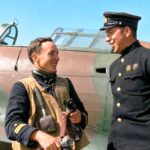
- Petr Zbignev with Battalion Commissar P. A. Redkov
-
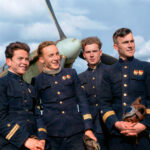
- Petr Zbignev with his comrades-in-arms
-
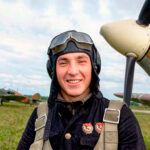
- In 38 engagements, Petr Zbignev shot down 16 aircraft individually and four jointly
-
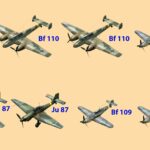
- German aircraft shot down by Pyotr Sbignev in a Hurricane
Nikolai Gerasimovich Golodnikov also achieved his first victory flying a Hurricane. He witnessed his commander, Alexander Andreyevich Kovalenko, attack a German Ju 87 dive bomber by putting his Hurricane into an almost vertical attitude and, while side-slipping downwards, firing all twelve machine guns in a burst that literally severed the German aircraft’s tail.
Amet-Khan Sultan, the future two-time Hero of the Soviet Union, performed the most extraordinary feat in a Hurricane. When Amet-Khan ran out of ammunition, he rammed a German Ju 88 bomber. His Hurricane became lodged in the bomber after the collision, but the Soviet hero managed to escape from his aircraft and parachute to safety. This aerial ramming brought the future ace his first victory, achieved in a British Hurricane.
-
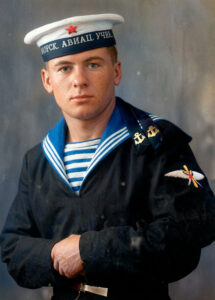
- Nikolai Gerasimovich Golodnikov personally shot down five aircraft in 15 engagements
-
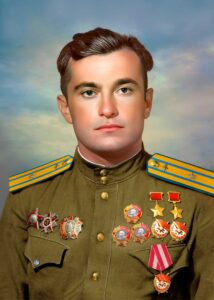
- By the end of the war, Amet-Khan Sultan would have achieved 49 victories in 150 engagements (30 individual and 19 shared)
In March 1942, Major Boris Safonov and Captains Alexander Kovalenko, Alexei Kukharenko and Ivan Tumanov were awarded Britain’s highest aviation decoration, the Distinguished Flying Cross.
-
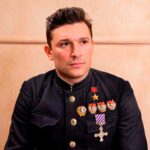
- Boris Feoktistovich Safonov shot down 20 aircraft individually and five jointly in 34 engagements
-
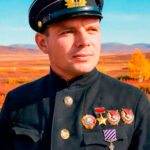
- Alexander Andreyevich Kovalenko shot down 14 aircraft individually and six jointly in 38 engagements
-
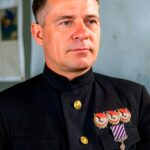
- Alexei Nikitovich Kukharenko shot down 18 aircraft
-
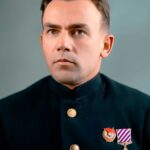
- Ivan Konstantinovich Tumanov was credited with one individual victory and three shared victories. He credited the other aircraft he shot down to the pilots under his command
Throughout the war, Soviet pilots and mechanics who had been trained by the British passed on their experience of working with Hurricanes to their younger colleagues. A total of 2,952 Hurricanes were supplied to the USSR, including Mk.IIB and Mk.IIC variants and a number of Mk.IIDs. Unlike the American aircraft that would soon be supplied to the USSR free of charge under the Lend-Lease programme, the British aircraft had to be paid for in gold. Aware of this, the Germans even managed to sink the British light cruiser Edinburgh, which was carrying 5.5 tonnes of gold from Murmansk: 465 bars packed in 93 crates. Despite being paid for in gold, around 10% of the Hurricanes supplied to the USSR had already seen service with the Royal Air Force. This was particularly true of deliveries during the critical period for our country in late 1941 and early 1942, when the British were simply unable to build large numbers of new Hurricanes quickly enough and therefore handed over some of the aircraft they had already flown themselves.
The British aircraft was noted for its simplicity and durability. It had a robust truss-frame construction that was easy to repair under field conditions. Shells often passed straight through the fabric covering of the rear fuselage without detonating.
Unlike the latest British Spitfire or the German Messerschmitt Bf 109, the Hurricane had a wide-track undercarriage, making it very stable during take-off and landing and allowing it to operate from poorly prepared grass airfields. It also had significant advantages over the I-16: every aircraft was equipped with a high-quality two-way radio, while the spacious cockpit offered good visibility, making the pilot’s job easier.
Unlike Soviet fighters, the Hurricane had… a wooden propeller! After sustaining any damage, however minor, it could not be repaired. Propellers failed in large numbers: they broke when aircraft overturned on landing, cracked when struck by bullets and suffered severe damage from small stones drawn up from the unpaved airfields from which Hurricanes so often had to take off. As a result, up to half of the Hurricanes were grounded while awaiting propellers, which had to be removed from aircraft already being cannibalised for parts.
To solve this problem, production of wooden propellers for the British fighters began at a factory in Moscow in the spring of 1942.
The Hurricane was inferior to the German Bf 109 in speed and vertical manoeuvrability. Soviet pilots described it as ‘slow’ and often could not even catch German bombers. Like that of the Soviet I-16, the Hurricane’s machine-gun armament had limited penetrating power against armoured German aircraft.
Boris Safonov therefore initiated the rearmament of the British aircraft with Soviet weapons. The Hurricane's machine guns were replaced with two Soviet 20 mm ShVAK cannon and two BS heavy machine guns. As the Hurricane was used for ground-attack missions, rails for 82 mm rockets from the Il-2 ground-attack aircraft were fitted beneath its wings.
-
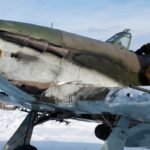
- The black barrel of a 20 mm ShVAK cannon protrudes from the Hurricane’s wing, while rails for 82 mm rockets are visible beneath it
-
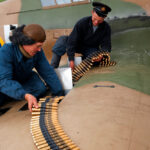
- Soviet ground crew load a belt of 20 mm ammunition for the ShVAK cannon
-
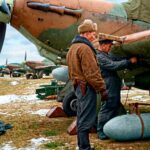
- Soviet ground crew prepare to fit an auxiliary fuel tank to a Hurricane
-
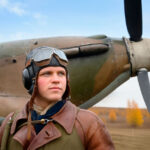
- : Kolomiyets Pyotr Leontyevich achieved three victories flying the Hurricane. In 40 engagements, he destroyed a total of 11 enemy aircraft, for which he was awarded the Gold Star of Hero of the Soviet Union
-
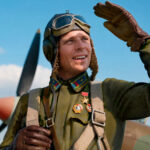
- Yefimov Matvei Andreyevich achieved 31 victories in 106 engagements (9 individually and 22 shared), for which he was awarded the Gold Star of Hero of the Soviet Union
-
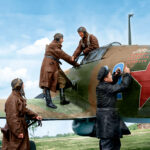
- Captain Yefimov achieved five victories flying the Hurricane
-
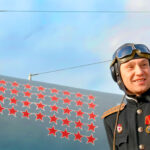
- Kostylev Georgy Dmitrievich destroyed 43 enemy aircraft in 112 engagements (10 individually and 33 shared), for which he was awarded the Gold Star of Hero of the Soviet Union
-
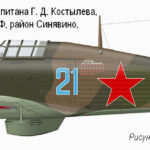
- Captain Kostylev achieved 11 victories flying the Hurricane (5 individually and 6 shared)
The Hurricane's engine required high-octane fuel and high-quality oil; when Soviet equivalents were used, its service life fell sharply. In the USSR, the Hurricane was given the unofficial Russian nickname ‘Khariton’.
-
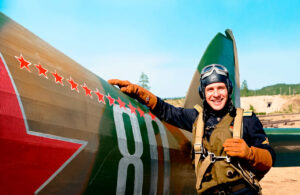
- Vasily Semyonovich Adonkin achieved 11 victories flying the Hurricane. In total, he shot down 24 enemy aircraft in 50 engagements (16 individually and 8 shared victories), for which he was awarded the Gold Star of Hero of the Soviet Union
-
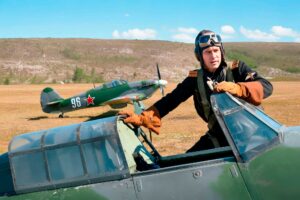
- Adonkin in his Hurricane in the summer of 1943, when grey paint and white outlines around the red stars were introduced on Soviet fighters.
The British fighter had an armoured backrest and a small armour plate at the front. Its frontal armoured windscreen saved the lives of many Soviet pilots. It was 38 mm thick and could even withstand a direct hit from a 20 mm German aircraft cannon shell.
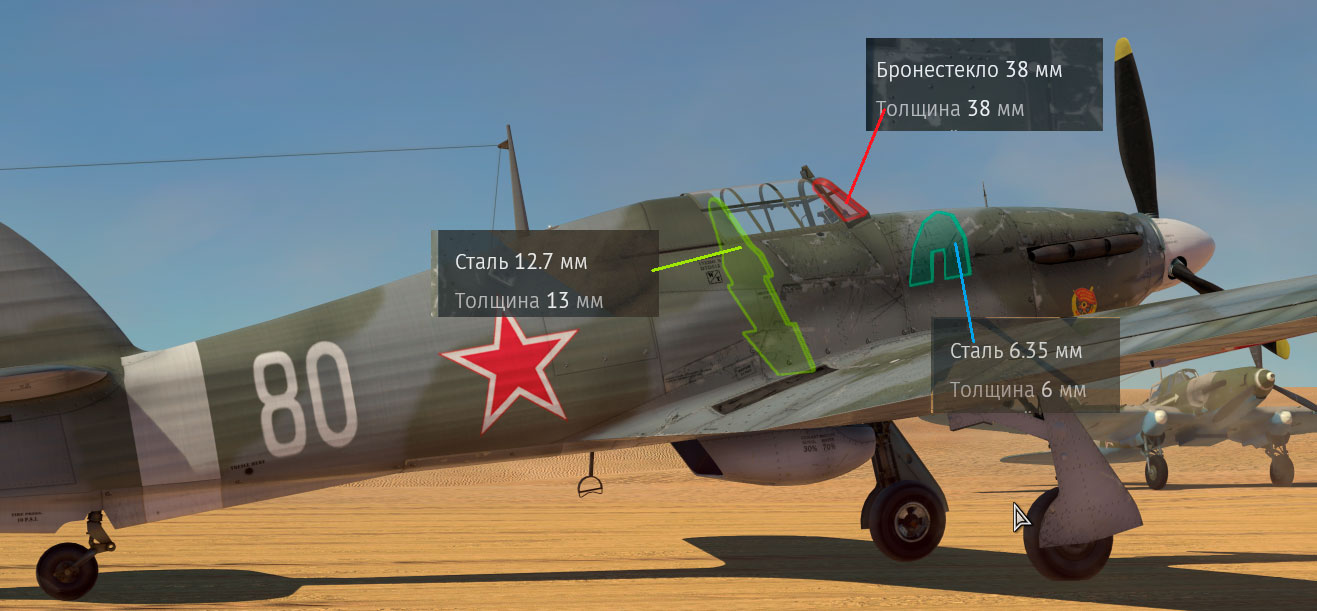
Hurricane Armour Layout
-
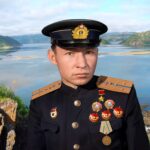
- Semyon Ivanovich Lvov shot down 11 aircraft flying the Hurricane. In total, he achieved 30 victories in 98 engagements (9 individually and 21 shared victories). Hero of the Soviet Union
-
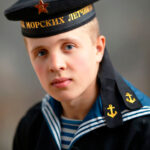
- Igor Alexandrovich Kaberov shot down 11 aircraft flying the Hurricane
-
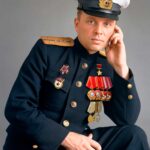
- In total, Kaberov achieved 29 victories in 92 engagements (9 individually and 20 shared victories). Hero of the Soviet Union
-
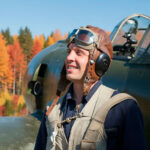
- After the Hurricane, Kaberov began flying the Soviet La-5 fighter
Although the Hurricane was already considered obsolete by 1942, it played a highly important role in the defence of Murmansk, Moscow and Stalingrad. This was the most difficult period of the war, before Soviet industry had established production of modern Yak and Lavochkin fighters. Unsurprisingly, many Soviet aces who went on to become Heroes of the Soviet Union flew Hurricanes in combat.
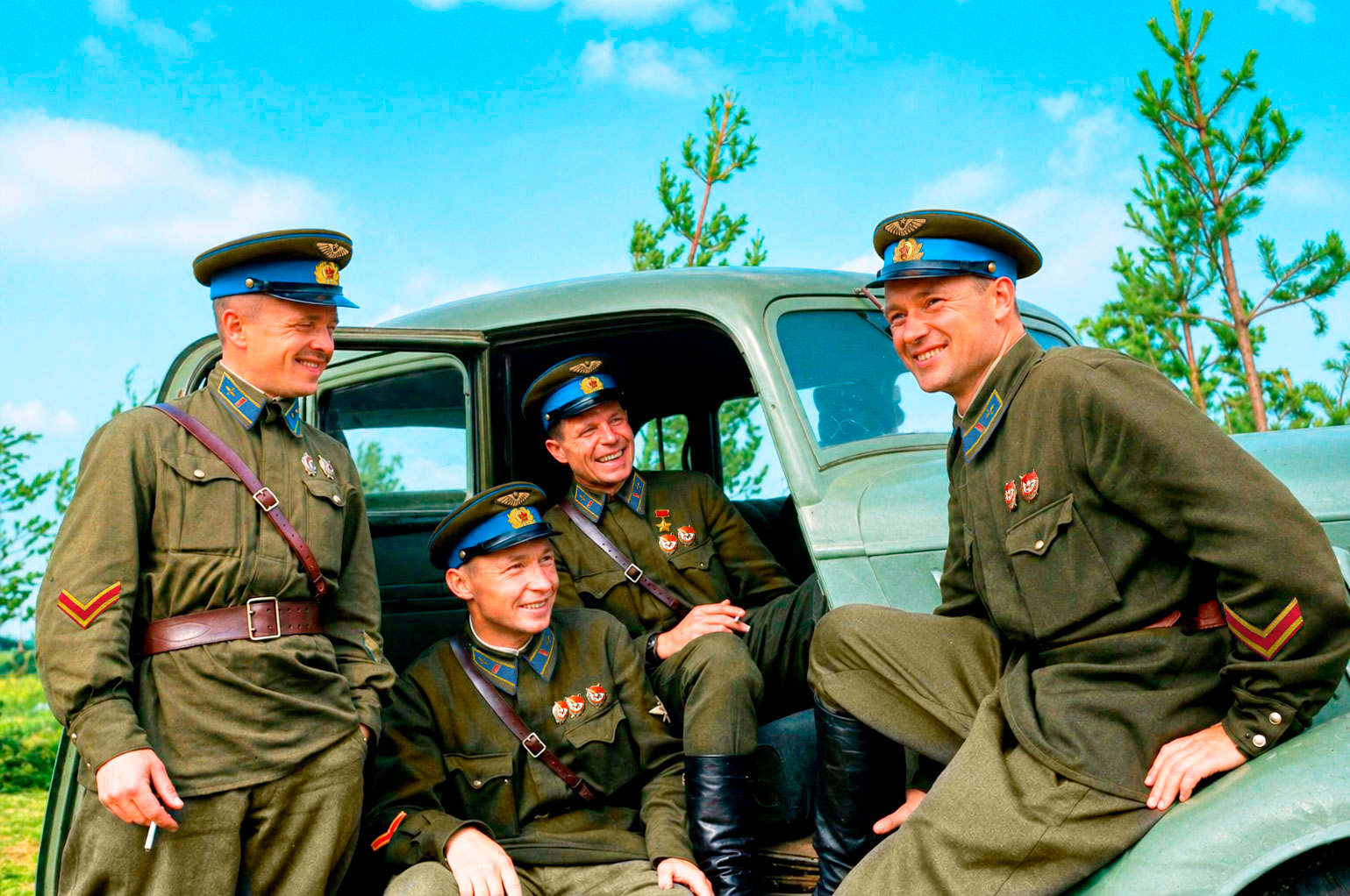
Soviet Heroes who fought in Hurricanes: I. A. Kaberov, S. I. Lvov, M. A. Yefimov and G. D. Kostylev
Overall, Soviet pilots achieved relatively few victories in Hurricanes. This was due not only to the aircraft’s poor performance, but also to the limited number of engagements in which it took part. Its peak period of widespread use as a fighter was brief—just one year, from autumn 1941 to autumn 1942. By spring 1942, it was already being replaced on a large scale by American fighters supplied free of charge under Lend-Lease. At the same time, the Hurricane was increasingly used as a ground-attack aircraft and later exclusively to train young pilots.
Nevertheless, it was with the arrival of the first Hurricanes in the USSR that British and Soviet airmen began their joint struggle against Nazism. With the onset of the Cold War, the comradeship forged in battle between British and Soviet airmen was forgotten on both sides of the Iron Curtain. It was only with the advent of Perestroika in the USSR that articles about the participants in Operation Benedict began to appear again. Nor have they been forgotten in modern Russia. In 2014, Eric Carter of No. 81 Squadron was awarded the Russian Ushakov Medal for bravery. In 2017, Valdis Pelsh made a documentary about Operation Benedict entitled “Polar Brotherhood”, which is available on various platforms:
https://m.ok.ru/video/2247907740249?__dp=y
https://vk.com/video-158285273_456239087
https://yandex.kz/video/preview/4826697308168237162
https://www.youtube.com/watch?v=NY5d-Bf4m2E
Valdis Pelsh’s film is especially moving in the scenes where British fighters fly wingtip to wingtip with our aircraft, fighting together against the Nazis. Today, the words of Churchill’s address to the British people on 22 June 1941—that Britain would give Russia and the Russian people every possible assistance in the struggle against Nazism—evoke bitterness. Yes, in 1941 Britain helped us in the struggle against Nazism. But today, it is doing everything in its power to support with money, weapons and equipment the Nazis fighting against us.
 Russian
  English