
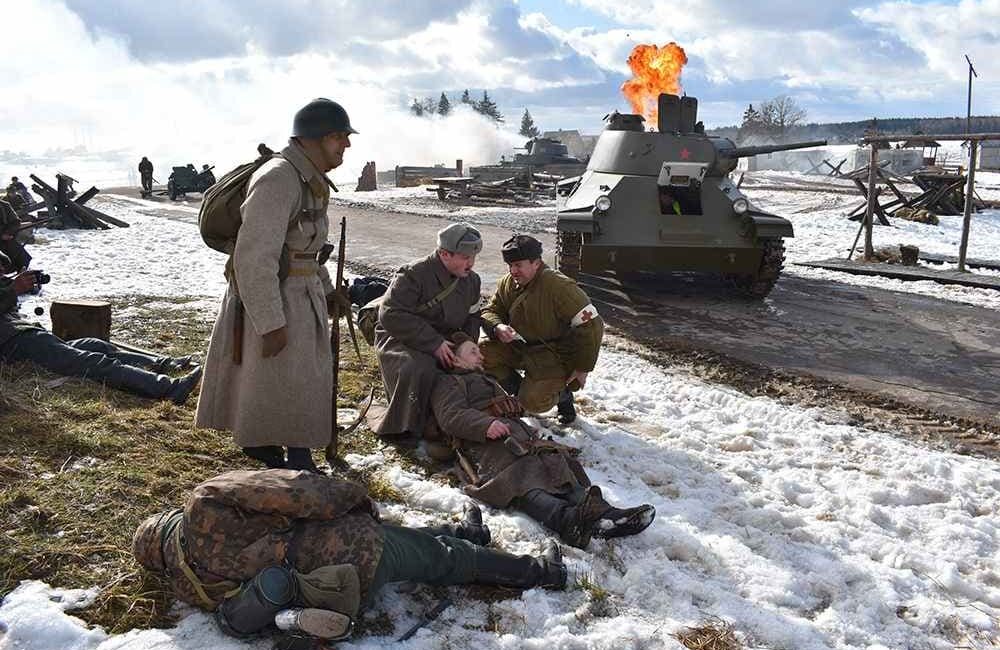
The new season officially opened at the Stalin Line Historical and Cultural Complex on 26 February.
In keeping with tradition, a ceremonial event was held to mark Defender of the Fatherland and Armed Forces of the Republic of Belarus Day. The highlight was a military-historical reenactment based on the Red Army’s Toropets–Kholm Offensive. The operation took place 80 years ago as part of the 1942 winter campaign and was one of the most successful operations during the Battle of Moscow. Troops of the 3rd and 4th Shock Armies launched an offensive, drove German Army units far back from the Soviet capital and liberated many settlements.
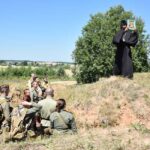
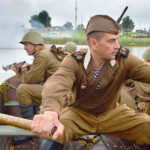
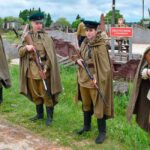
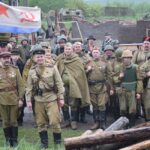
The performance on the museum’s main reenactment ground was staged for the assembled spectators by members of several Belarusian military-history clubs and servicemen of the 120th Guards Separate Mechanised Brigade of the North-Western Operational Command of the Ministry of Defence of the Republic of Belarus. They appeared in the uniforms of the Red Army and the German Army.
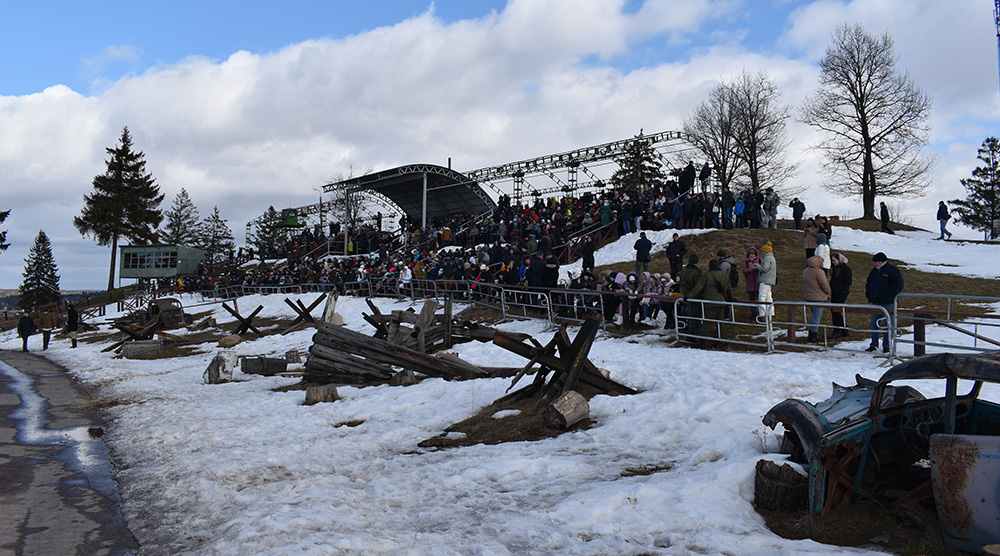
These open-air performances at the Stalin Line Historical and Cultural Complex become more interesting every year. One reason is the growing variety of military vehicles appearing on the “battlefield”. For many years, these have been created by specialists from the museum complex’s Historical Restoration Group. Over the course of their work, they have restored and produced accurate replicas of around twenty models of tracked and wheeled vehicles that took part in actual combat during the Great Patriotic War.
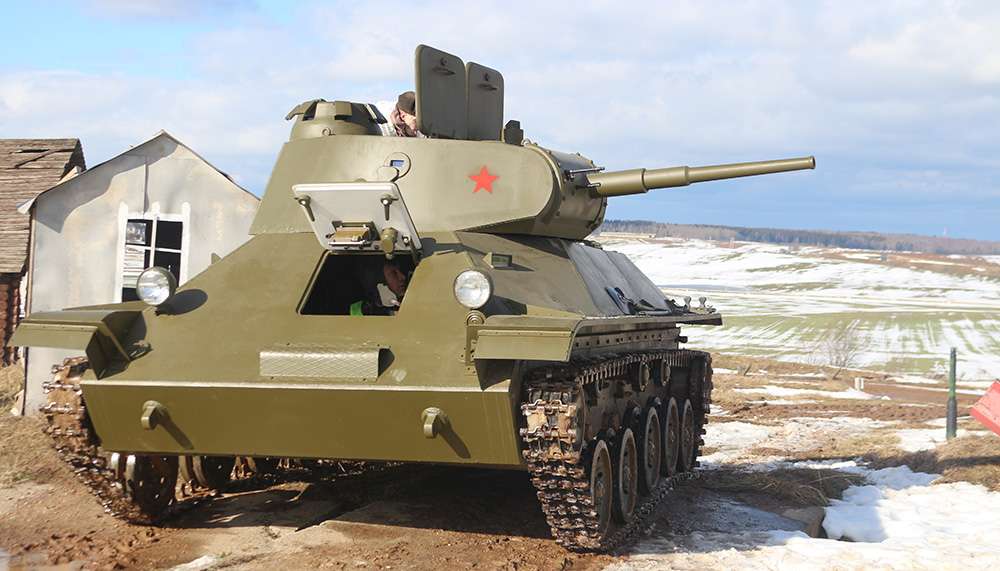
The new season opened with the appearance of another “iron” participant: an accurate replica of the Soviet T-50 light tank. It was built by the museum’s Historical Restoration Group using a BMD-1 airborne infantry fighting vehicle as its basis. The new addition is expected to enjoy a long professional career.
The newcomer was joined by other “performers” in the half-hour military-historical reenactment, which consisted of six acts.
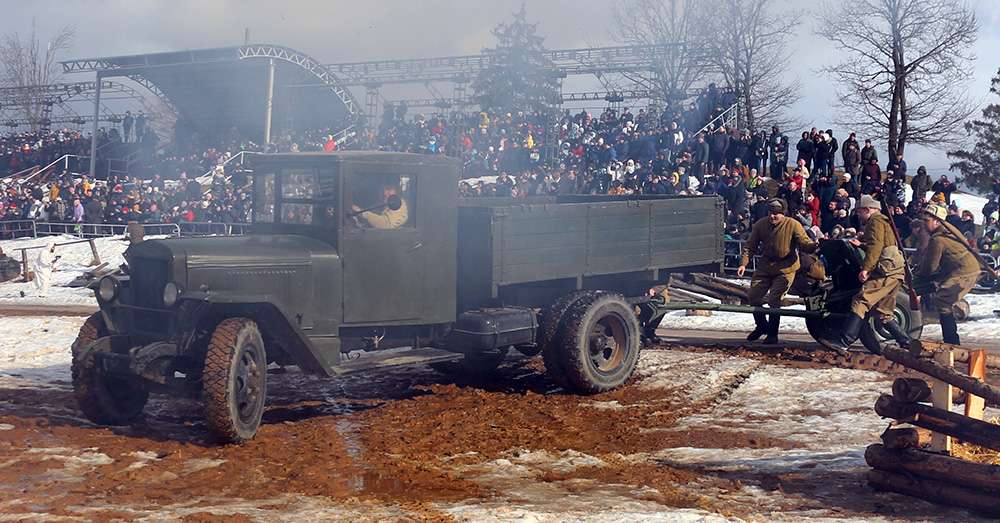
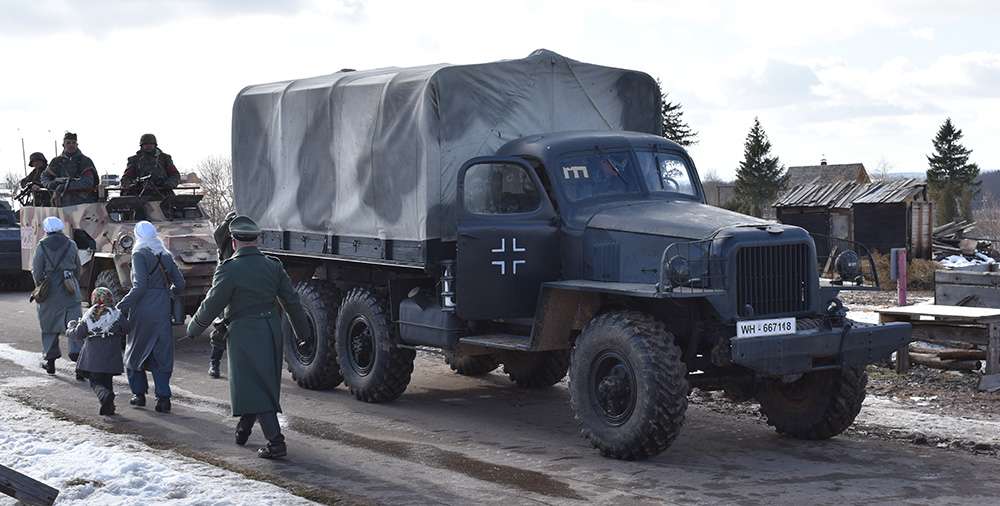
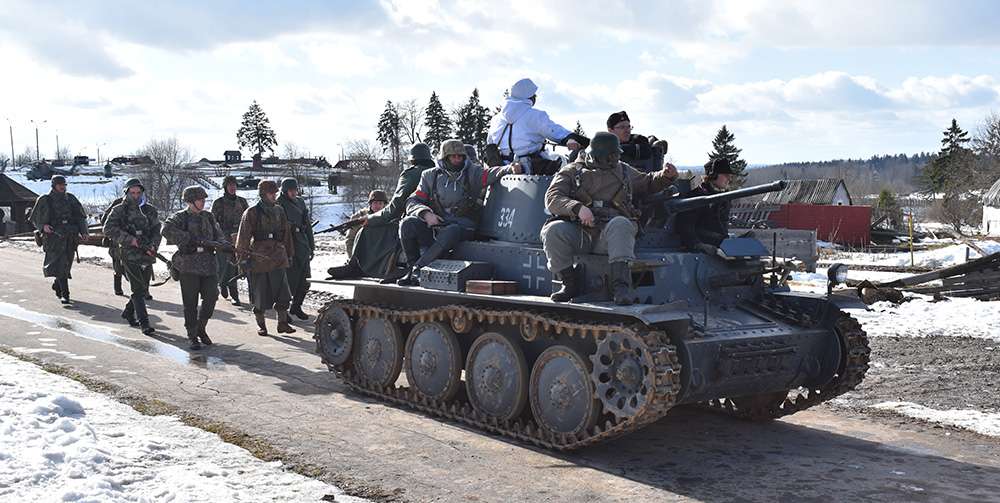
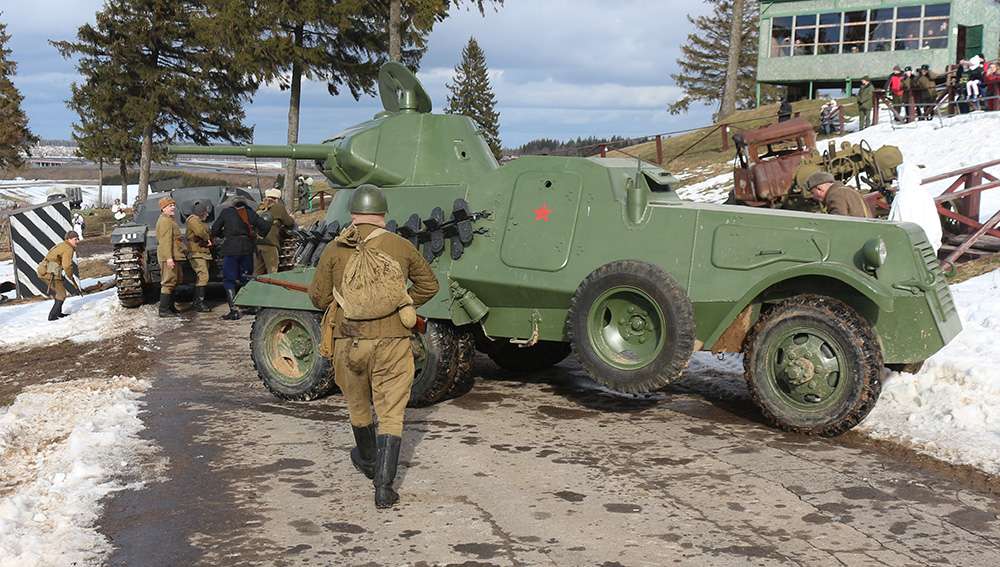
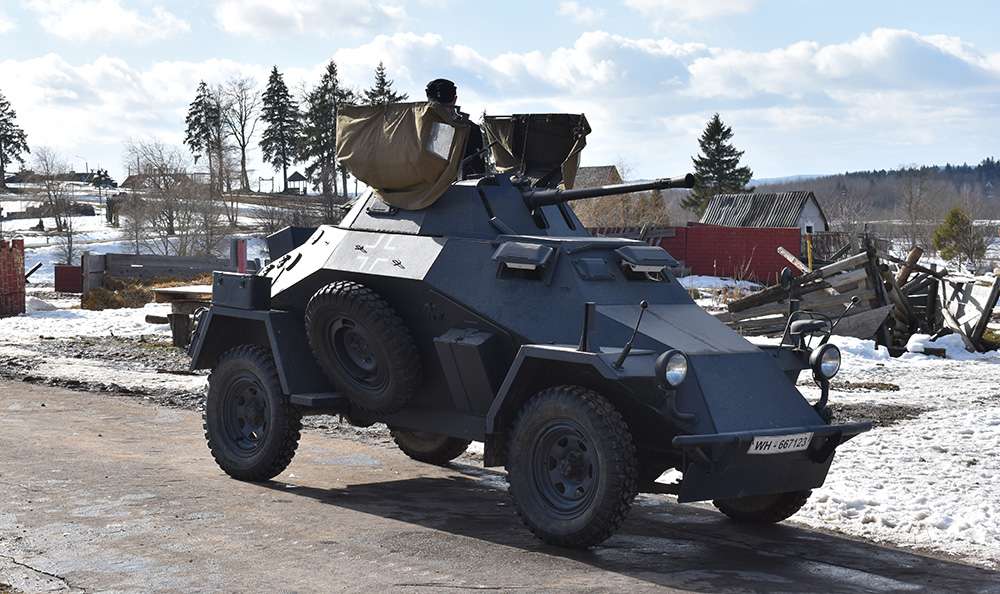
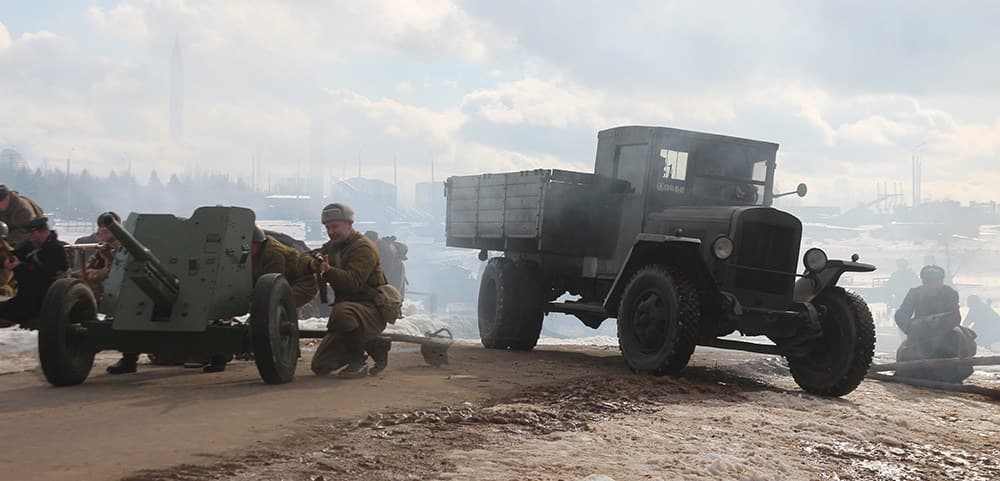
In 2005, the military donated four vehicles to the museum’s collection. One of them was a ZiS-5 lorry, which has since become a regular participant in performances.
The ZiS was joined by its younger “relative”, the ZiL-157. It has appeared in several roles, one of the main ones being a “German” vehicle of the German Wehrmacht. On this occasion, the three-axle lorry once again appeared in its familiar guise.
An accurate replica of the German PzKpfw 38 tank was unveiled on 23 February 2016. Armoured vehicles of this type were in German service during the invasion of the USSR. These tracked vehicles were manufactured in Czechoslovakia before its occupation, but it was in the German Army that they became “famous”.
The Belarusian replica was built using components and assemblies from Soviet vehicles, including GT-MU and AT-P tracked tractors. Most of the structure was made by the Historical Restoration Group’s own craftsmen.
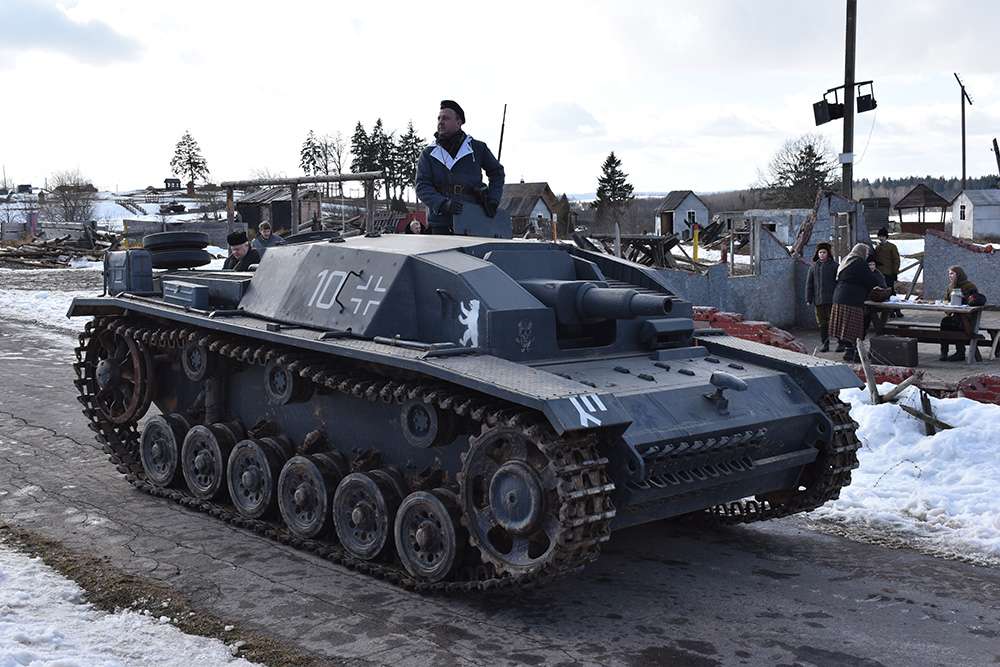
Last Saturday also saw the “youngsters” enter the “battle”: the BA-11 armoured car of the Red Army and the Sd.Kfz. 222 of the Wehrmacht. They were joined by the seasoned “performers” — a BTR-40 armoured personnel carrier, a StuG III assault gun and a BMW R-71 motorcycle, all on the “German” side.
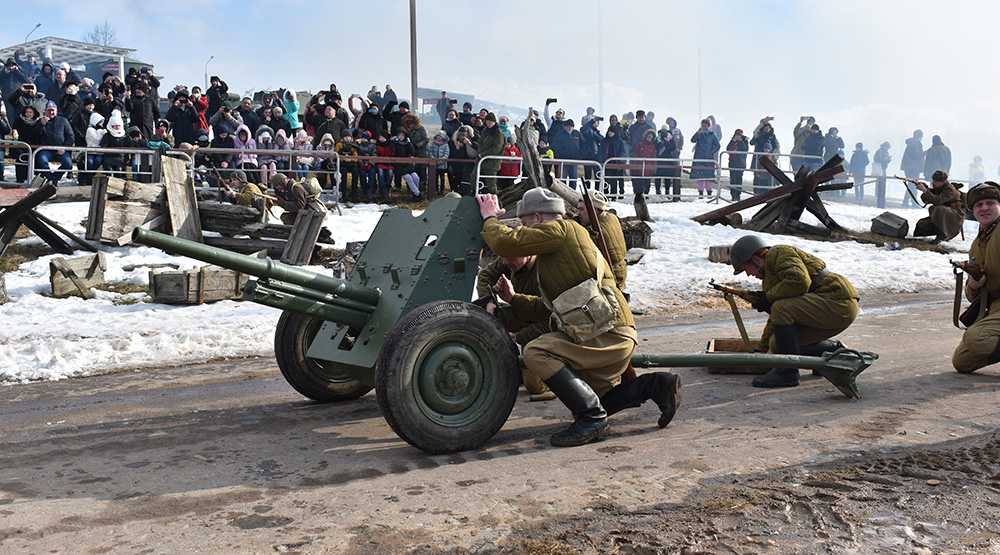
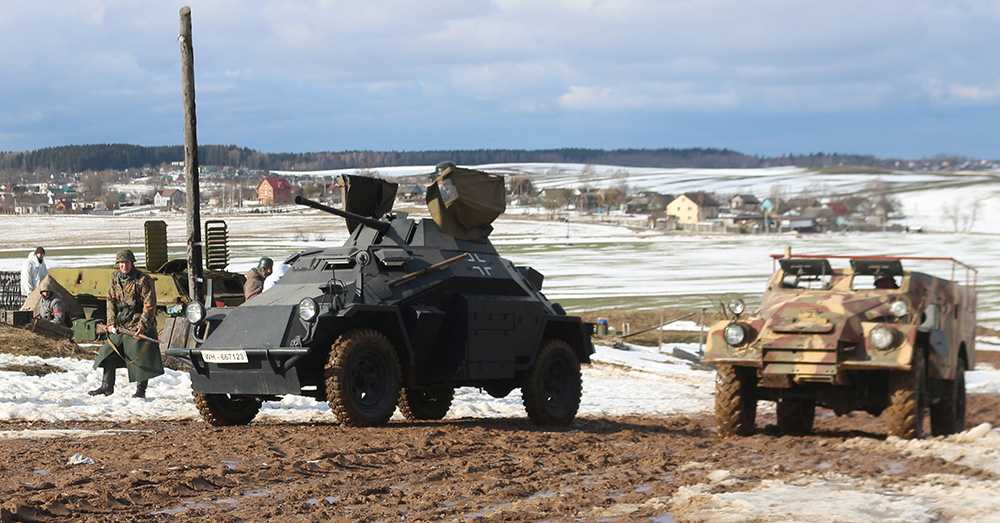
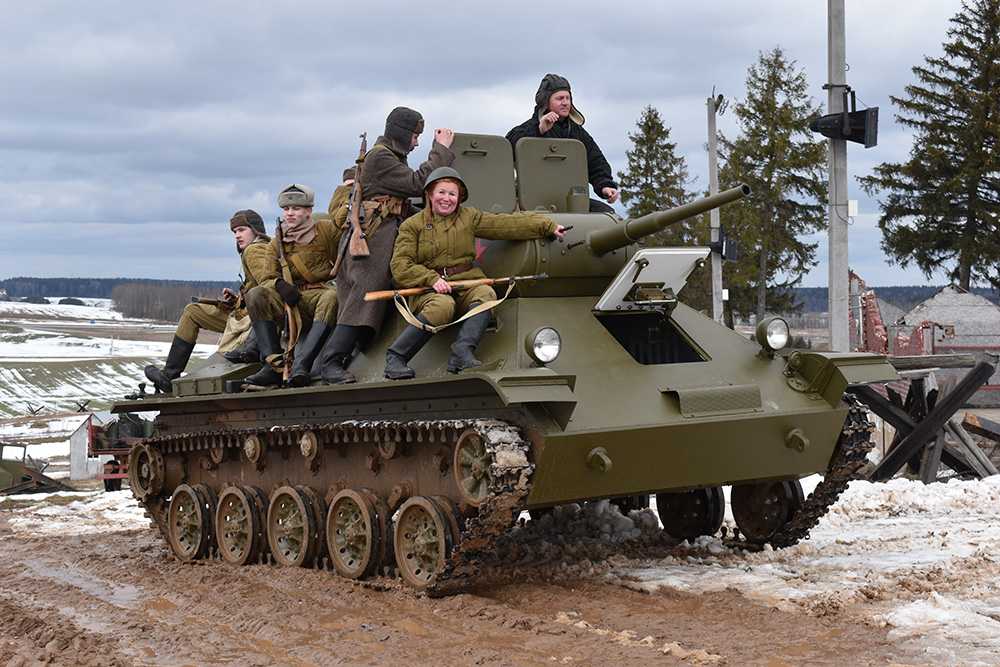
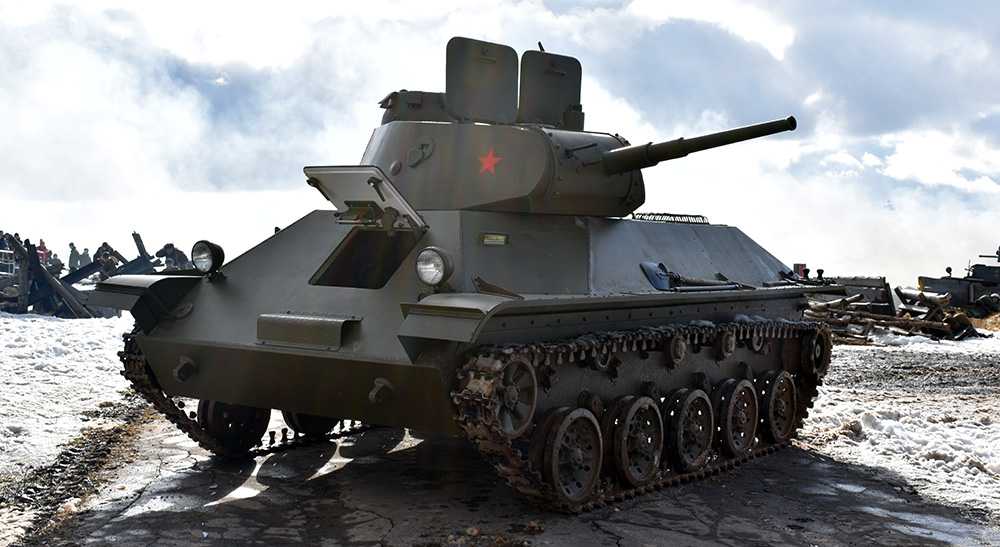
The large-scale performance was accompanied by blank fire from all types of deactivated weapons and pyrotechnic gas explosions.
The action on the reenactment ground was accompanied by enthusiastic cheers and applause from the spectators.
The military-historical reenactment concluded with a minute’s silence. The participants received well-deserved awards and posed for commemorative photographs.
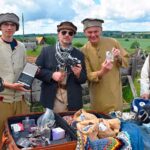
P.S. During the event, visitors to the complex were able to explore various guided-tour and interactive areas, take part in sporting competitions, enjoy a tank ride and much more.
Material provided by the website https://adt.by/
Author — Yuri VLODAVSKY.
 Russian
  English