
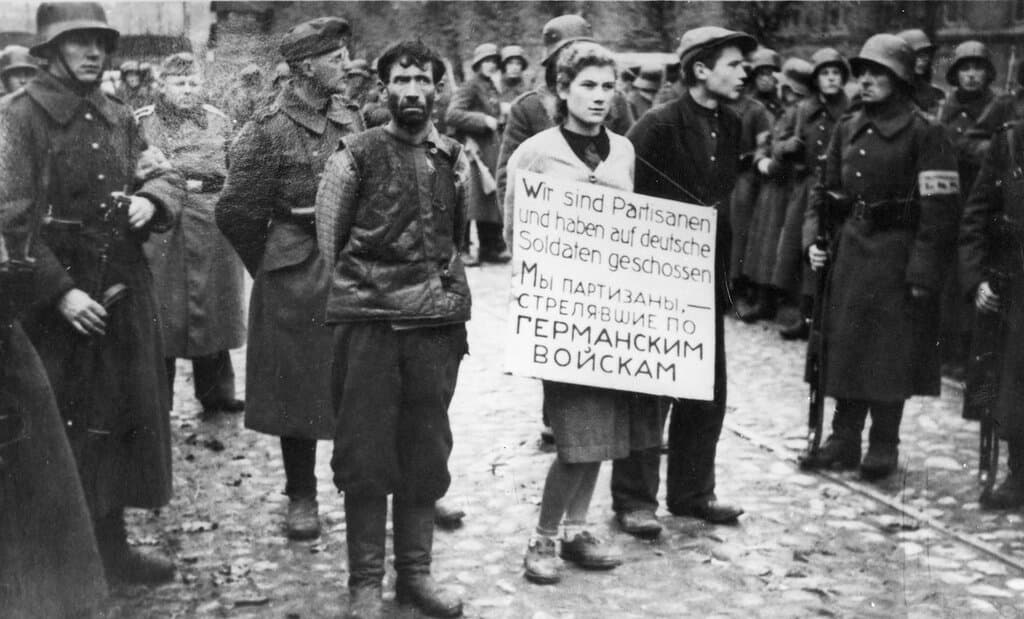
On the morning of 26 October 1941, twelve people sentenced to death were led out through the gates of Minsk Prison. To intimidate the city’s residents, they were divided into groups of three and hanged at four locations across the city.
On the morning of 26 October 1941, twelve people sentenced to death were led out through the gates of Minsk Prison. To intimidate the city’s residents, they were divided into groups of three and hanged at four locations across the city. Pieces of plywood bore inscriptions claiming that the condemned had fired on German soldiers. In fact, they had voluntarily visited a hospital where they helped wounded Soviet prisoners of war. They then obtained documents and civilian clothing for them and organised the escape of 48 people. These heroes were Kirill Trus, Masha Bruskina, Volodya Shcherbatsevich, his mother Olga Shcherbatsevich, her brothers Pyotr and Ivan and her sister Nadezhda Yanushkevich, Yelena Ostrovskaya, Nikolai Kuznetsov, medical assistant Pisarenko, hospital orderly Leonid Zorin and medical student Sonya Idelson.
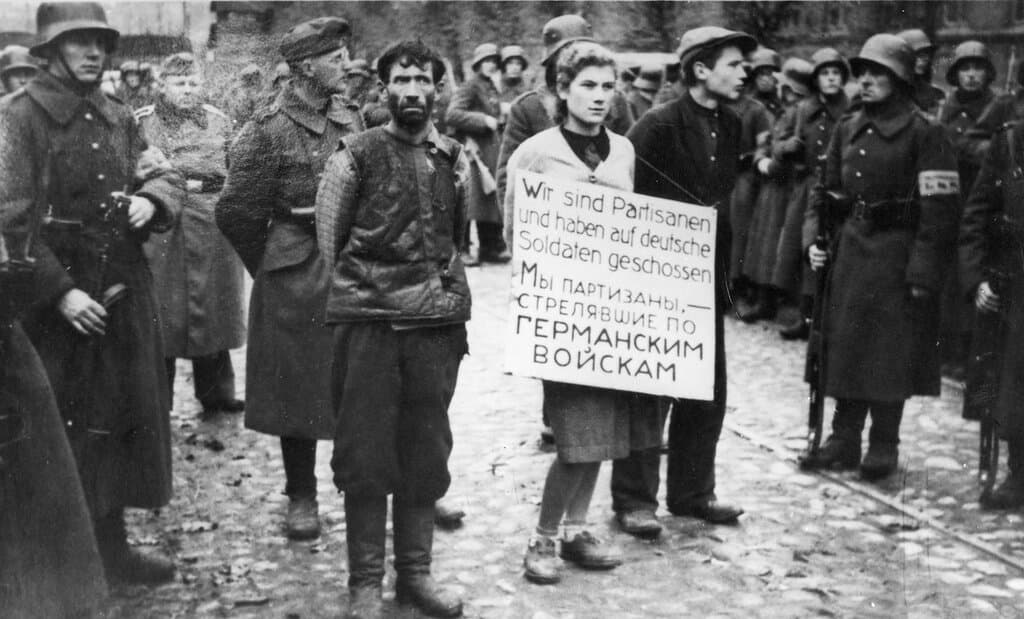
Kirill Ivanovich Trus, Masha Bruskina and Volodya Shcherbatsevich
The Minsk underground members were escorted and executed by the Lithuanian police battalion commanded by Major Antanas Impulevičius. The executioners wore Lithuanian Army greatcoats and German steel helmets dating from 1916, which led Minsk residents to mistake them for Germans. After executing the Minsk underground members, the Lithuanian battalion was sent to Slutsk, where it gained notoriety for the extermination of Jews.
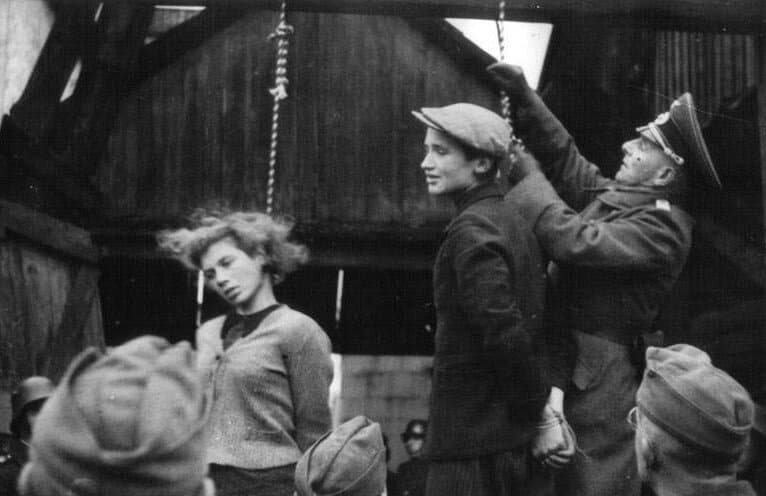
Antanas Impulevičius, wearing a German officer’s uniform, checks the noose intended for 15-year-old Volodya Shcherbatsevich. Masha Bruskina was 17 on the day of her execution

Antanas Impulevičius tightens the noose around the neck of underground leader Kirill Ivanovich Trus
Olga Shcherbatsevich not only nursed the prisoners in the hospital, but later sheltered them in her own home or in the homes of her two brothers and sister. Her son Volodya helped his mother obtain civilian clothing for the escapees and then guided them out of the city. On one occasion, they obtained German soldiers’ uniforms and dressed the prisoners in them, after which Olga’s brother took them out of the city.
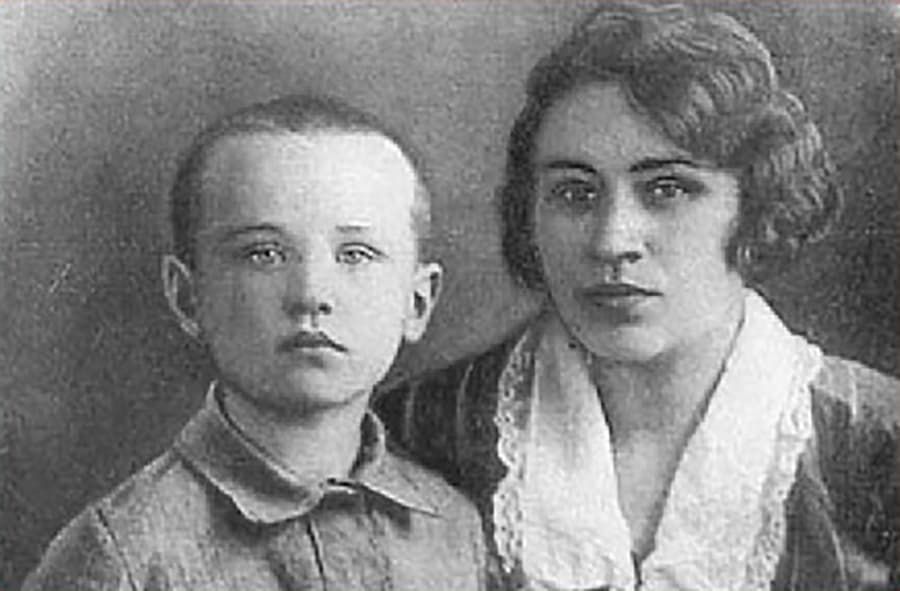
Volodya and his mother, Olga Shcherbatsevich

Olga Shcherbatsevich after her execution
Hospital orderly Leonid Zorin, Pyotr and Nadezhda Yanushkevich sheltered escapees in their home. Medical assistant Pisarenko provided those being rescued with documents and helped them leave the hospital. Yelena Ostrovskaya, a seamstress, provided clothing. As a medical student, Sonya Idelson treated the prisoners of war with medicines from supplies her father had laid in before the Germans arrived. Working alongside Sonya was her friend Masha Bruskina, a graduate of a Minsk school. It was Masha who managed to obtain a camera and deliver it to the hospital, even though failure to surrender a camera and possessing one were punishable by execution. The camera was used to take photographs for the documents issued to prisoners of war before their escape.
Boris Rudzyanko betrayed the group of underground members to the Germans.
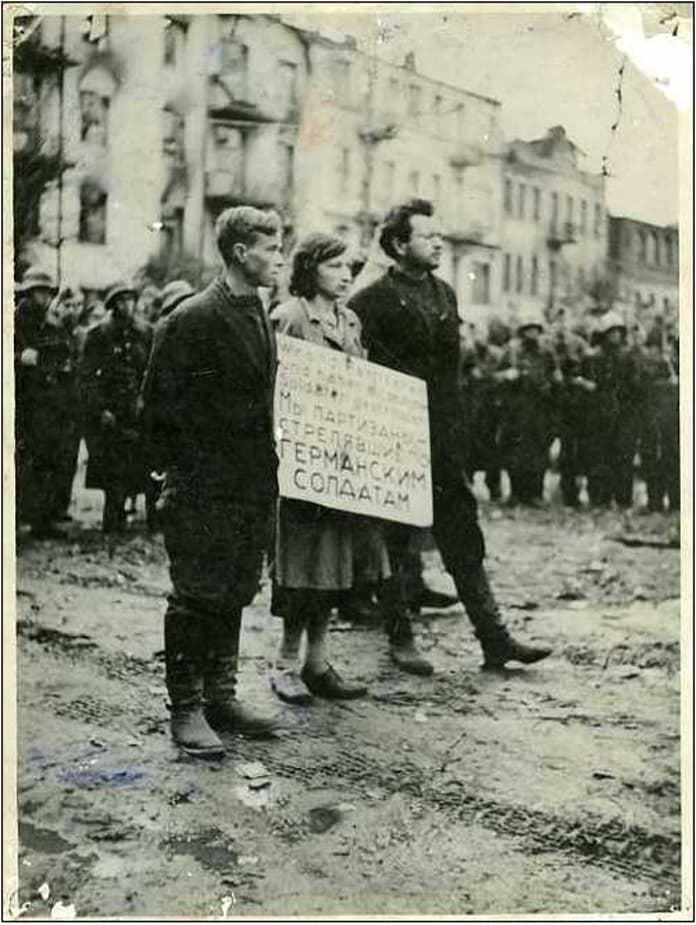
Leonid Zorin, Nadezhda and Pyotr Yanushkevich before their execution
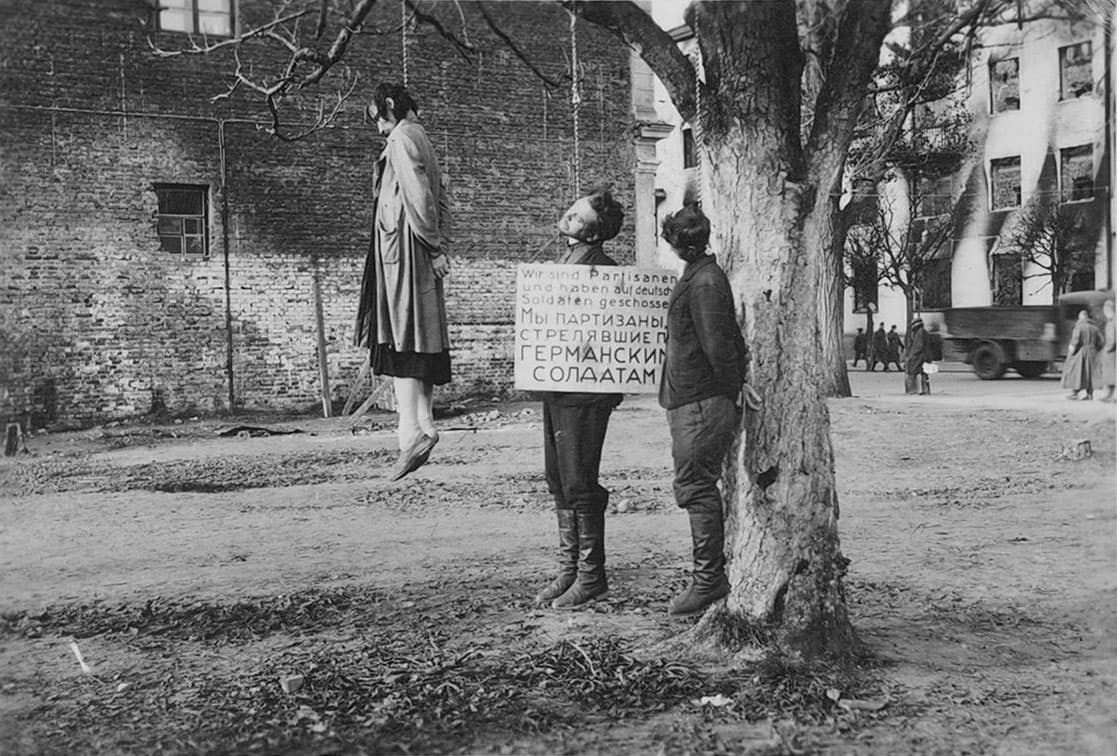
Leonid Zorin, Nadezhda and Pyotr Yanushkevich after their execution
 Russian
  English