

On the morning of 24 June 1941, more than two hundred Soviet tanks attempted to halt the advance of the Wehrmacht’s 6th Panzer Division, commanded by Erhard Raus, near the Lithuanian town of Raseiniai.
Upon encountering them, the German division split into two: Seckendorff’s tanks engaged the enemy, while Raus’s tanks continued their advance along another road.
At noon, a lone Soviet KV tank drove onto the road used to supply Raus’s force, which had pushed ahead. It ran out of fuel there, leaving the immobilised KV an easy target. Under regulations, the crew could have abandoned the stricken vehicle, but they did not. In the June heat, the tank crew spent the entire day inside the tank’s scorching hull, keeping a tense watch on the road. Expecting to die, they opened fire whenever the enemy appeared. First, the KV disrupted telephone communications with German divisional headquarters; it then destroyed a convoy of lorries carrying petrol, shells and hot food to the German troops. Raus was forced to halt his advance, while his soldiers had to make do with tinned food. The ground around the road blocked by the tank was waterlogged, so the Germans had no way to bypass it.
Raus then ordered the Russian monster to be destroyed with the latest 50 mm anti-tank guns. Using the forest for cover, the Germans crept to within 600 metres of the KV, opened fire and scored eight hits. Yet the tank survived and calmly knocked out every one of the guns in turn.
After this failure, an 88 mm anti-aircraft gun was brought onto the road. Under cover of the smoke from the burning lorries, the Germans approached to within 500 metres of the KV.
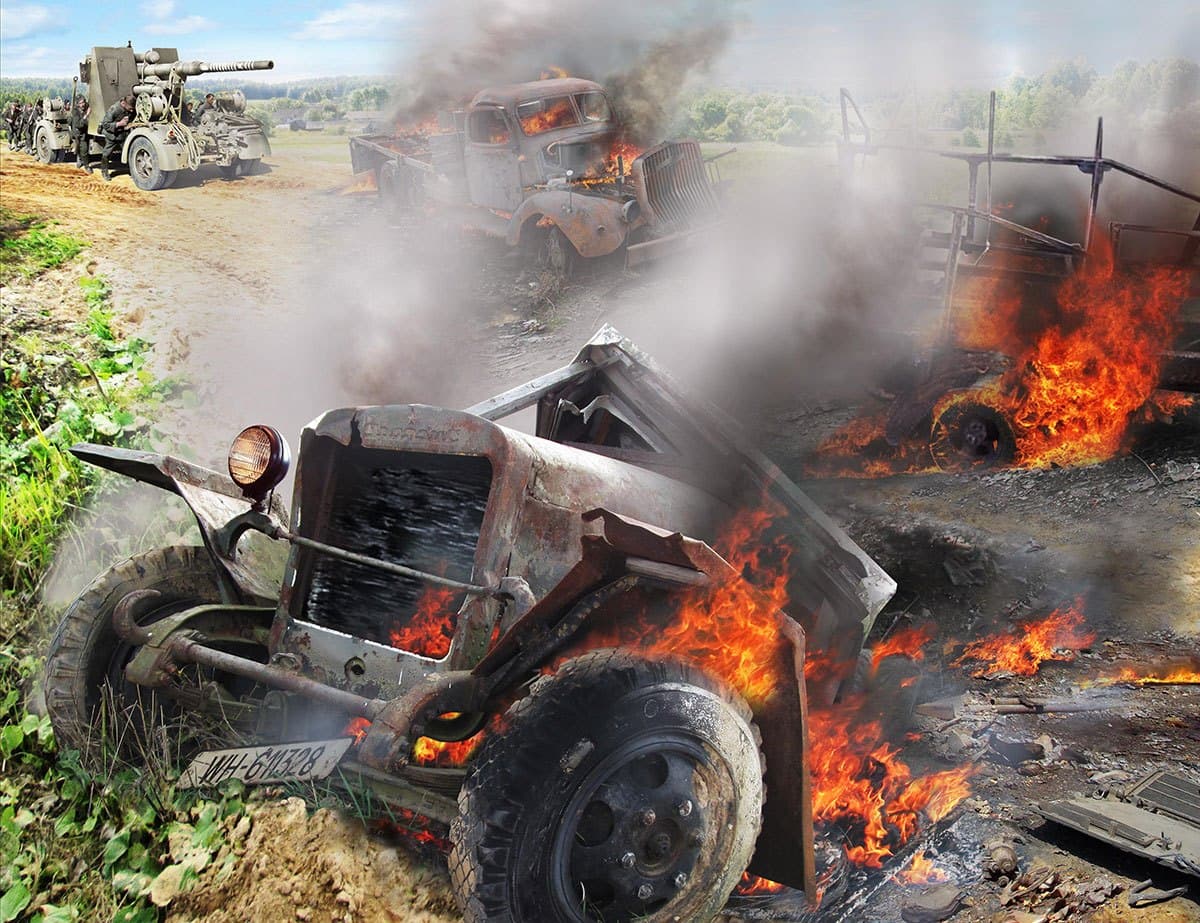
The tank, however, suddenly traversed its turret and, with a single shot, knocked the gun into the ditch. The KV also survived fire from 105 mm howitzers engaging it from concealed positions.
During the night, twelve German sappers crept up to the tank and placed explosives on one of its tracks. Even after the explosion, however, the KV resumed the fight in the morning. Raus even requested air support, but his request for an aircraft to destroy a single tank was refused. He then persuaded Seckendorff to provide another anti-aircraft gun, while sending a company of nimble Czech Panzer 35(t) tanks into action.
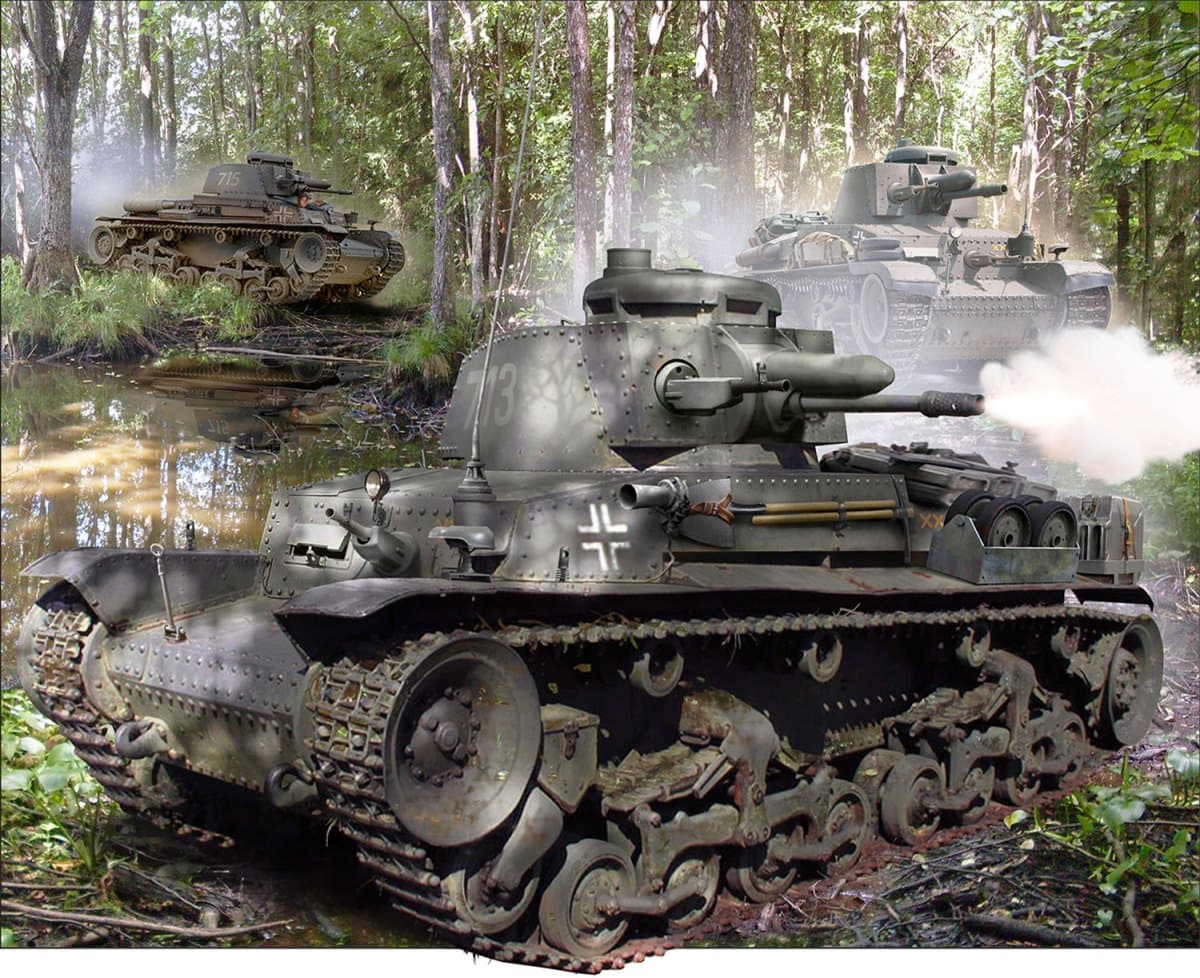
Manoeuvring through the sparse woodland and firing at the KV from different directions, they distracted its crew. Preoccupied with returning fire, the Soviet tank crew failed to notice another anti-aircraft gun crew creeping up behind them.

By then, the lorries were no longer giving off smoke, and the German anti-aircraft gunners grimly pushed their completely exposed gun along the open road. The KV, however, was occupied with firing at the nimble tanks. At last, the anti-aircraft gun fired. When the damaged KV attempted to traverse its turret, it was struck by another two shells.

The Germans then dared to approach the KV. To finish off the crew, one of the sappers pulled the pin from a grenade and pushed it through a shell hole in the turret. The explosion tore off the hatch. The Soviet tank crew were dead. Erhard Raus ordered that the heroes be buried with full military honours.
Only twenty years later, when the remains were reinterred, was it discovered that the tank crew included Pavel Yegorovich Yershov, V. A. Smirnov, a soldier with the initials Sh. N. A., and three other unidentified heroes.
Eternal glory to the heroes.


 Russian
  English