
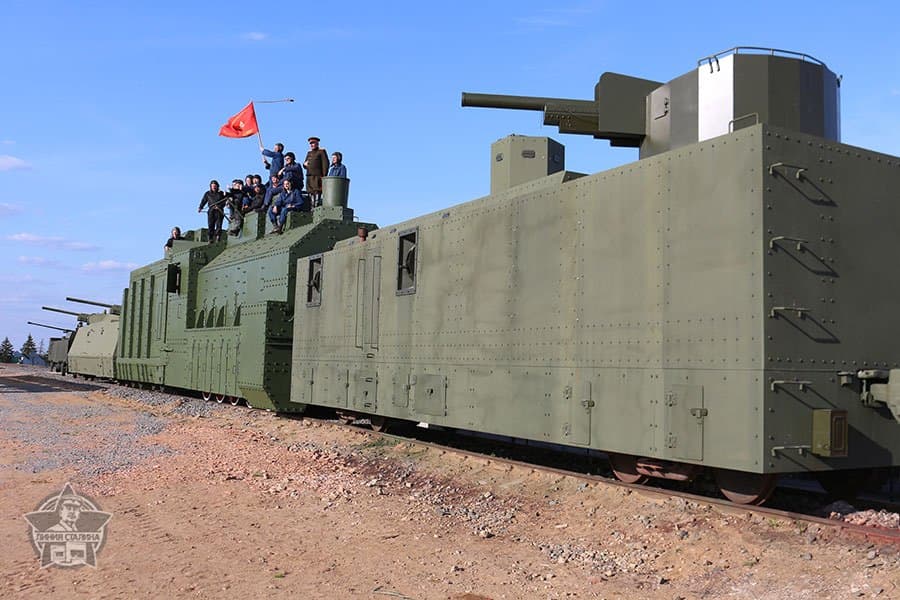
By 1941, the Red Army had a total of 64 armoured trains.
Ten armoured trains took part in the fighting in Belarus in the summer of 1941: seven belonging to the army, two to the NKVD and one built with the assistance of railway workers from Gomel.
Armoured Train No. 44 saw action at Molodechno before heading towards Lida, where encircled Soviet units were engaged in heavy fighting. The armoured train was damaged by enemy fire, but was repaired in the shortest possible time, and by 29 July its guns were already firing on German positions near Klimovichi and Kletsk. It was only after a major bombing raid on 6 August 1941, on the Orsha–Unecha section of the railway, that the armoured train was sent for a complete overhaul.
Near Zaslavl, close to the Stalin Line, NKVD Armoured Train No. 73 engaged German motorised infantry and tanks of the 20th Panzer Division. The armoured train was damaged in an air strike. After repairs, it was sent to the area around Yelizovo station to recapture a bridge over the Berezina that had been seized by the enemy. The mission was accomplished, but enemy aircraft again damaged the armoured train. Having established that it could no longer move, the crew removed the machine guns and gun breechblocks, then destroyed the ‘steel fortress’.
Armoured Trains Nos. 50, 51 and 52, serving with the 21st Army, fought near Gomel. Armoured Train No. 50 provided artillery support to Soviet troops near Bobruisk, and on 4 July it knocked out 18 German tanks and armoured vehicles. During this period, while operating without infantry support, Armoured Trains Nos. 51 and 52 destroyed ten tanks, two tankettes, two armoured vehicles, 72 motorcycles, 50 motor vehicles and two aircraft. On 30 July, Armoured Train No. 52 was destroyed by enemy aircraft, but with the assistance of railway workers from Gomel, the crew built an improvised armoured train that operated under the same number. The 12th Battalion, comprising Armoured Trains Nos. 47, 48 and 49, fought in the Orsha–Zhodino–Borisov area. On 1 July, No. 47 engaged German tanks near Zhodino and destroyed several vehicles. No. 48 came under extremely heavy artillery fire and was put out of action. Armoured Train No. 48 was quickly repaired and became the last Soviet armoured train to defend Belarusian territory, in the Kostyukovichi area. On 17 August, while covering the withdrawal of Soviet troops, it was cut off from friendly forces. That evening, its crew set it alight and destroyed it on the bridge over the River Iput.
Eighteen armoured trains took part in the Bagration strategic offensive operation. During the war, armoured trains destroyed 370 tanks, 115 aircraft, 344 guns and mortars, two enemy armoured trains, 840 machine guns, 712 lorries and armoured vehicles, and 160 motorcycles. One in every four armoured train crew members received a state award.
At the complex, a 270-metre railway was built jointly with Belarusian Railways, the Ministry of Defence and Belavtodor. On 1 August 2018, the new “Our Armoured Train” historical exhibition was officially opened. In addition to a steam locomotive, two armoured wagons, a fighting platform fitted with a 37 mm automatic anti-aircraft gun and a German rail trolley, the following were built: the Sovetskaya railway station building and platform; a set of points; a guarded level crossing with a barrier and keeper’s hut; a railway bridge over a body of water; a sawmill; a water hydrant for the steam locomotive; and oil and petrol tanks. Track was also laid for an exhibition of post-war equipment, where a fighting platform fitted with an 85 mm D-44 gun has already been installed.


Find out how the railway exhibition was created in our report.

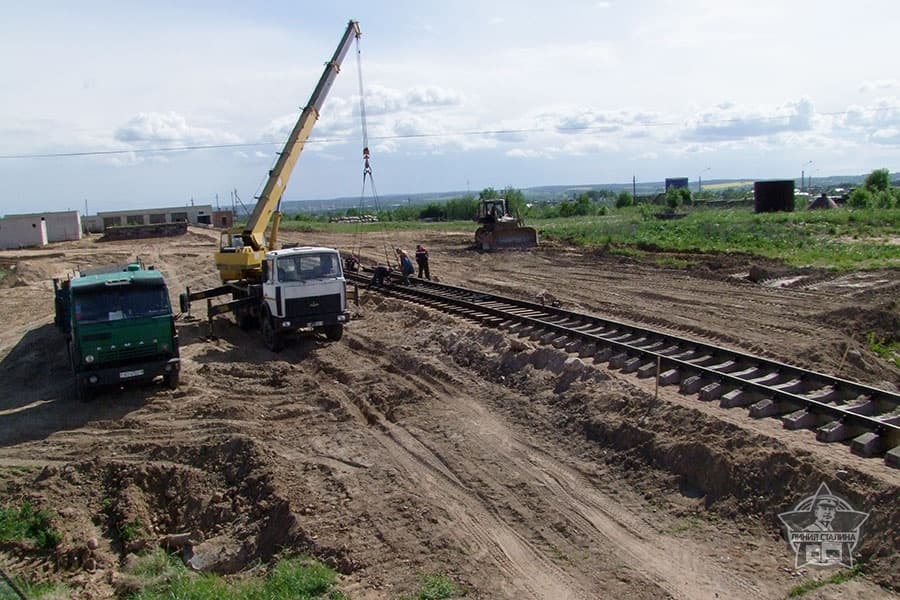


Steam locomotives of this class were first developed in 1915 and remained in production for more than 20 years. The locomotive restored at the complex was built in 1933.


Once the steam locomotive had been restored, work began on manufacturing Hiram Maxim machine guns for the armoured train. Around 20 Maxim guns are required to equip the entire train. One has already been completed and successfully tested. Instead of blank cartridges, all our machine guns will fire using a gas-and-oxygen mixture, a technique known as gas shooting.


At the same time, our craftsmen began building T-34 tank turrets for the armoured train. Turret rings have been made for both turrets, allowing them to rotate freely in either direction. Special elevating mechanisms have been manufactured for the guns.

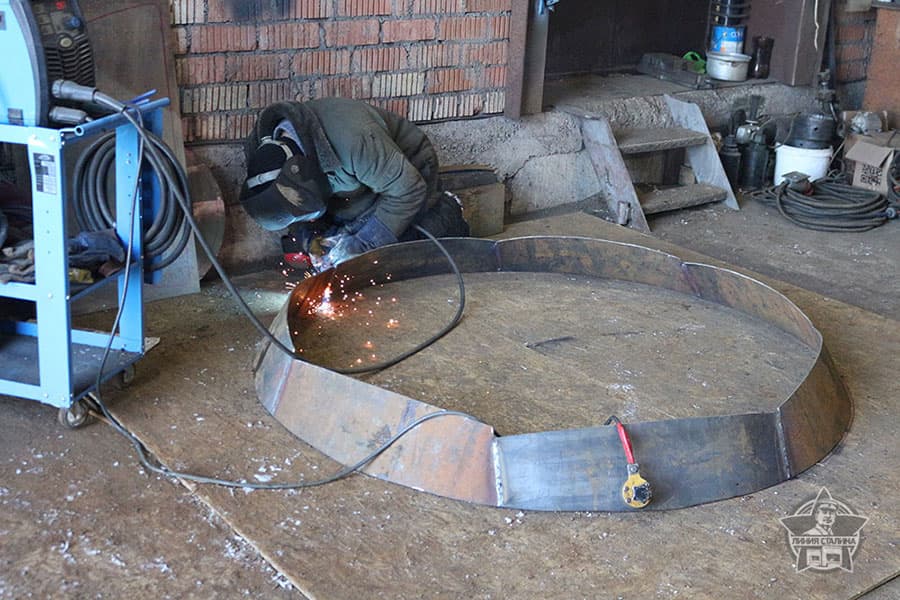


Once the turrets had been completed, construction began on the armoured wagon that would carry them.


After the armoured wagon with two T-34 turrets had been completed, work began on the PT-33 heavy armoured fighting platform, armed with a 107 mm gun.
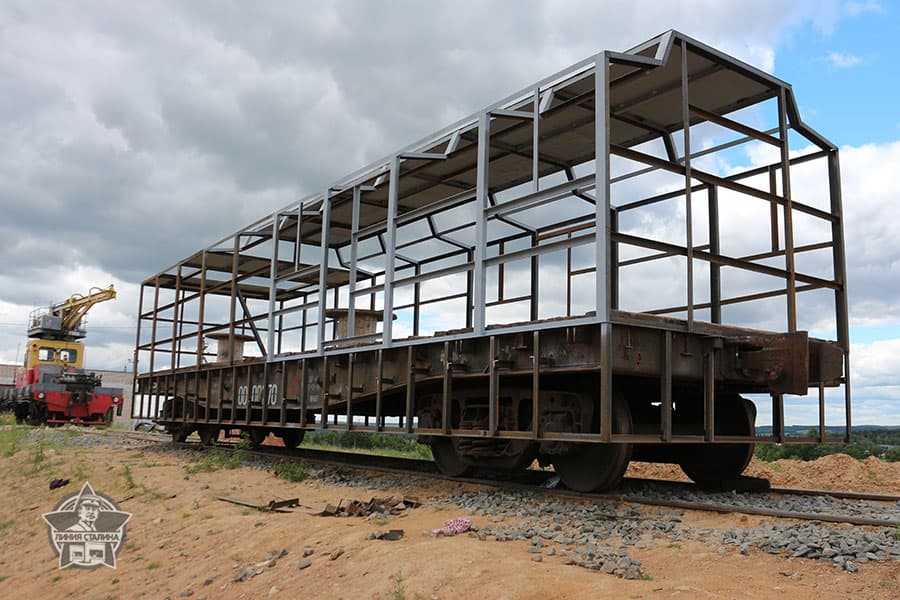

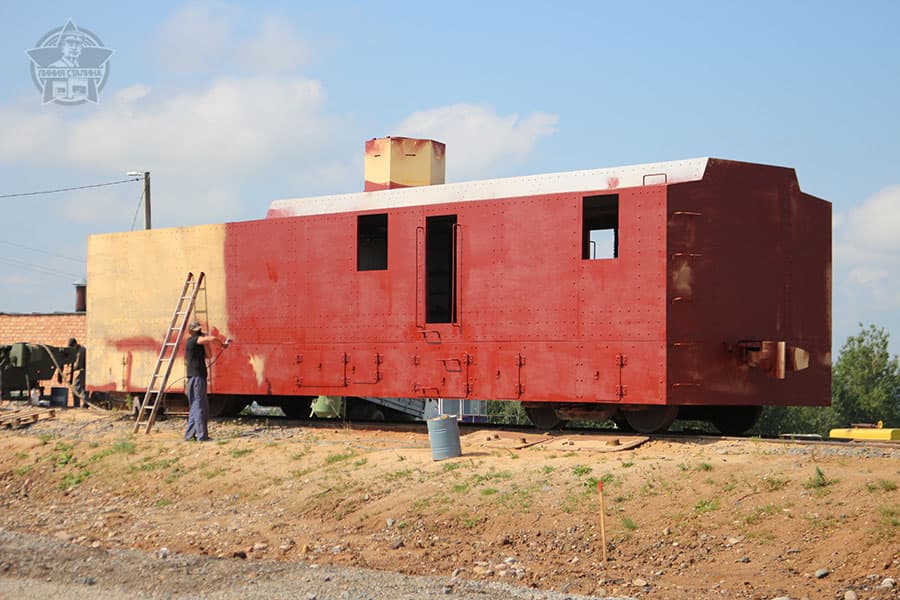


The steam locomotive was then restored to working order and fitted with armour plating.


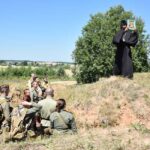
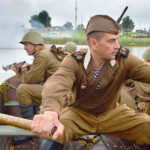
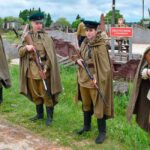
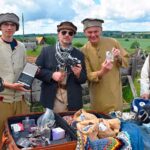
Visitors to the Stalin Line Historical and Cultural Complex can take part in an exciting paid interactive experience — “Our Armoured Train” Training Exercise
 |
 |
 Russian
  English