
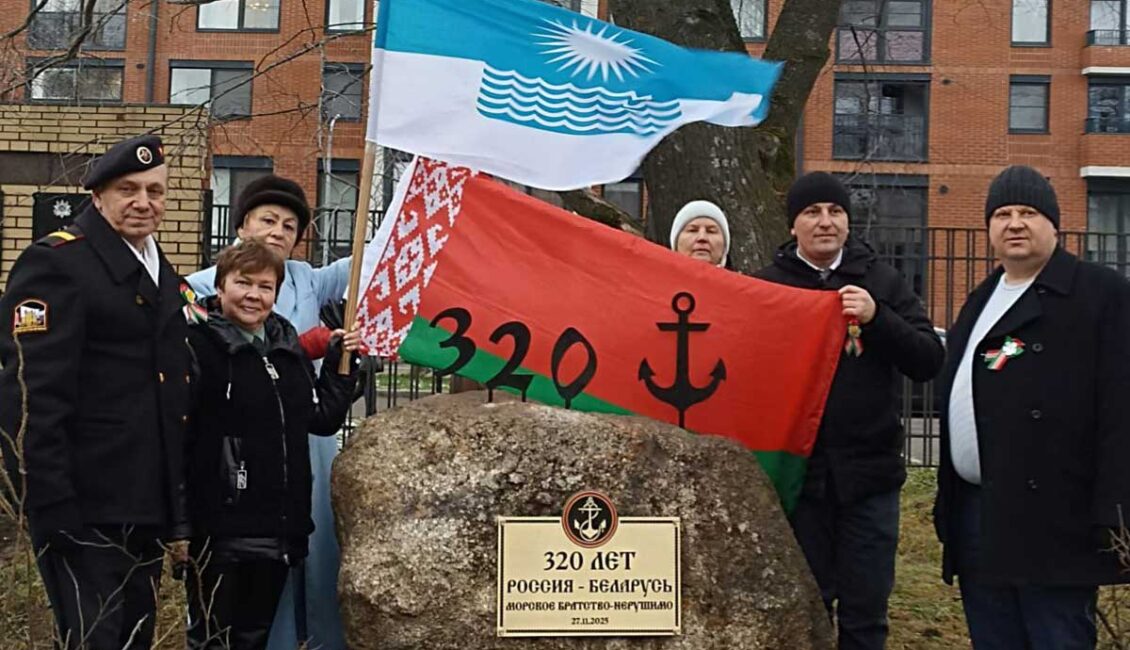
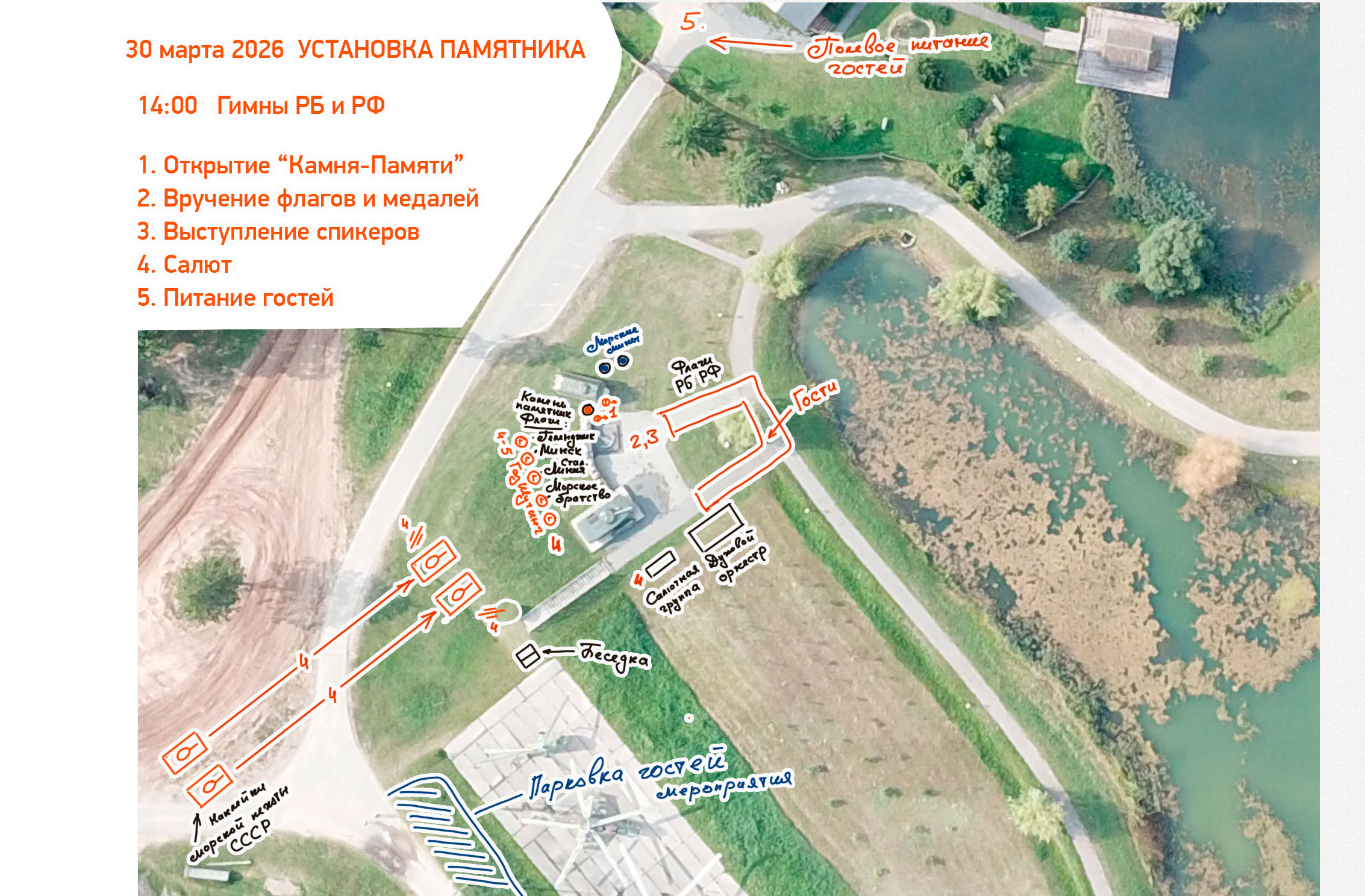
On 30 March 2026 at 14:00, the Stalin Line Historical and Cultural Complex will host an event dedicated to the Day of Unity of the Peoples of Belarus and Russia, celebrated on 2 April. At the initiative of the International Social and Patriotic Movement “Maritime Brotherhood Is Unbreakable!”, a “Stone of Remembrance” marking the 320th anniversary of the founding of the Russian Naval Infantry will be installed at the complex.
Few people know that the Russian Naval Infantry was born twice on Belarusian soil, becoming a shared national symbol of the valour and courage of our fraternal peoples.
During the Great Northern War against Sweden (1700–1721), Russia was an ally of the Polish–Lithuanian Commonwealth, which included Belarus and Grodno. The Swedes captured Warsaw, leaving Poland in a desperate situation. The joint struggle against Sweden, then a powerful maritime nation, required the creation of special troops capable not only of boarding and capturing enemy vessels, but also of landing from ships to launch infantry attacks from the sea.
In the autumn of 1705, the headquarters of the Russian forces sent to join the struggle against the Swedes was located in Grodno. It was here, on 27 November, that Tsar Peter the Great issued a decree establishing the first Naval Infantry Regiment. The Tsar’s close associate Fyodor Golovin, the foreign minister, was responsible for forming the regiment. He enlisted Cornelius Cruys, a highly responsible officer with extensive maritime experience. Cruys was a Norwegian who had served in the Dutch navy before being invited to Russia by Tsar Peter in 1697. In Russia, Cruys was entrusted with the most perilous and difficult assignments, but thanks to his tenacity, perseverance and high salary—three times what he had earned in the Netherlands—he always succeeded.
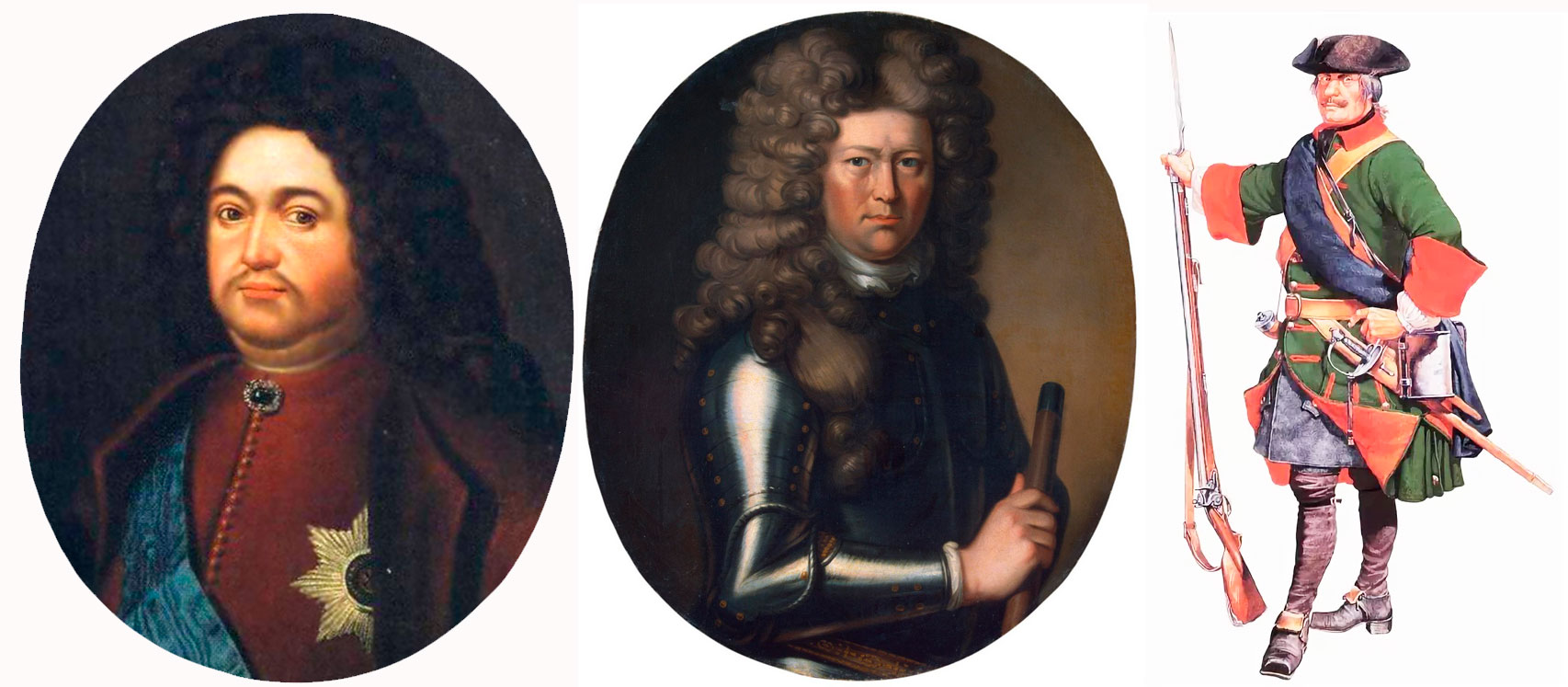
Fyodor Golovin, Cornelius Cruys and a Naval Infantry fusilier, 1706–1708. Computer artwork by V. A. Perederiy, based on a drawing by the artist N. V. Zubkov, 1995.
Russia’s first Naval Infantry Regiment comprised 45 officers, 70 non-commissioned officers and 1,250 other ranks. They were armed with muskets fitted with plug bayonets, the forerunners of later bayonets, as well as hangers and sabres. In 1706, the Naval Regiment saw action for the first time. Captain Bakhtiyarov’s detachment succeeded in capturing the Swedish boat Espern in a boarding action.
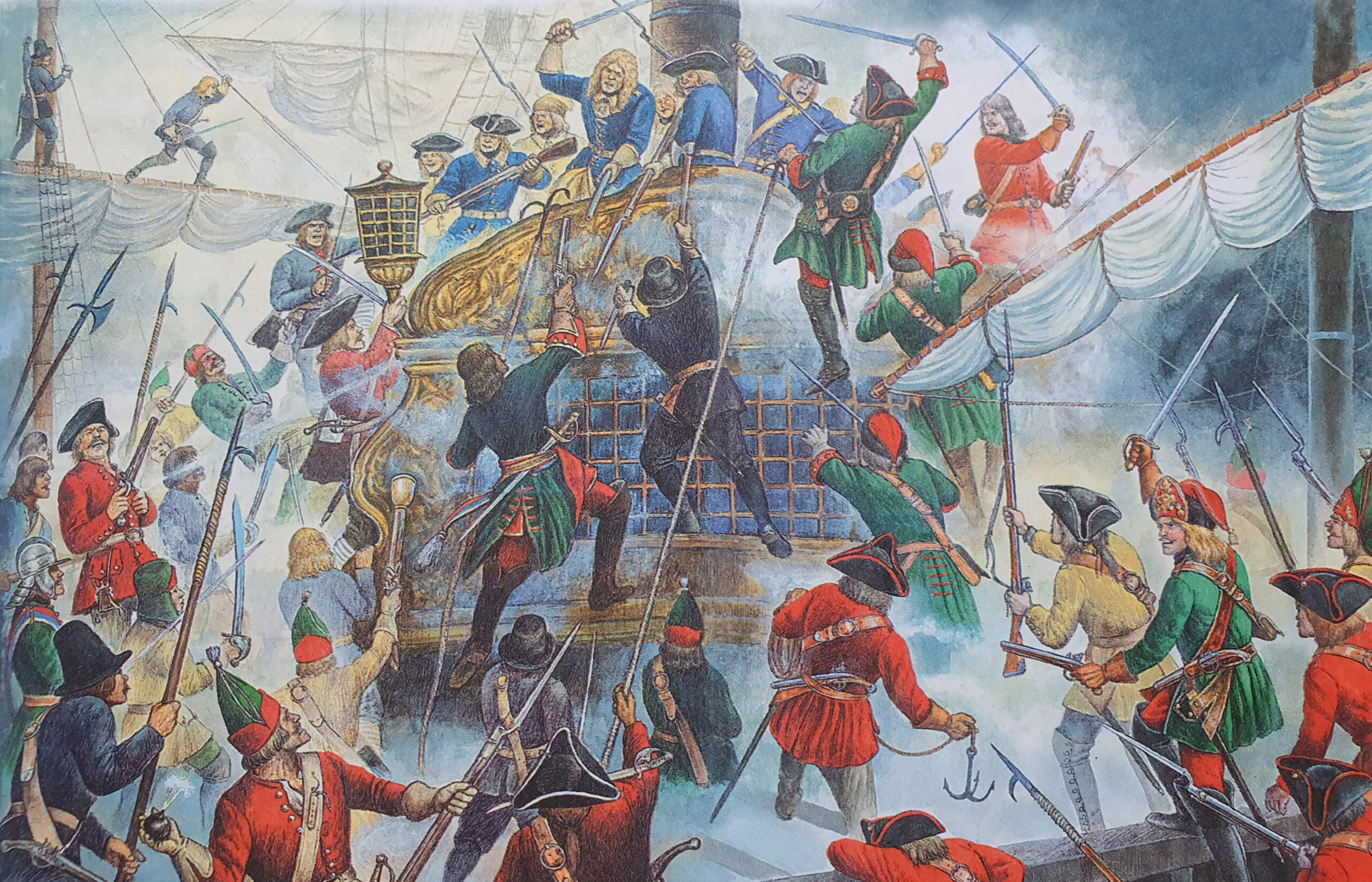
The capture of a Swedish vessel by a Russian Naval Infantry boarding party. Illustration from Yuri Kashtanov’s book The Age of Peter. Illustration by the author.
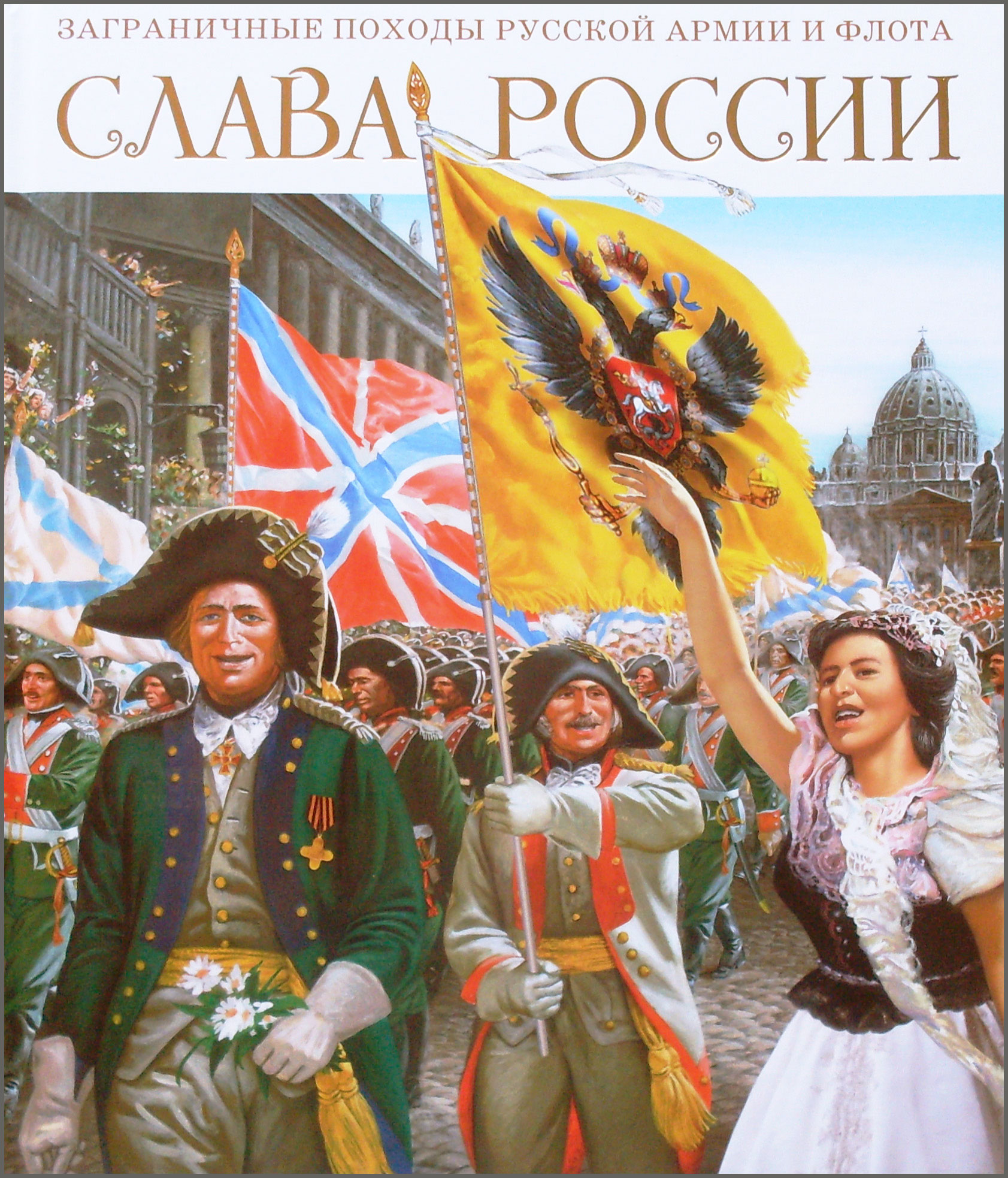
Russian naval infantrymen liberating Rome from the French on 11 October 1799. Cover of Boris Prokazov’s book The Glory of Russia. Illustration by the author.
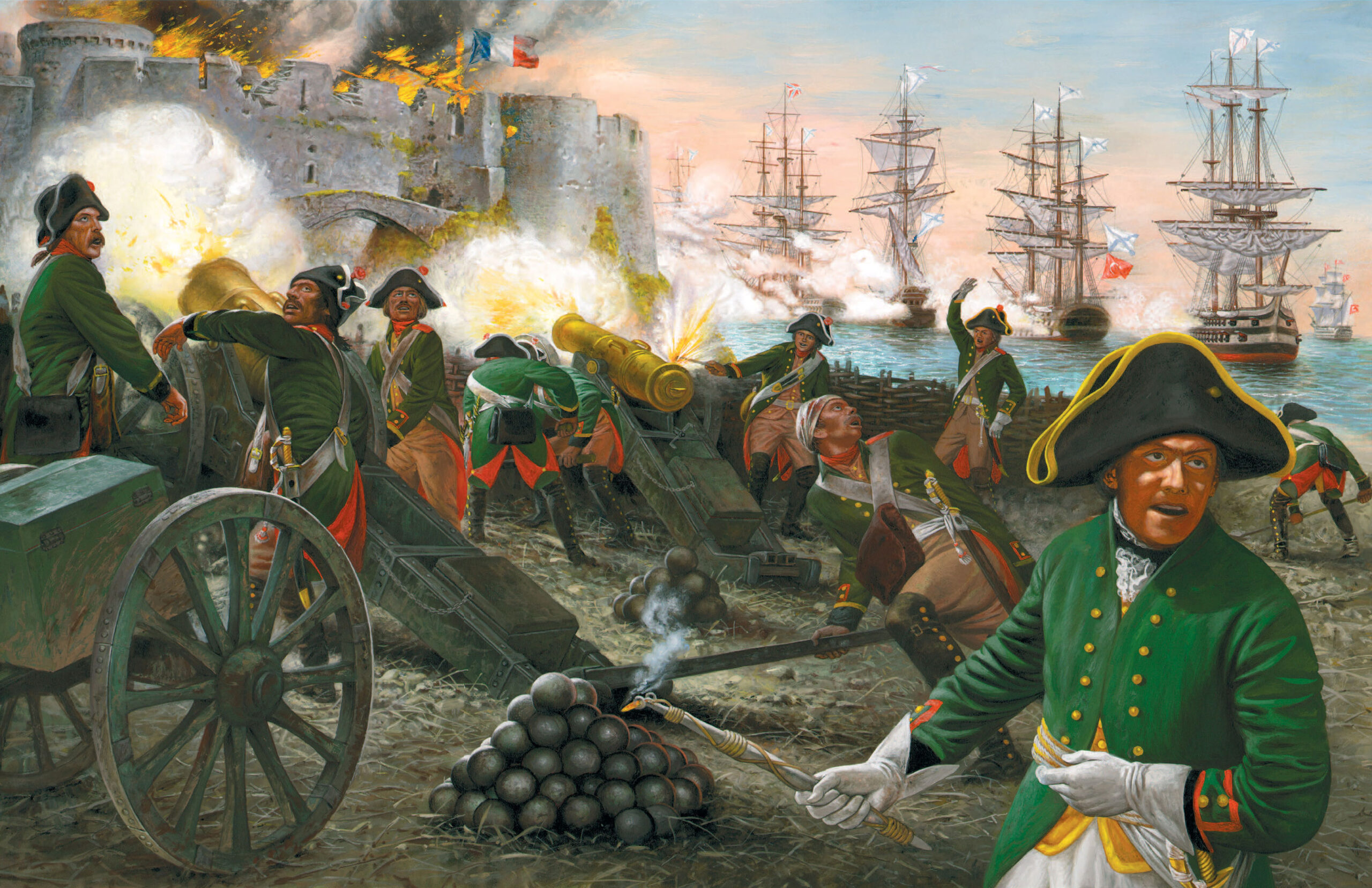
A Russian Naval Infantry artillery battery during the assault on the French fortress on the island of Santa Maura, 13 November 1798. From Boris Prokazov’s book The Glory of Russia. Illustration by the author.
The proud record of the Russian Naval Infantry continued in the Soviet Union. In May 1956, however, Soviet leader Nikita Khrushchev, who believed that naval infantry would have no role in a nuclear war, abolished it as a branch of service. After the Cuban Missile Crisis of 1962, however, it became clear that, since no one was prepared to launch nuclear strikes, conventional branches of the armed forces, including the Naval Infantry, had to be re-established. The decree re-establishing it was signed on 7 June 1963. It was decided that the first Naval Infantry Regiment would be formed from the 336th Regiment of the 120th Guards Motor Rifle Division, stationed near Minsk.
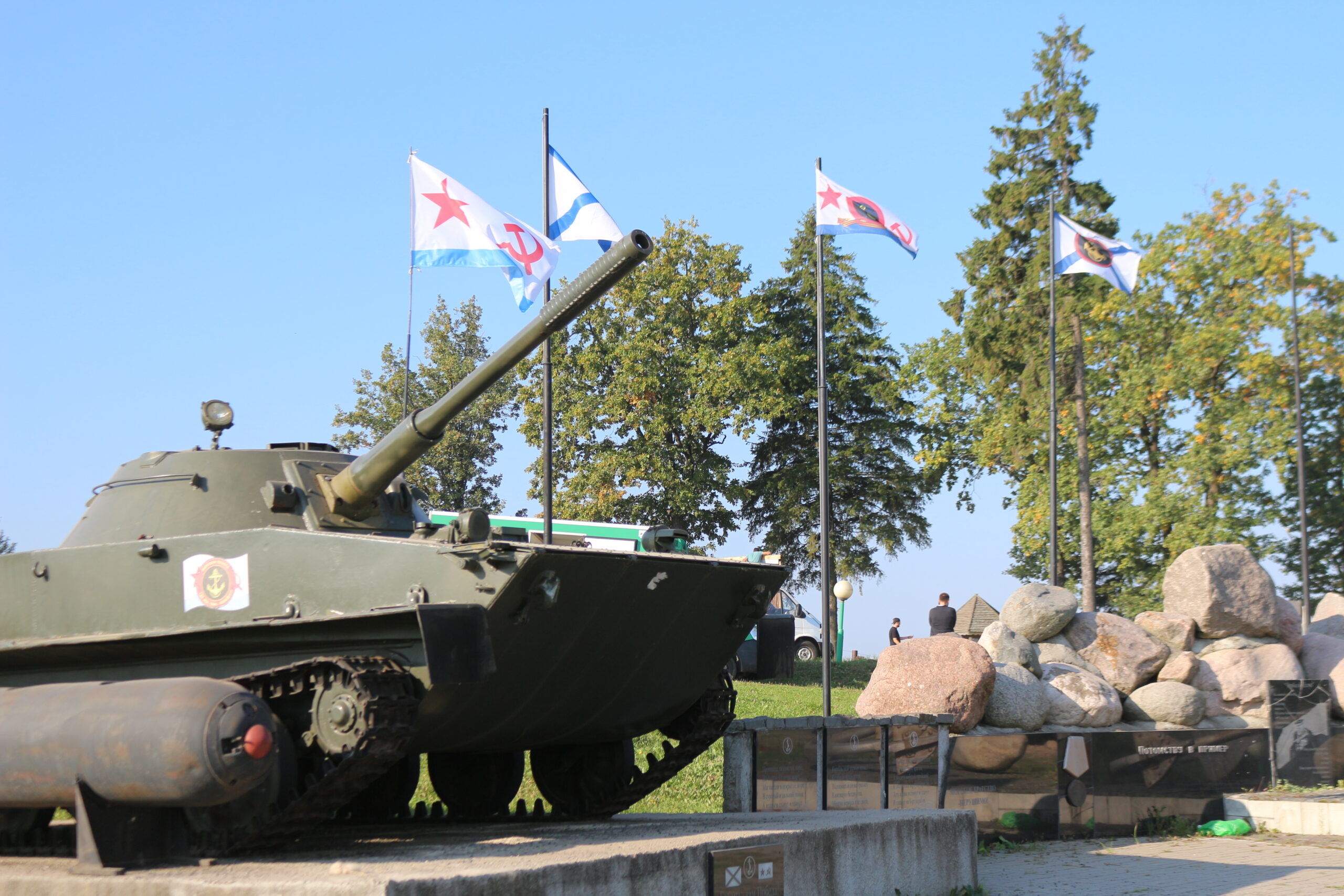
The “Stone of Remembrance” is to be installed at the Maritime Brotherhood Monument at the Stalin Line Historical and Cultural Complex.
Georgy Nikitich Kholostyakov, a native of Baranovichi, became known as the Admiral of the Belarusian Land. In 1942, he led the defence of Novorossiysk. In 1943, he oversaw the organisation of amphibious landings near Yuzhnaya Ozereyka and Stanichki. He was subsequently responsible for supplying by sea the captured bridgehead at “Malaya Zemlya”, and commanded the Novorossiysk Landing Operation, followed by the landings in Crimea. He commanded the Danube Military Flotilla, which took part in the liberation of Yugoslavia, Hungary, Austria, Slovakia. Georgy Nikitich Kholostyakov was awarded the title Hero of the Soviet Union. In Gelendzhik, where the Germans were halted under his command, he is regarded as the city’s saviour, while in Novorossiysk he is remembered as its liberator. Both cities have streets named after Georgy Kholostyakov.
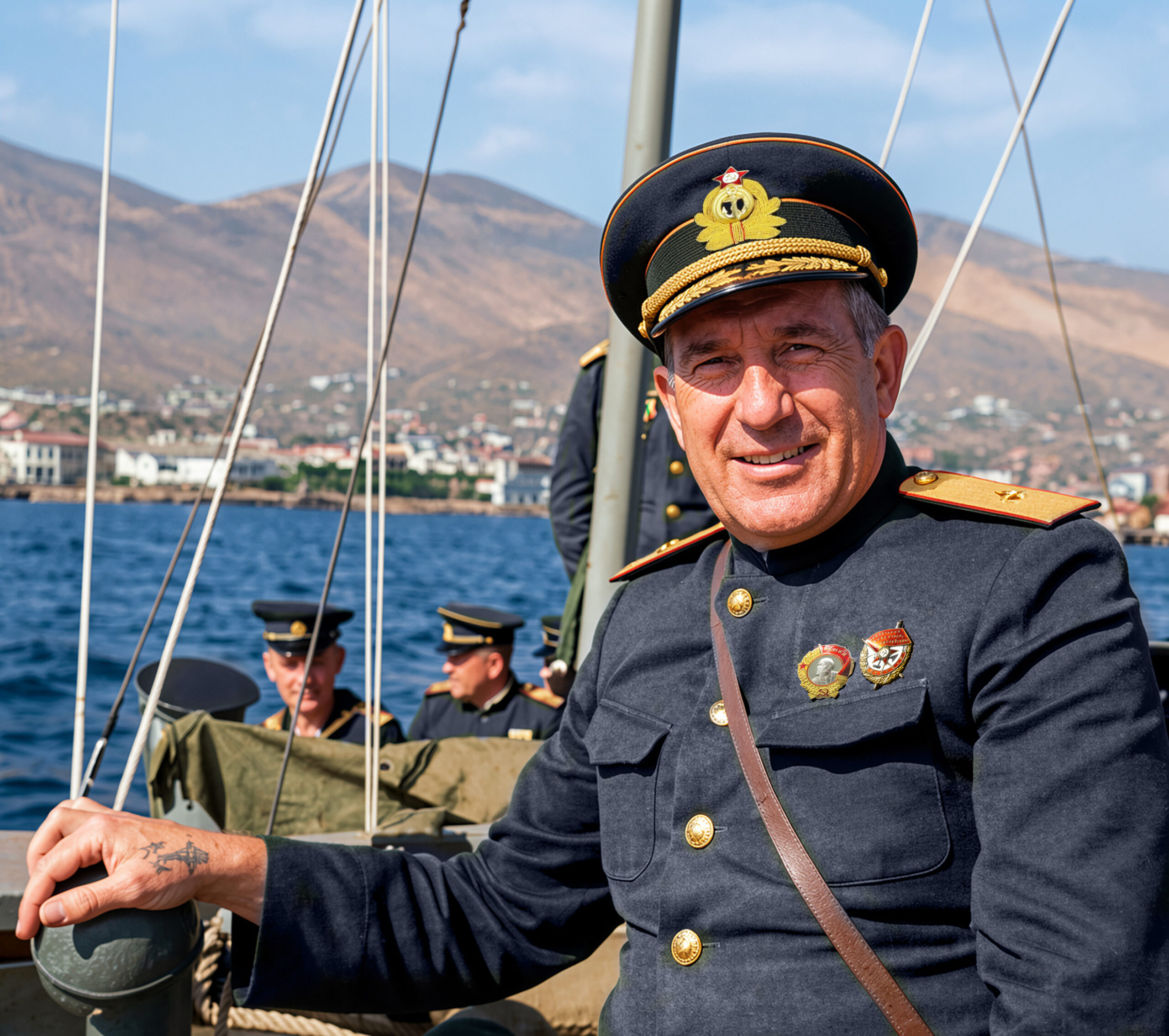
Rear Admiral Kholostyakov off the coast of Tsemess Bay, Novorossiysk, in 1943


 Russian
  English