
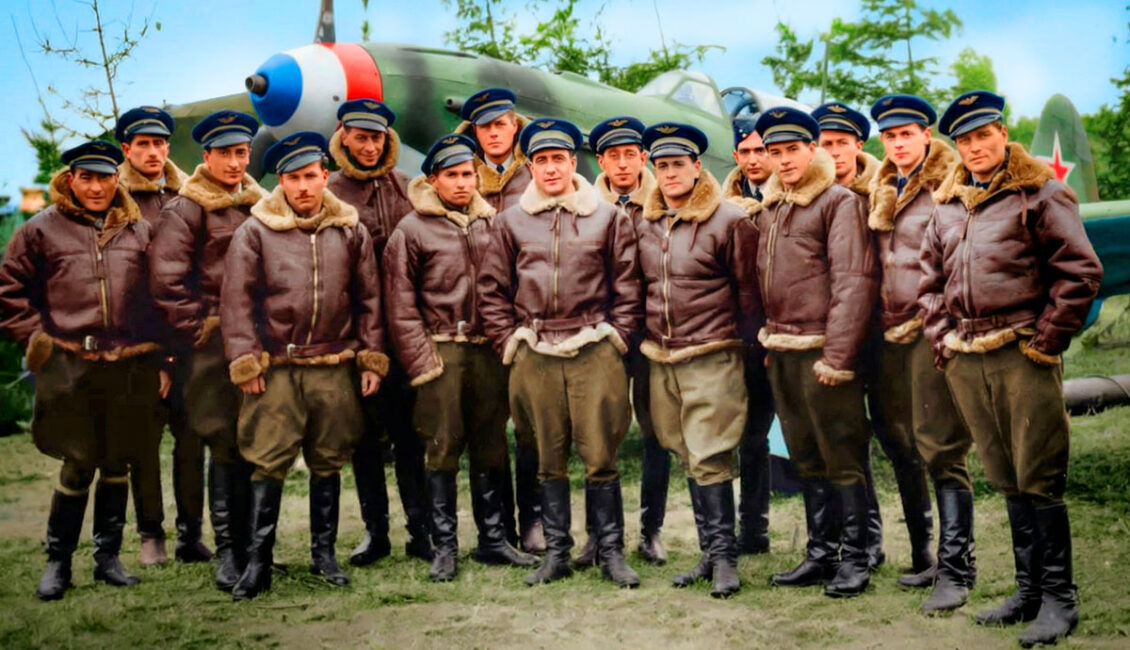
Following France’s defeat in 1940, its airmen found themselves serving the collaborationist regime in southern France, which fought on Hitler’s side. Some of them, however, remained patriots of their country. To uphold its honour, they left behind the warm sea, women and a comfortable life, escaped to Britain and then travelled to cold Russia to fight alongside the Russians against Nazi Germany.
On 28 November 1942, the Normandie Squadron, formed in Britain, arrived in the Soviet Union. The squadron comprised 72 French volunteers (14 pilots and 58 aircraft mechanics) and 17 Soviet aircraft mechanics.
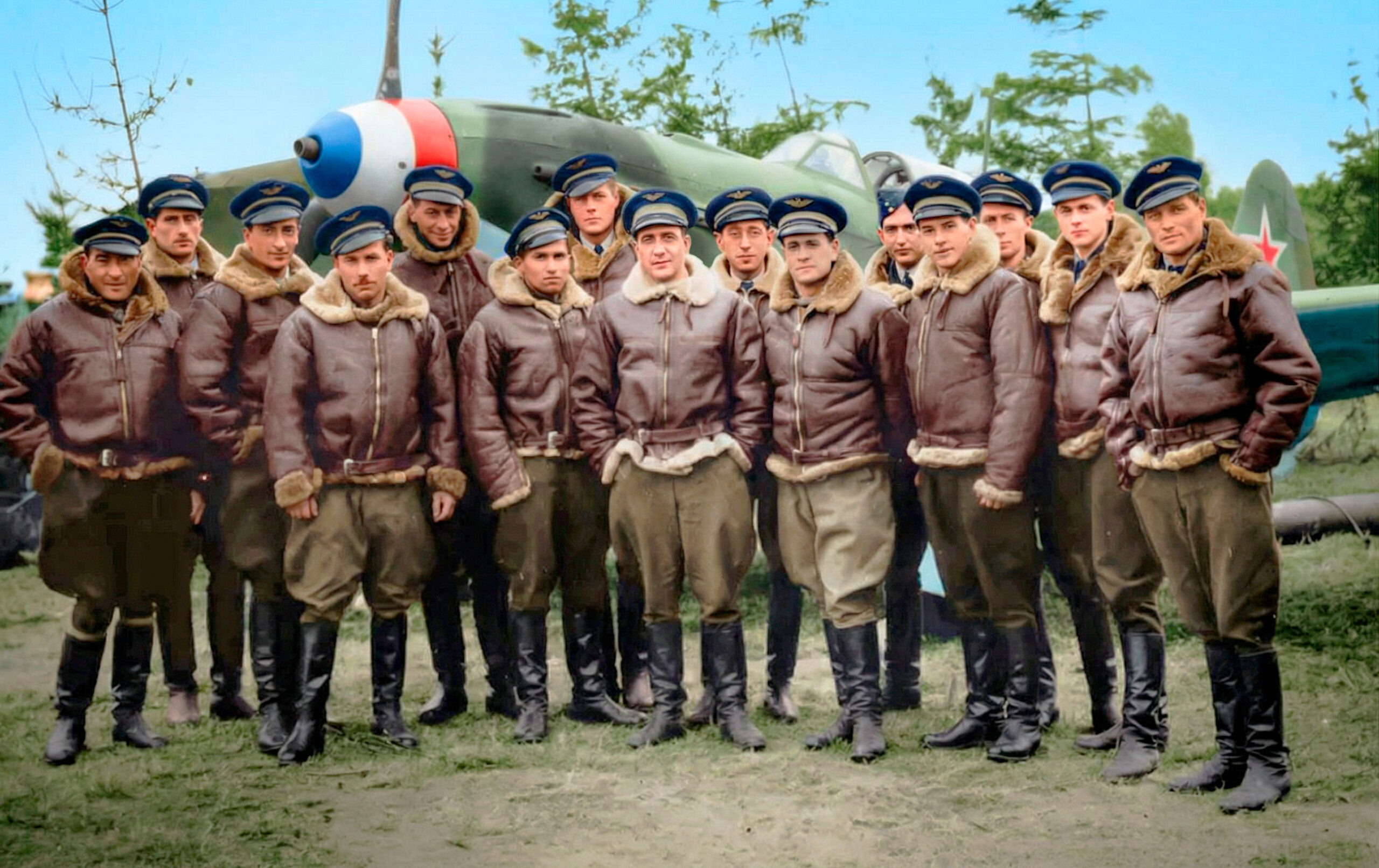
The first French pilots to arrive in the Soviet Union. The spinners of the Soviet aircraft they flew were painted in the colours of the French flag.
The French airmen received their baptism of fire while serving with the Soviet Air Force on 5 April 1943, when Senior Lieutenant Preziosi and Lieutenant Durand each shot down a Focke-Wulf Fw 190 in a single engagement.
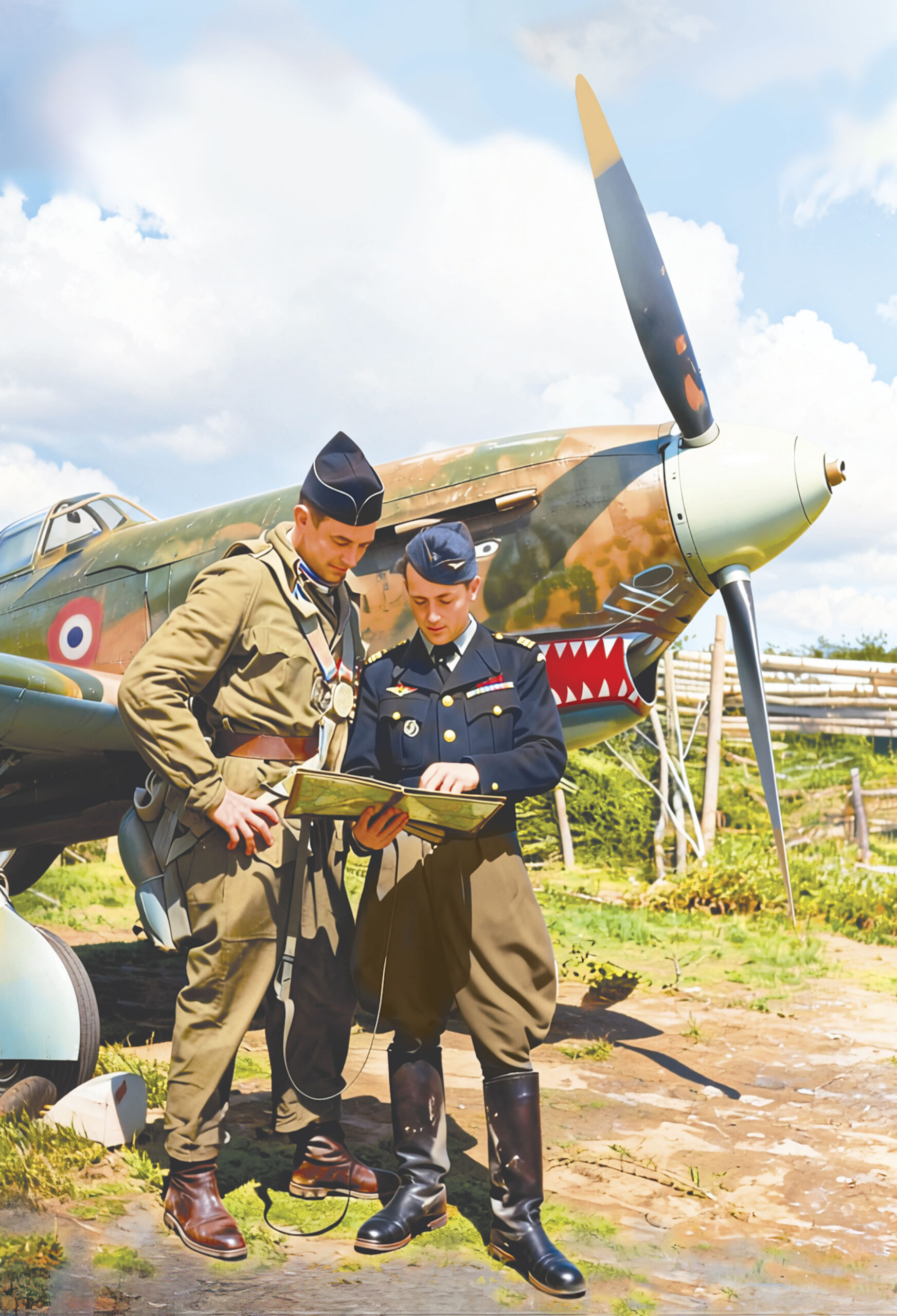
Albert Durand (11 victories, including six in the USSR in just five months) and Jean-Louis Tulasne (three victories in four months). Both pilots were killed in 1943.
Major Jean-Louis Tulasne was the first commander of the Normandie. Like all the French pilots, he favoured ‘free hunting’ — a tactic based on individual rather than group combat. On encountering the enemy, the wingmen would leave their flight leaders, and the pilots would fight alone. The Germans, meanwhile, attacked the courageous French pilots in groups and shot them down one by one.
13 April 1943 became the first ‘black day’ in the squadron’s history, when three French pilots were killed in a fierce engagement with German fighters. Thereafter, the Normandie’s pilot losses continued to mount.
Before the Battle of Kursk, the Normandie was therefore reinforced with new French pilots, who formed the Rouen, Caen, Le Havre and Cherbourg squadrons. The Normandie thus became an air regiment.
On 17 July 1943, the air regiment’s commander, Jean-Louis Tulasne, was himself killed. That evening, he led nine Yak-1 and Yak-9 fighters on a mission to escort Il-2 ground-attack aircraft attacking German columns on the Bolotovo–Orel road. Near the target, they encountered a group of enemy FW 180 fighters. An aerial battle ensued, in which Tulasne was killed.
The Normandie Fighter Regiment formed part of the 303rd Air Division, commanded by Major-General G. N. Zakharov. Georgy Nefyodovich had his ‘Normandie men’ fall in on the parade ground, called forward one of the French pilots, handed him a broom and ordered him to break it. The pilot was unable to do so. Zakharov then suggested that the Frenchman break the broom one twig at a time. This time, the broom was defeated. In this way, Georgy Nefyodovich showed the pilots that if the ‘musketeers’ worked together, it would be harder for the enemy to defeat them.
After Tulasne’s death, Pierre Pouyade took command of Normandie and introduced Soviet group combat tactics within the fighter regiment.
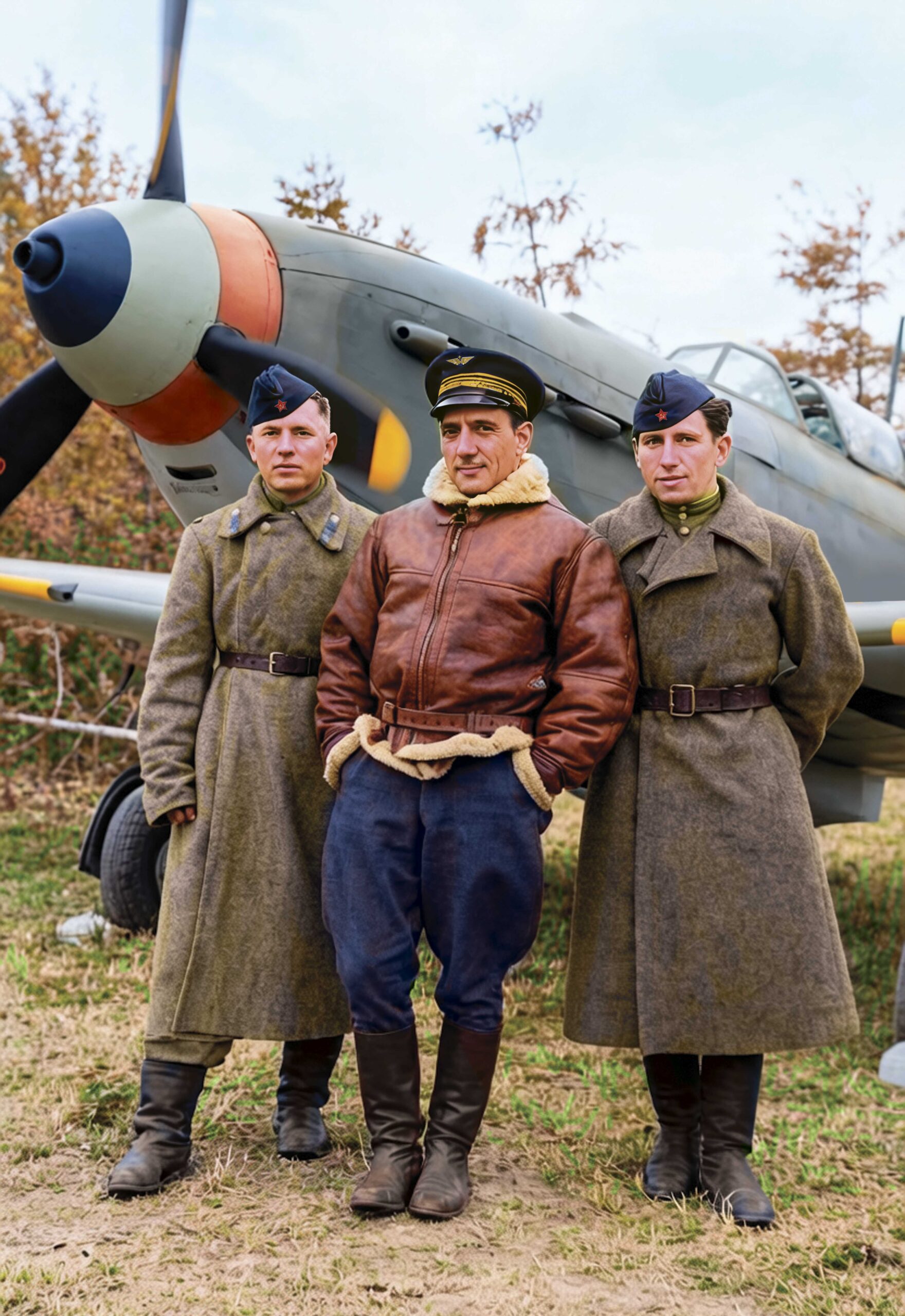
Pierre Pouyade (six victories) with Soviet mechanics. After the defeat of France in 1940, he served in Indochina, from where he flew an aircraft to China without authorisation. To continue the fight against the Germans, he made his way to London and later arrived in the USSR. Recognised as an able leader, he was recalled to France in November 1944 to help rebuild the French Air Force.
The regiment’s interpreters were French citizens who spoke Russian: Albert Mirlesse, Anatole Corot, Georges de Frédé, air liaison officer Pavel Pistrak, doctor Georgy Lebedinsky, signaller Mikhail Shik, radio operator Alexander Stakhovich, pilot Andrei Poznansky and radio guidance officer Igor Eichenbaum.
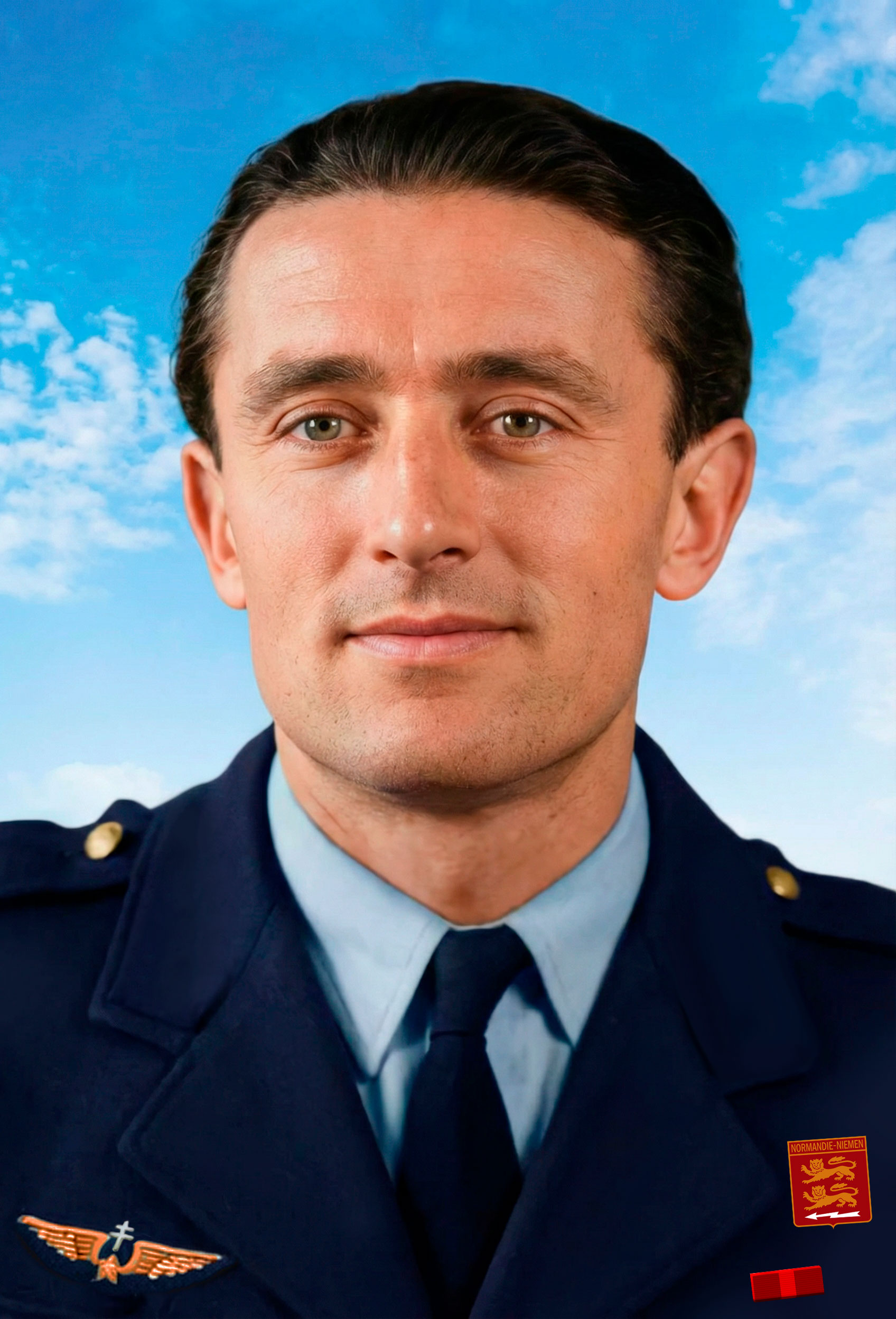
Léon Ougloff, a pilot of Russian origin, achieved six aerial victories.
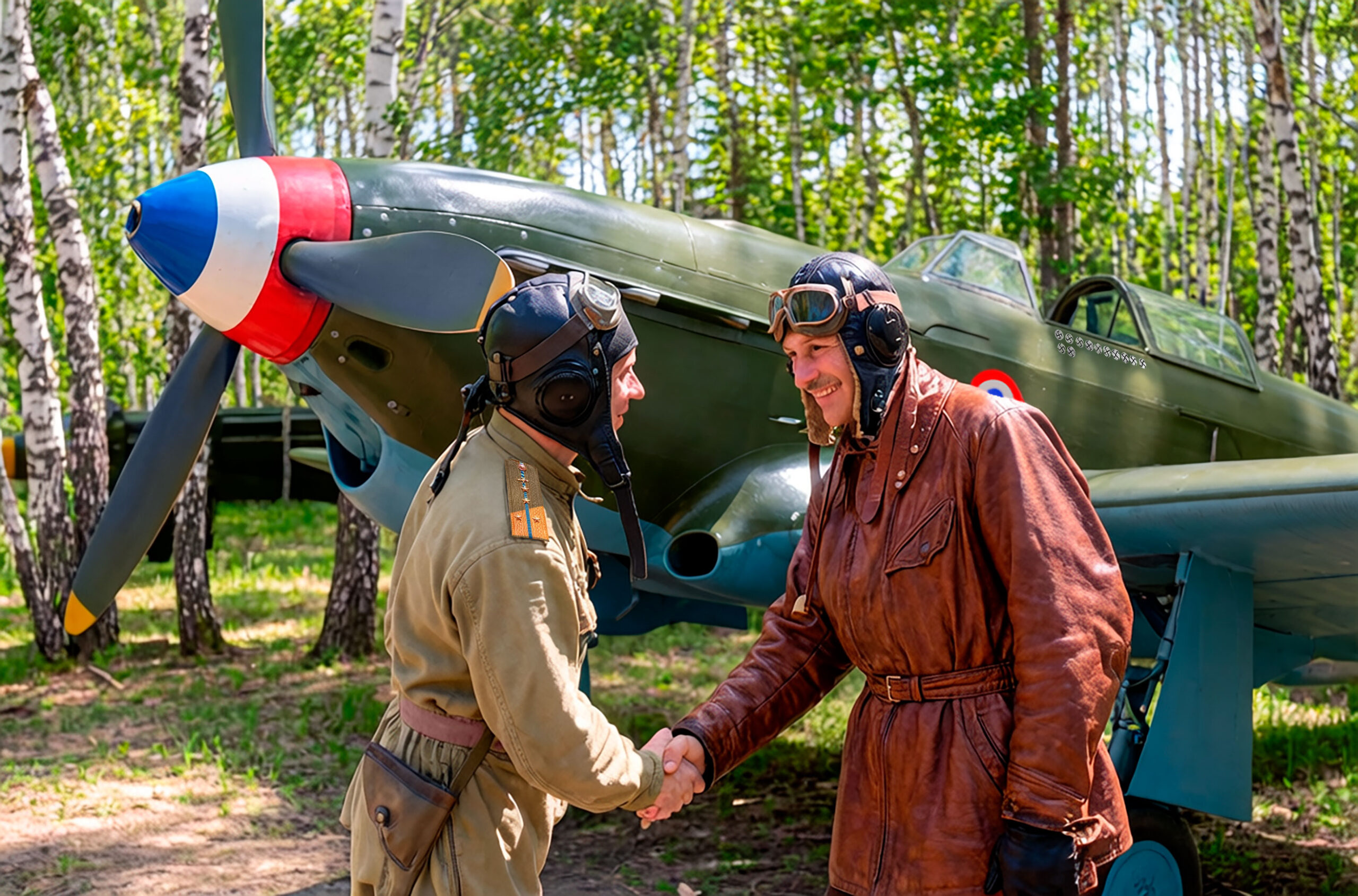
Hero of the Soviet Union Guards Captain S. A. Sibirin congratulates French pilot Captain Albert Littolff on his latest victory. A small French Air Force insignia was painted on the side of his Yak-1. Littolff was the only French pilot to mark the enemy aircraft he had shot down with black swastikas inside white circles. At the time of his death on 13 July 1943, Albert was credited with 14 enemy aircraft destroyed (six individually and eight shared) and two unconfirmed victories. He kept the promise he had made to his friends: to fight for as long as his hand could hold the control column and his eyes could see the enemy.
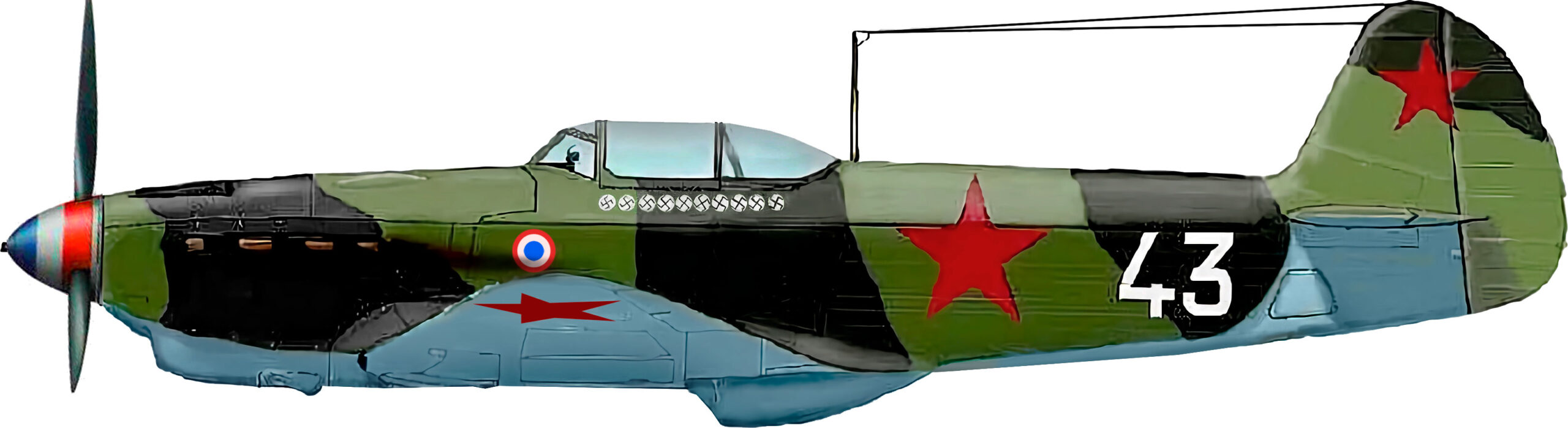
The Yak-1b of Albert Littolff, who shot down 14 aircraft, ten of them before arriving in the USSR. He was killed on 16 July 1943. His victories are marked with swastikas.
The French pilots fought the Germans in the skies over Kursk, Belarus and Lithuania. After supporting Soviet troops during the crossing of the River Neman, the air regiment received the honorary title ‘Neman’. It subsequently became known as ‘Normandie–Niemen’. The regiment then fought in East Prussia, where the French shot down 47 aircraft in two days of combat without suffering any losses of their own.
The regiment was credited with 273 enemy aircraft destroyed and 80 damaged. Of its 96 pilots, 42 were killed. Four were awarded the title Hero of the Soviet Union.
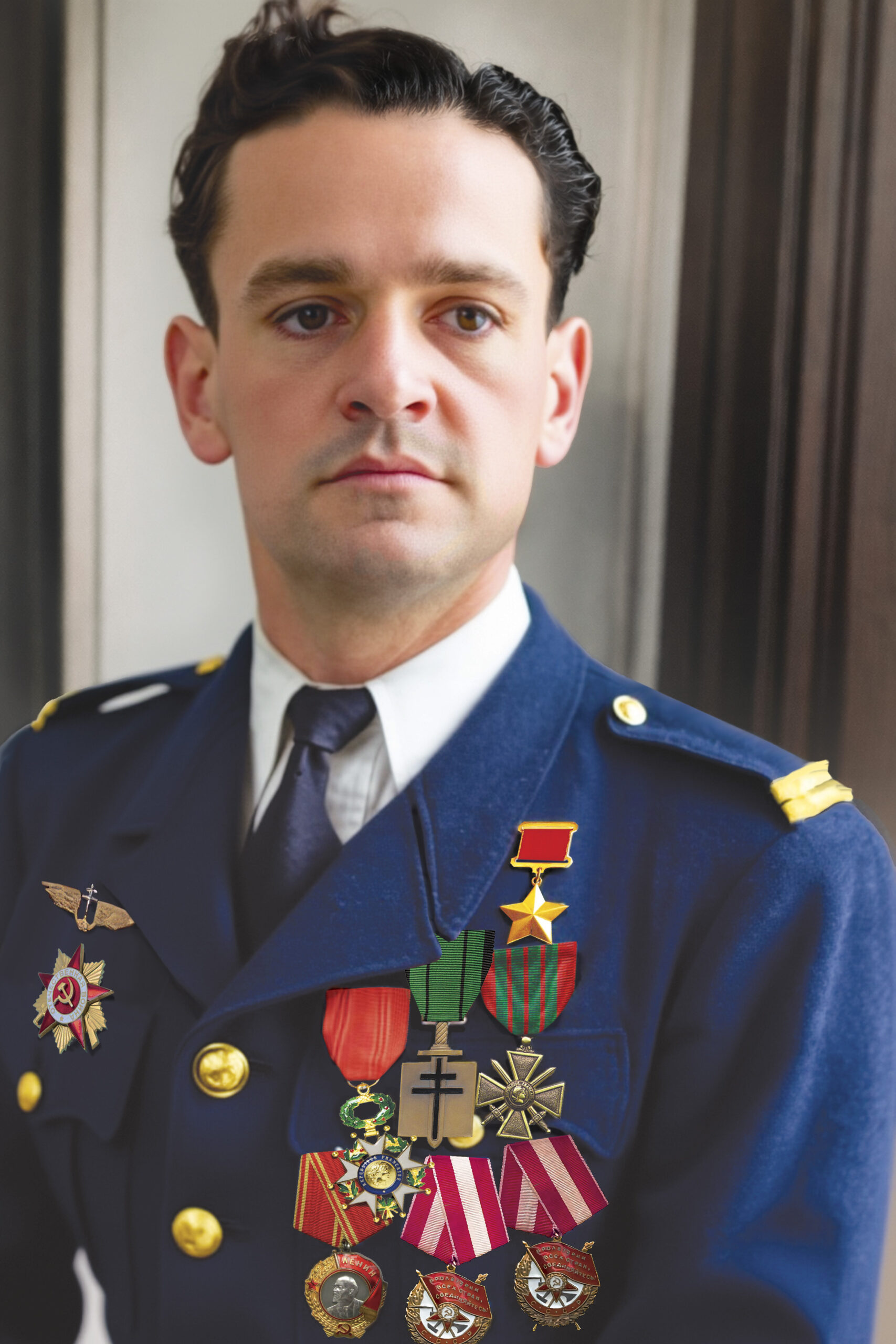
Marcel Albert left German-occupied France by flying an aircraft to Gibraltar and then travelled to the USSR. Flying Yak fighters, he shot down 21 German aircraft and was awarded the title Hero of the Soviet Union. Including the aircraft he shot down in 1940, Albert was the highest-scoring French pilot of the Second World War.
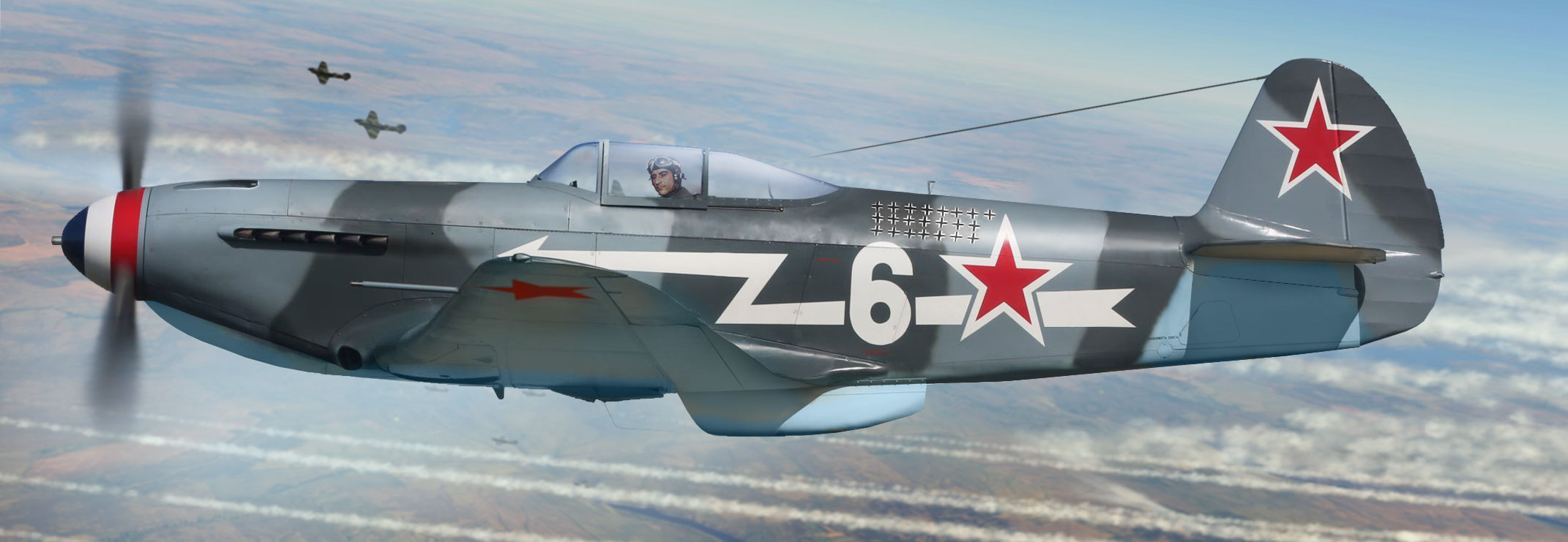
Marcel Albert’s Yak-3. The aircraft bears 22 German crosses, representing enemy aircraft shot down.
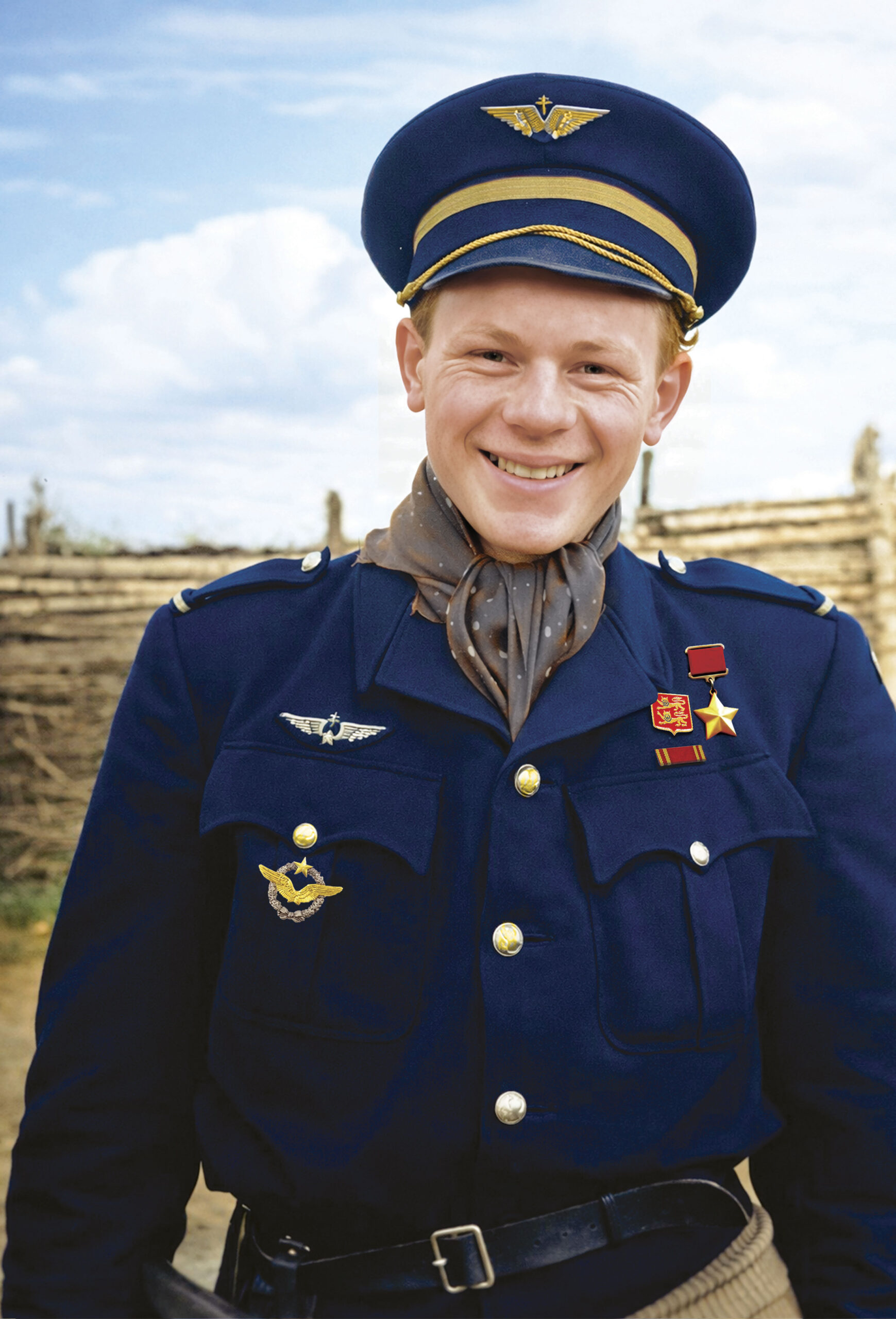
Roland de la Poype came from an aristocratic family. While serving with the Royal Air Force, he shot down a German aircraft. In 1942, he arrived in the USSR with the first group of pilots. He later wrote: ‘I do not regret for a second exchanging service in the comfortable conditions of British air bases for the warmth of the Soviet people, who welcomed us and took us under their wing. Their heartfelt support helps us forget all the discomfort, hardship and loneliness.’ Flying Soviet fighters, Roland shot down 16 enemy aircraft—seven individually and nine shared—and damaged one. He was awarded the title Hero of the Soviet Union.
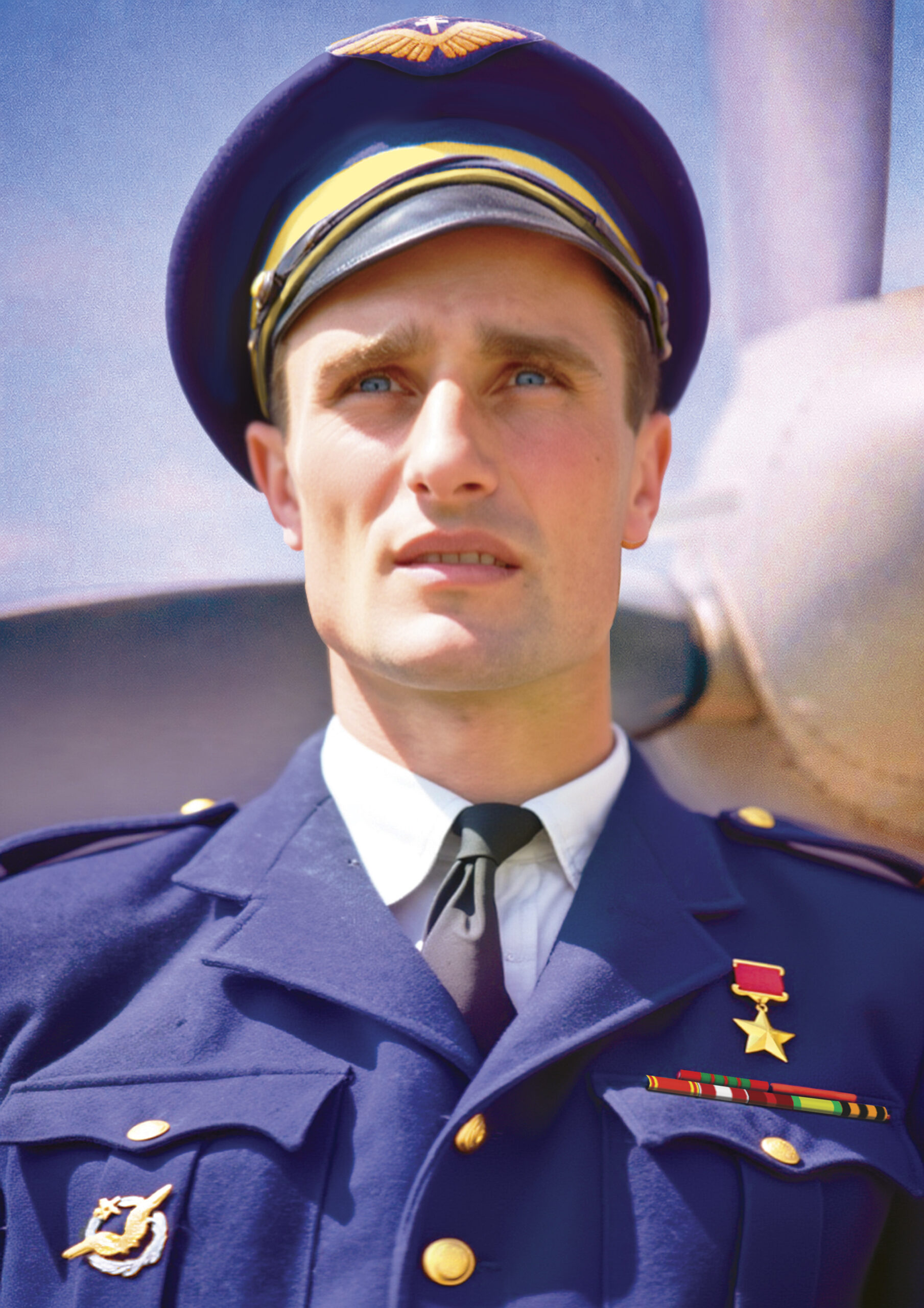
Jacques André commanded a flight of four fighters. On 16 January 1945, the flight engaged 40 Fw 190 aircraft! Jacques André claimed three victories, while his comrades claimed four. Jacques André was credited with a total of 15 aircraft shot down, for which he was awarded the title Hero of the Soviet Union.
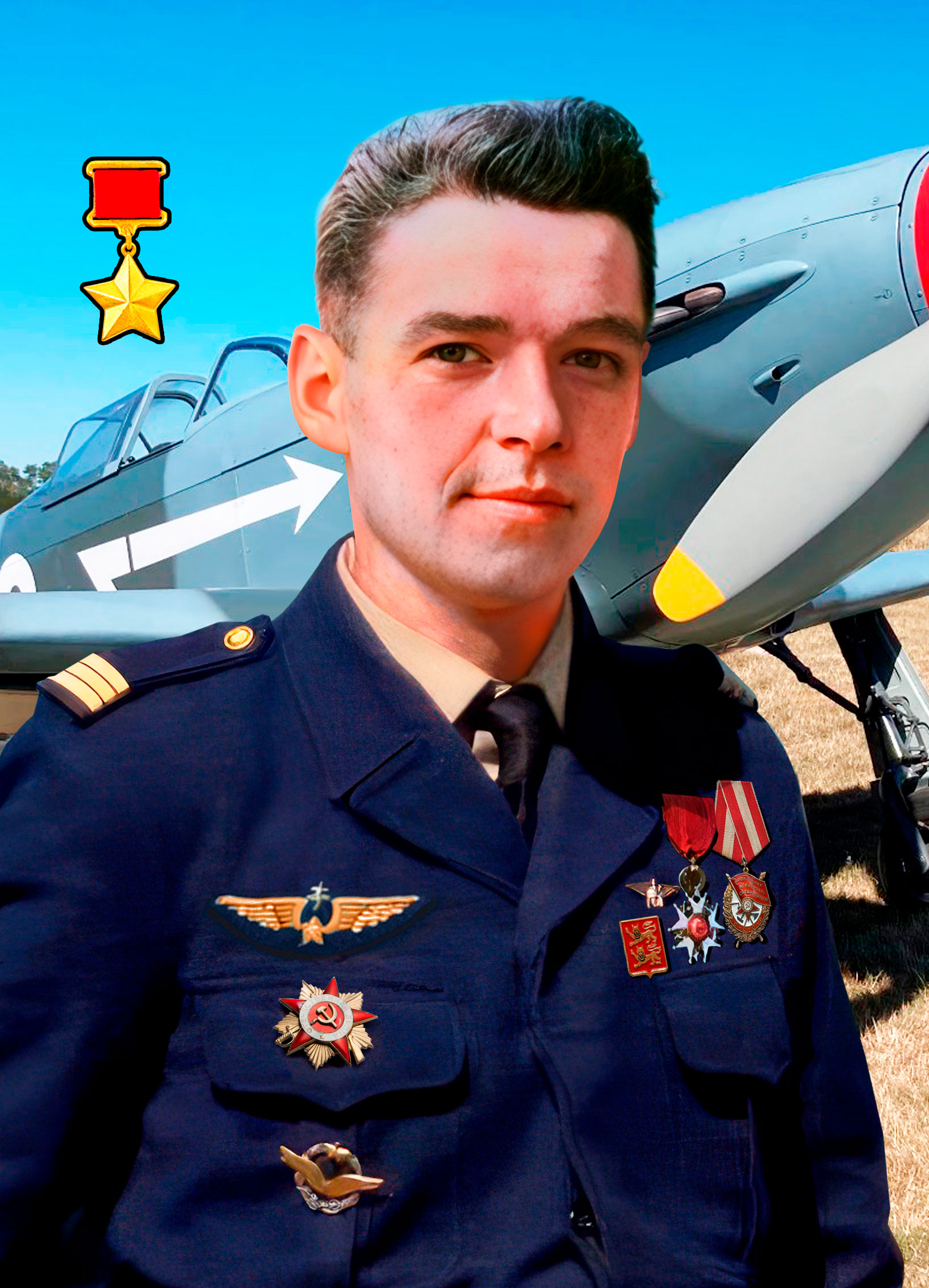
In 1940, Marcel Lefèvre flew a French aircraft to British Gibraltar, where he claimed his first aerial victory. In the USSR, he shot down a further 10 German aircraft. In 1944, he became commander of the ‘Cherbourg’ Squadron. He was killed on 5 June 1944 and posthumously awarded the title Hero of the Soviet Union.
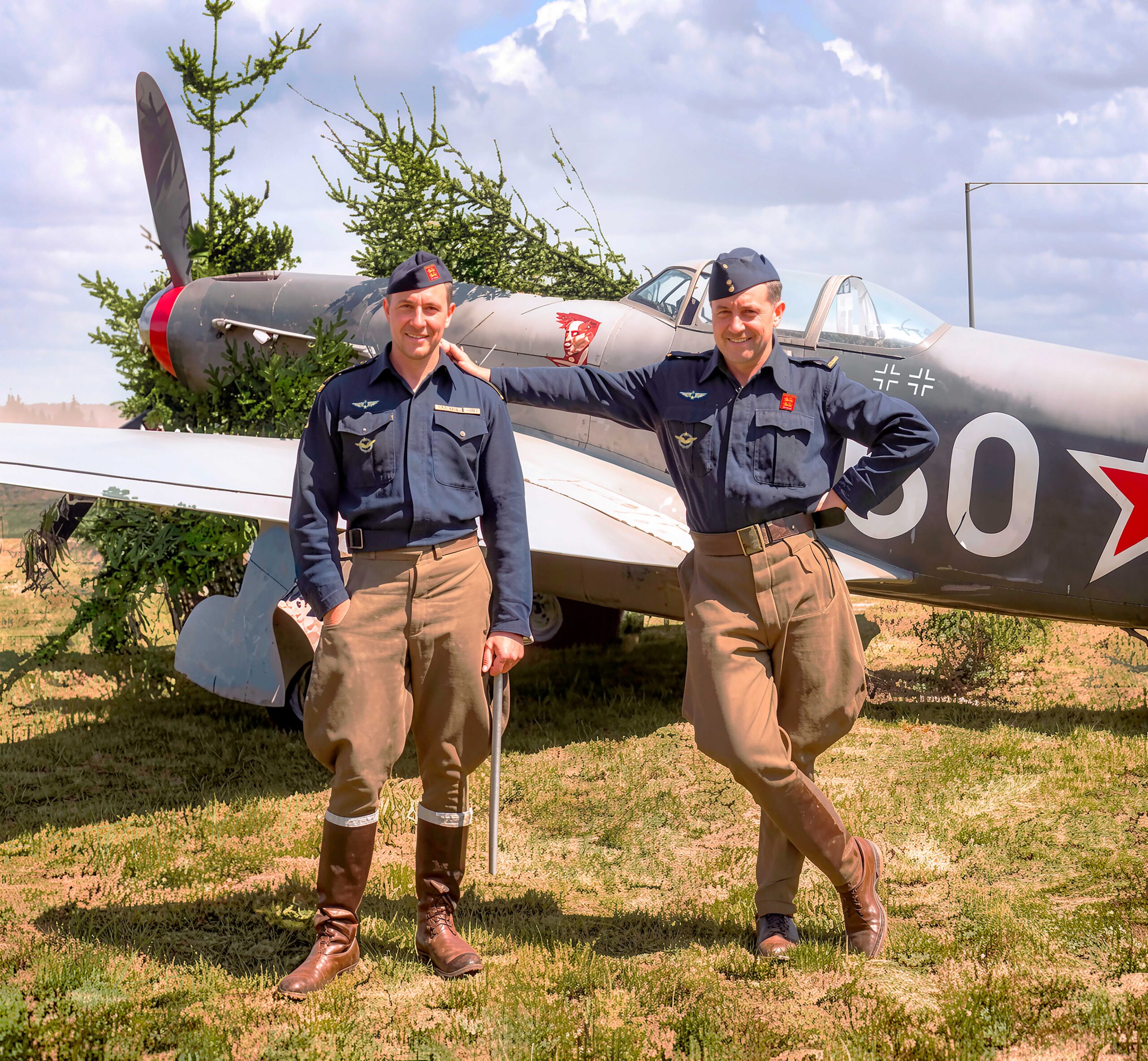
The brothers René and Maurice Challe. René claimed seven victories before being seriously wounded. In his very first engagement, on 8 June 1944, Maurice mistakenly shot down the Soviet pilot Vasily Arkhipov, who had 12 victories to his name. Seeking to atone for Arkhipov’s death, Maurice volunteered for the most difficult missions and shot down 11 enemy aircraft. He was killed on 27 March 1945.
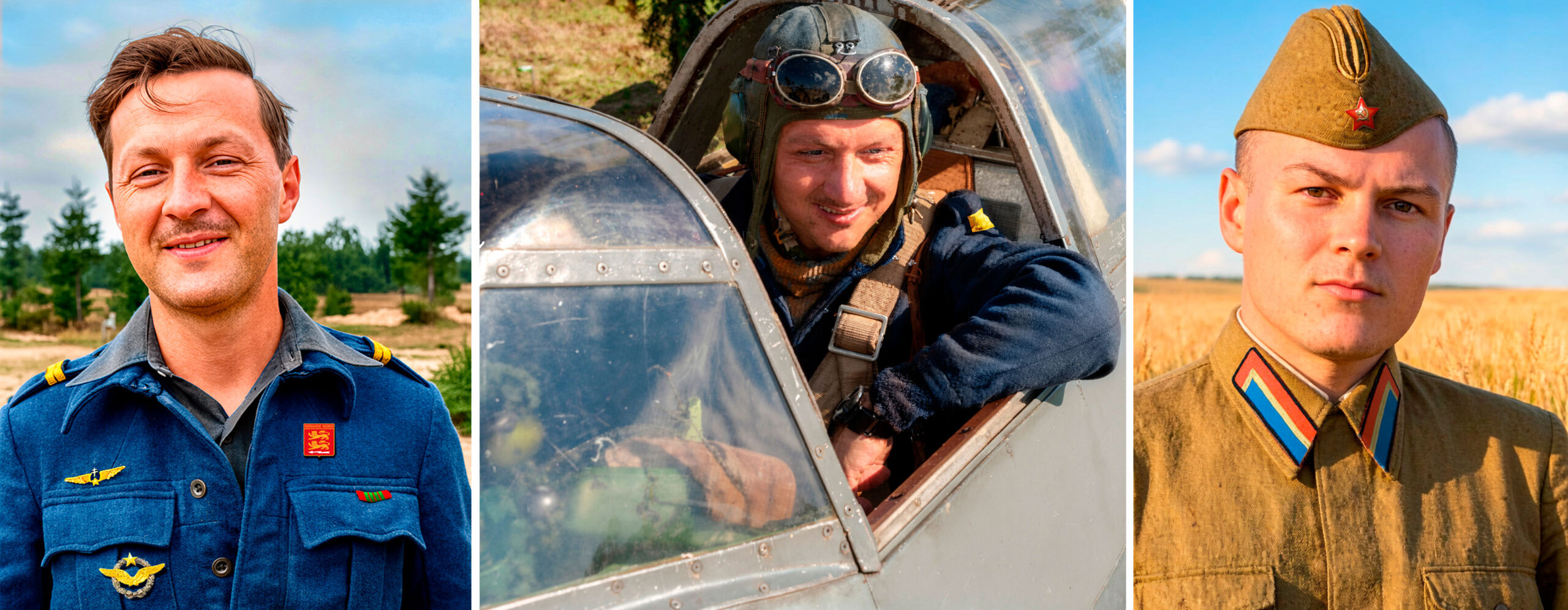
Maurice de Seynes, a nobleman from a distinguished family, died alongside his mechanic, Vladimir Belozub, an ordinary Russian lad from Ukraine. While redeploying to another airfield, Maurice’s aircraft was damaged, and the pilot was ordered to abandon it. But behind him sat Vladimir, his mechanic, who had no parachute. To save his ground-crew ‘guardian angel’, de Seynes continued trying to land the damaged aircraft until the very end.
After the war, Maurice de Seynes’s mother would say to General Georgy Nefedovich Zakharov when he visited her:
‘He was my only son, my hope and my solace. With his death, the last branch of our family tree was broken. But I would not have wished any other death for my son.’
Bruno de Faletans performed a similar act of heroism: he refused to abandon the aircraft without his mechanic, Sergei Astakhov, and continued trying to land the stricken aircraft until the very end. Eternal memory to the heroes!
 Russian
  English