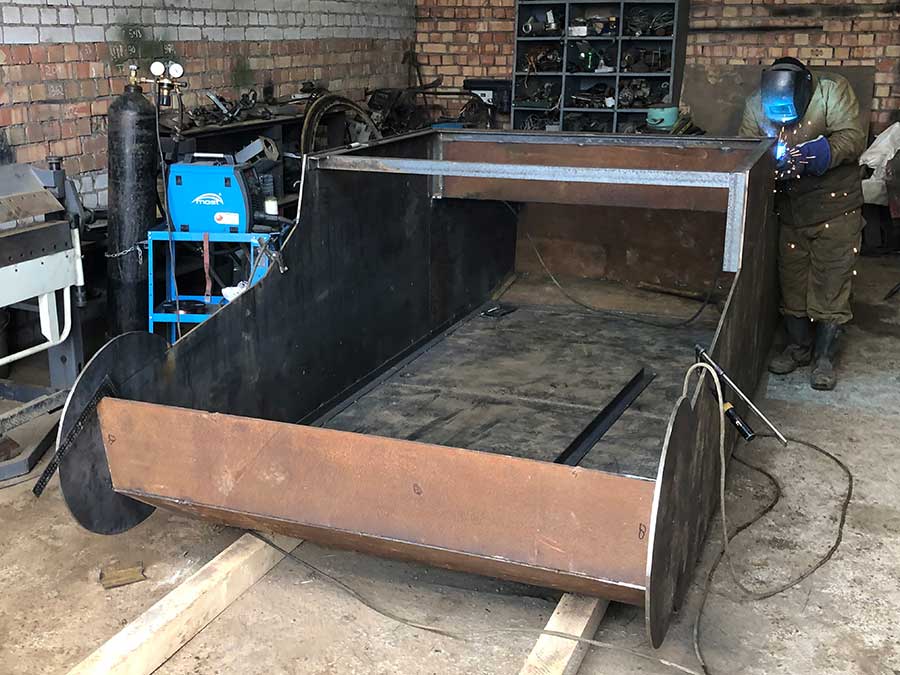
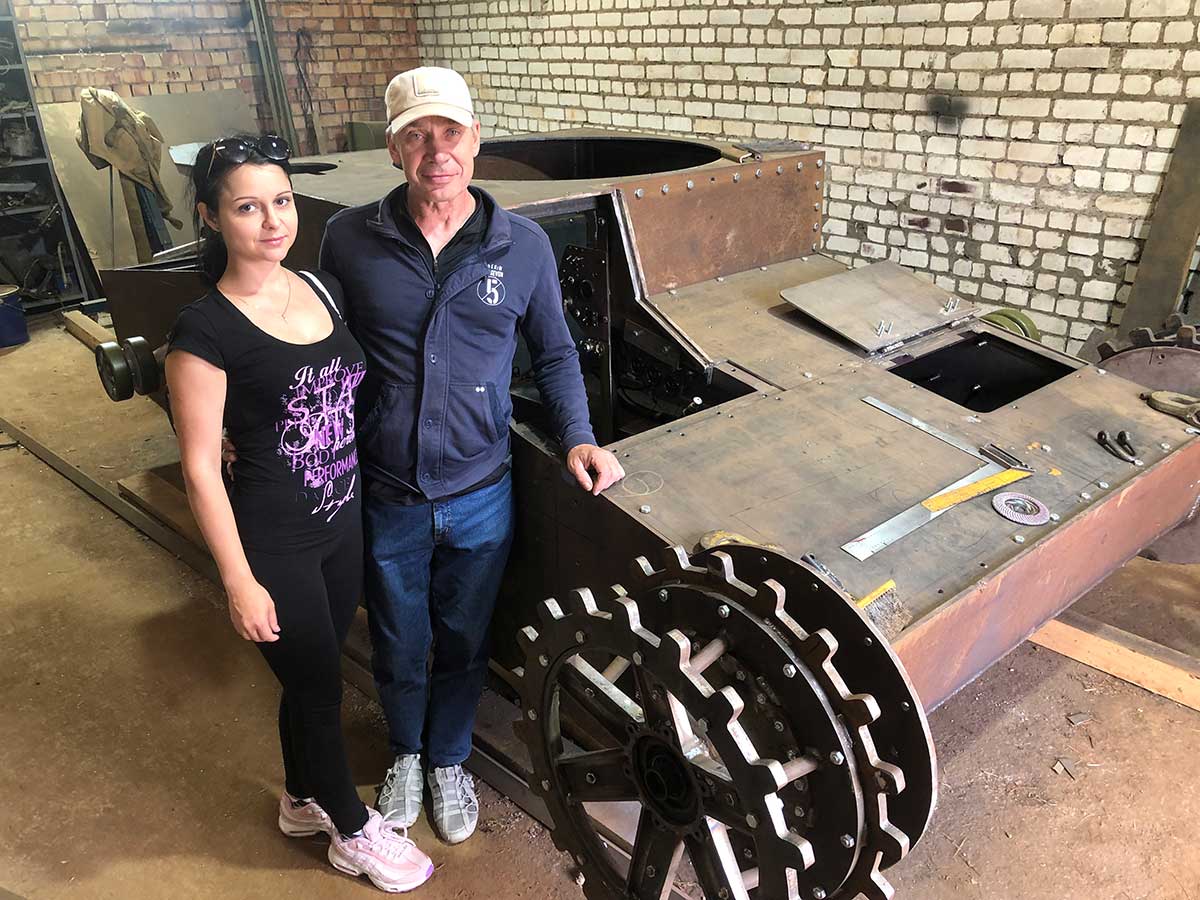
The engine and gearbox from a UAZ Hunter were donated by the Main Directorate of Internal Affairs of the Minsk City Executive Committee. BME-Diesel LLC, MAZ-MAN CJSC, and Minsktrans's Tram Park donated the wheels for the undercarriage.
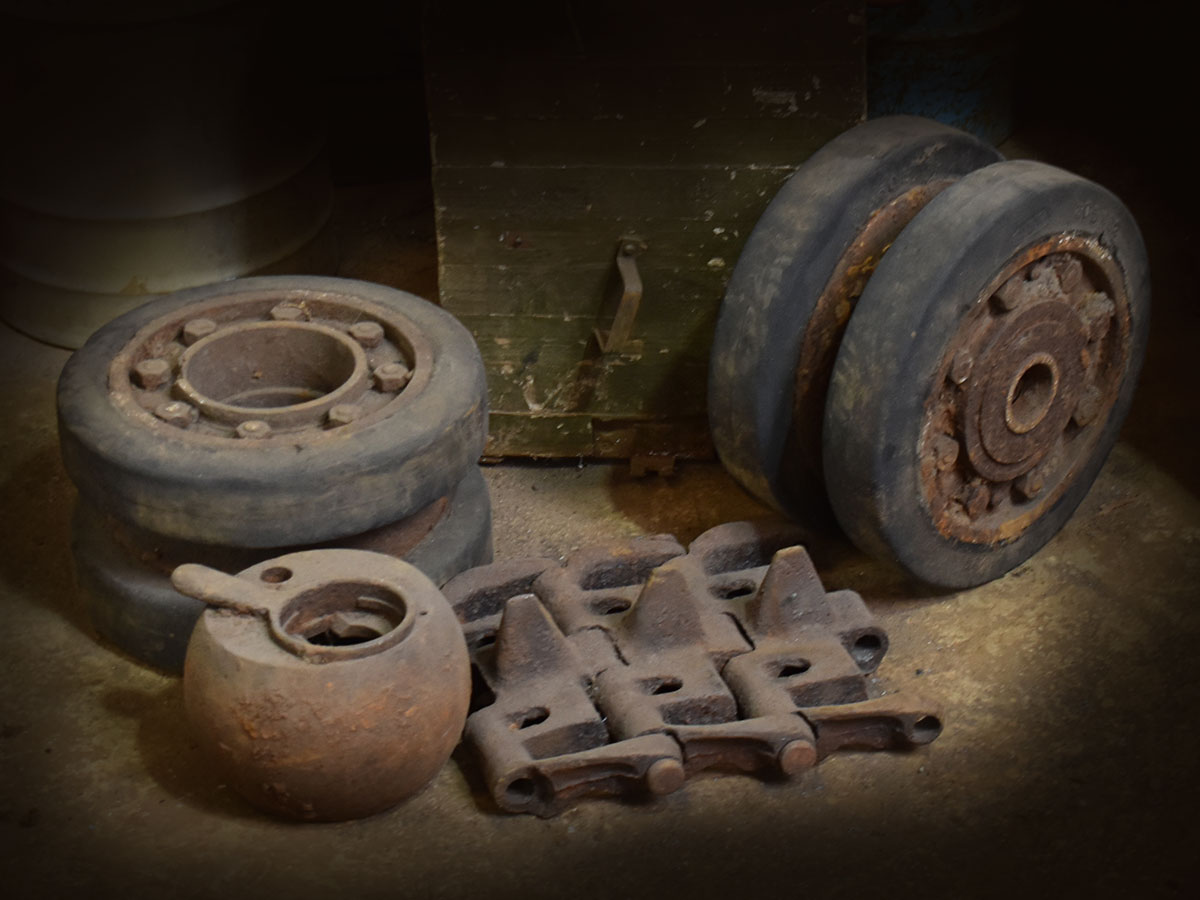
Sergei Zhirkov and his wife Lyudmila donated several rollers, a machine gun apple, and fragments of a T-26 tank track to us.
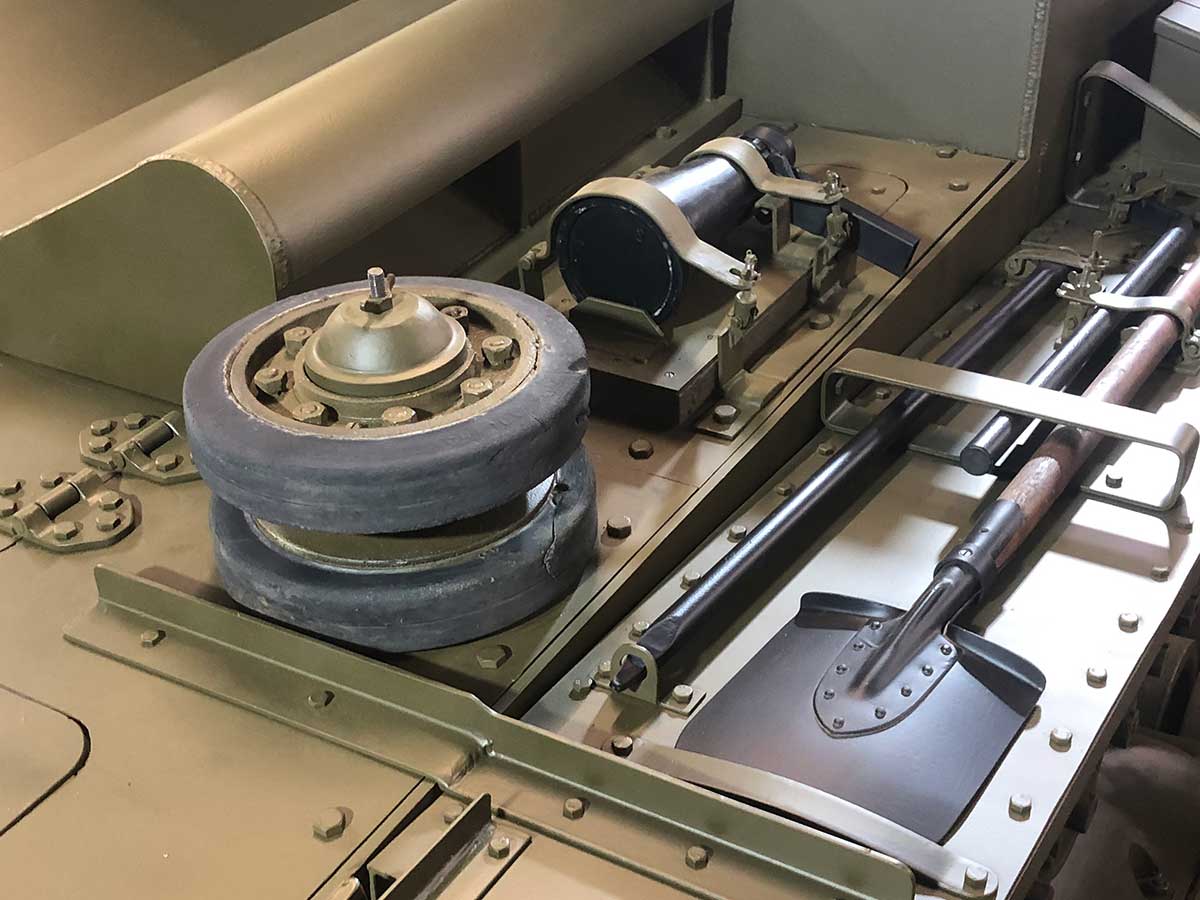
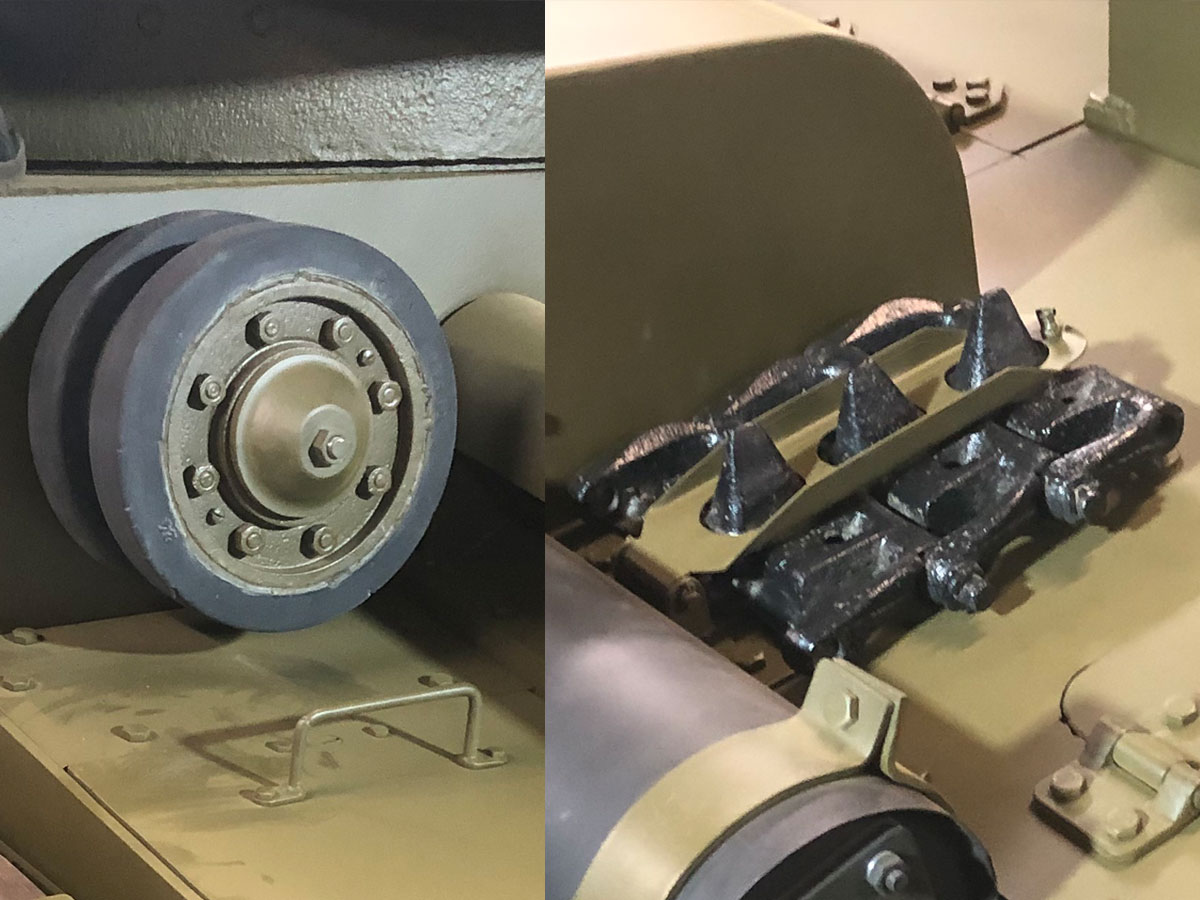
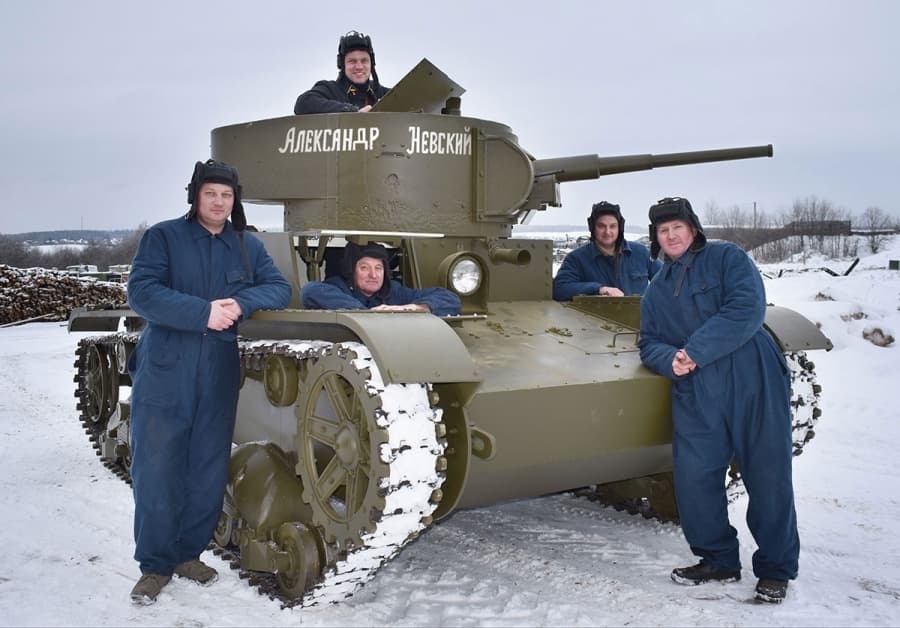
The T-26 light tank was created in 1931 to replace the T-18 (MS-1) light infantry support tanks. The T-26 became the most popular pre-war Soviet tank. Between 1931 and 1940, the USSR built a total of 11,307 T-26s of various modifications (double- and single-turret variants, artillery and flamethrower tanks, engineer and remote-controlled tanks). The first Soviet self-propelled guns (Samokhodnaya Ustanovka, “SU”) armed with 76-mm, 122-mm and 152-mm cannons were also built on its chassis. In 1936, the T-26 first saw combat in Spain, where they proved the best tanks. In 1938 in China, they fought side by side with British Vickers Mark E tanks, on whose basis they were created. The Chinese also noted the Soviet tank’s superiority. In 1939 in Finland, the T-26 fought against the Vickers. We were victorious. Over the Great Patriotic War period (1941-1945), the T-26s saw combat use until 1943.
Mikhail Metla, the grandfather of the executive director of the Stalin Line, Alexander Metla, and Nikolai Prokazov, the grandfather of the author of these lines, the artist Boris Prokazov, fought in the T-26.