


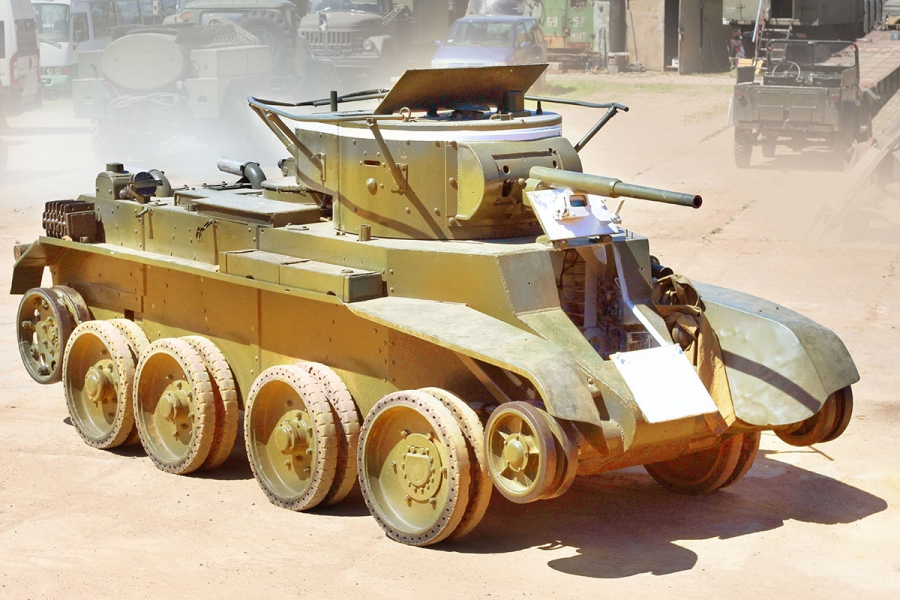
The documents found inside helped establish that in July 1941 this tank participated in the Soviet counterattack at the town of Senno and fought against the Japanese at the Khalkhin Gol river in 1939.
.jpg)
The Soviet ‘BT’ high-speed tanks family was based on an American tank by John Walter Christie. It was he who invented the world’s first successful tank capable of moving not just on tracks, but wheels too. To control the tank, the driver used an automobile steering wheel in ‘wheeled’ mode and levers in ‘tracked’ mode. Several Christie M 1931 tanks were tested in the United States, but were not accepted into service by the American army.
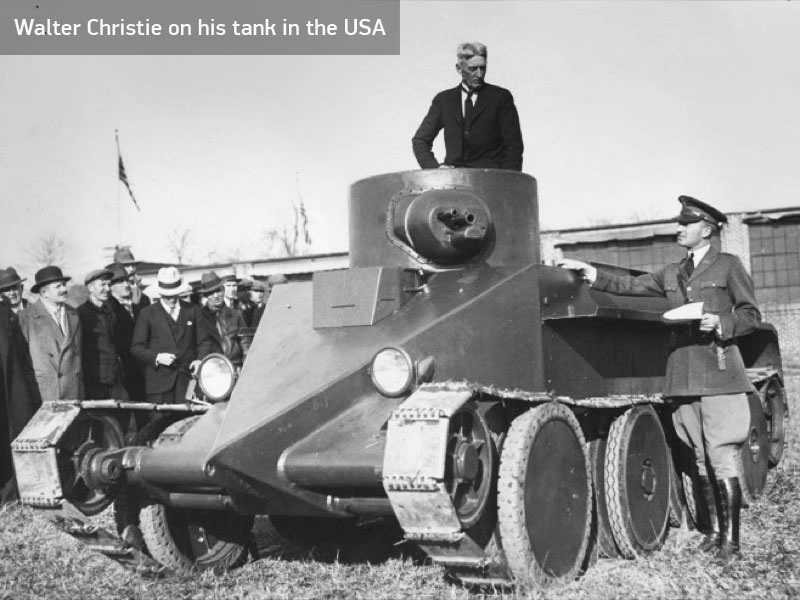
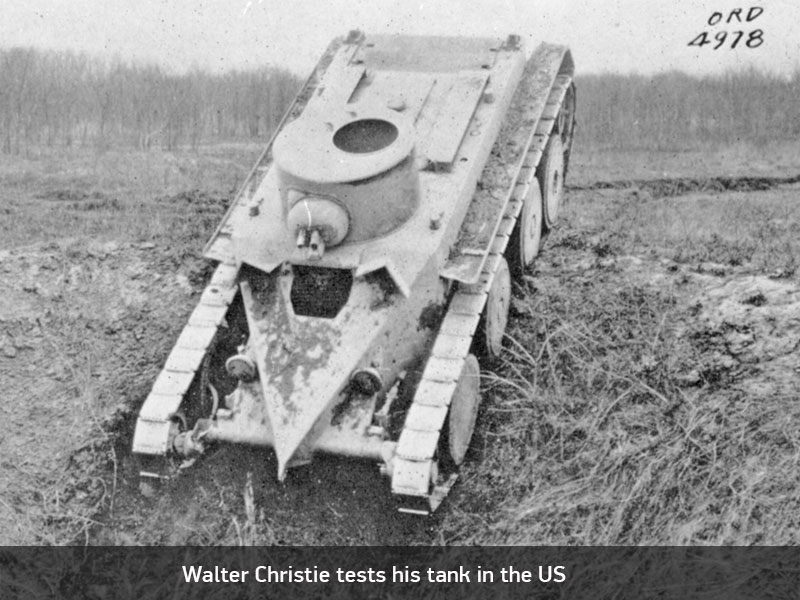
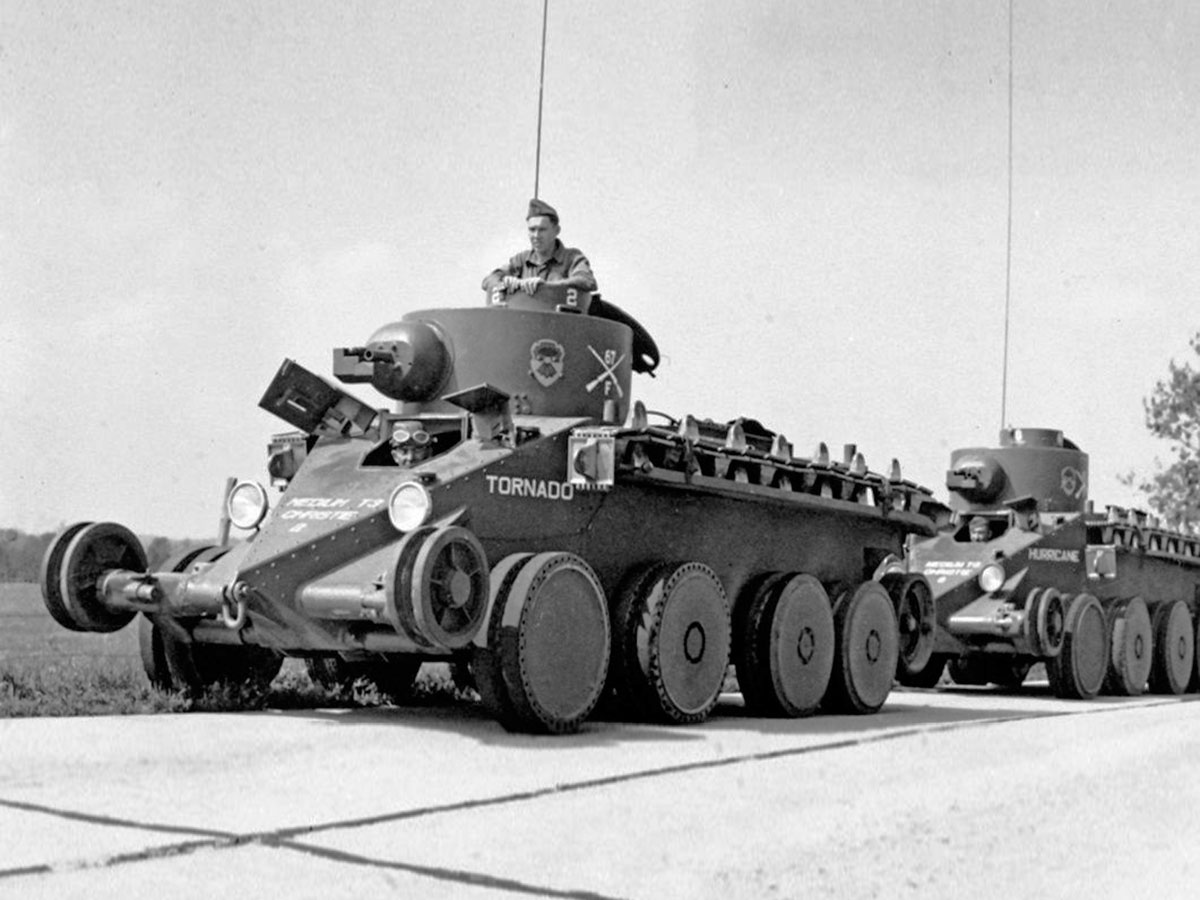
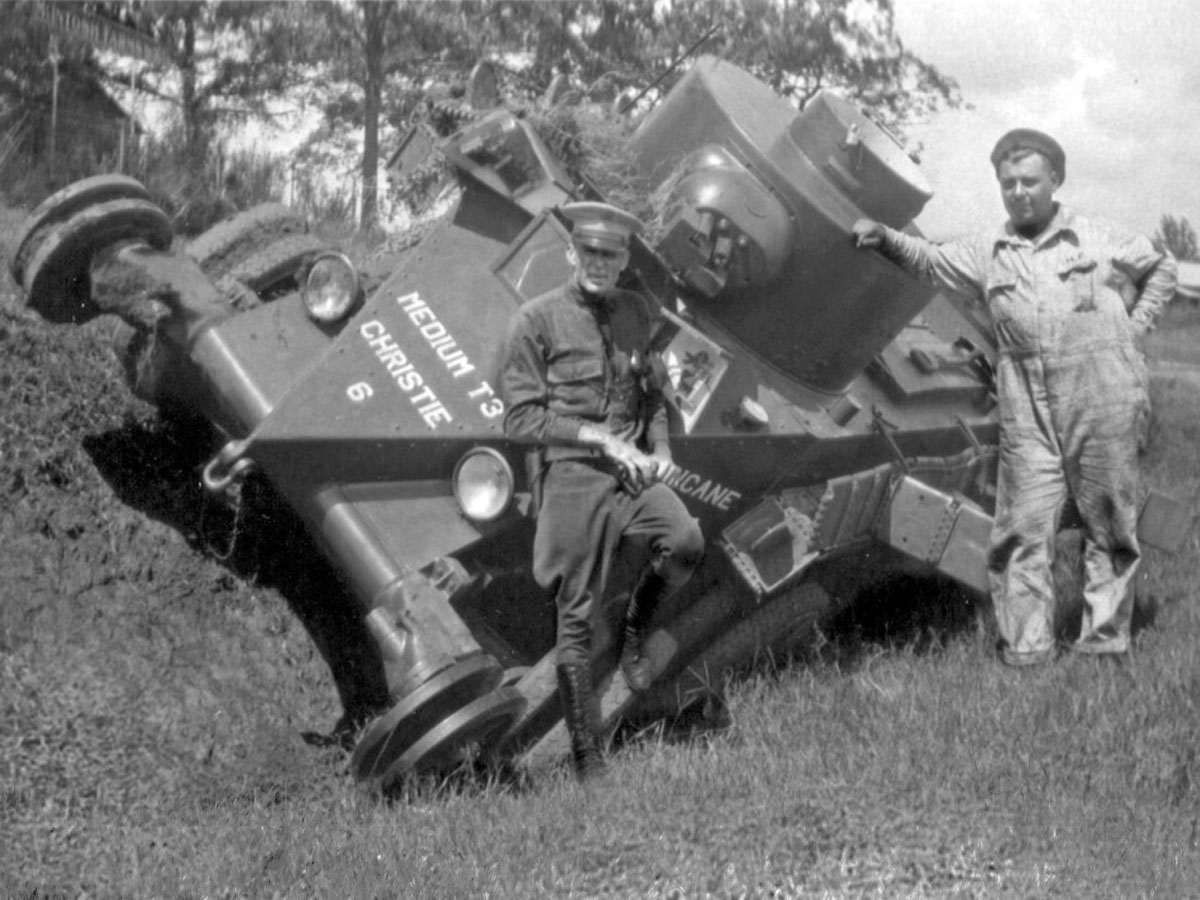
In 1931, a Christie tank without a turret arrived in the USSR. Walter Christie sold the technical documentation and production license to the Soviet Union for $160,000.
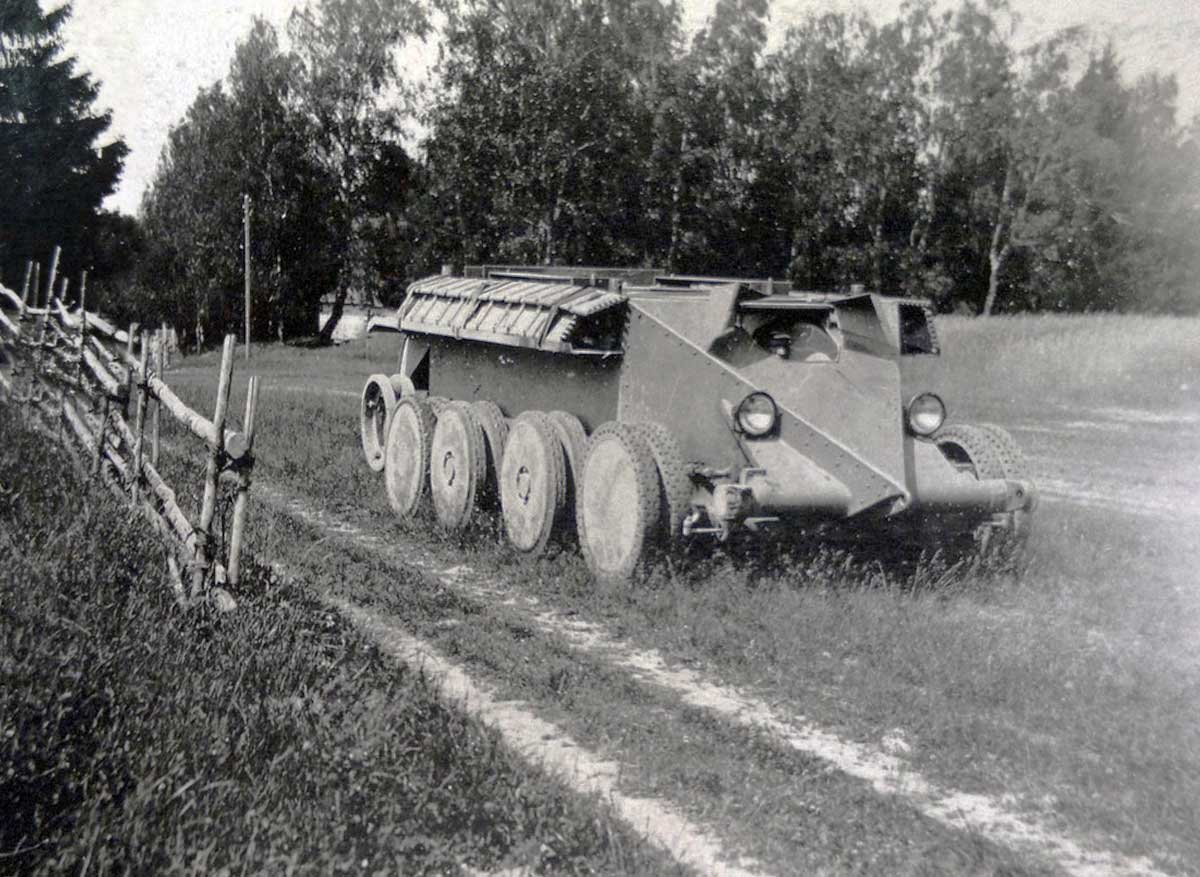
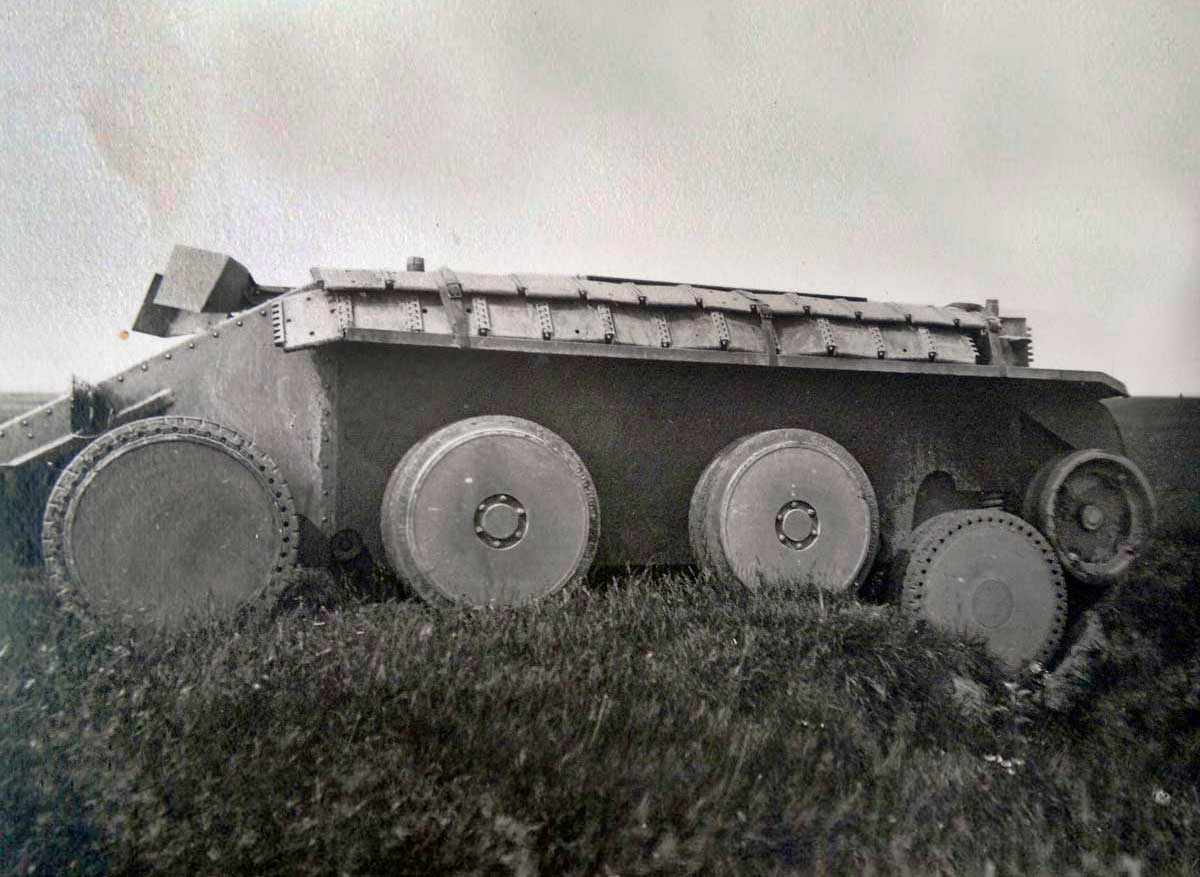
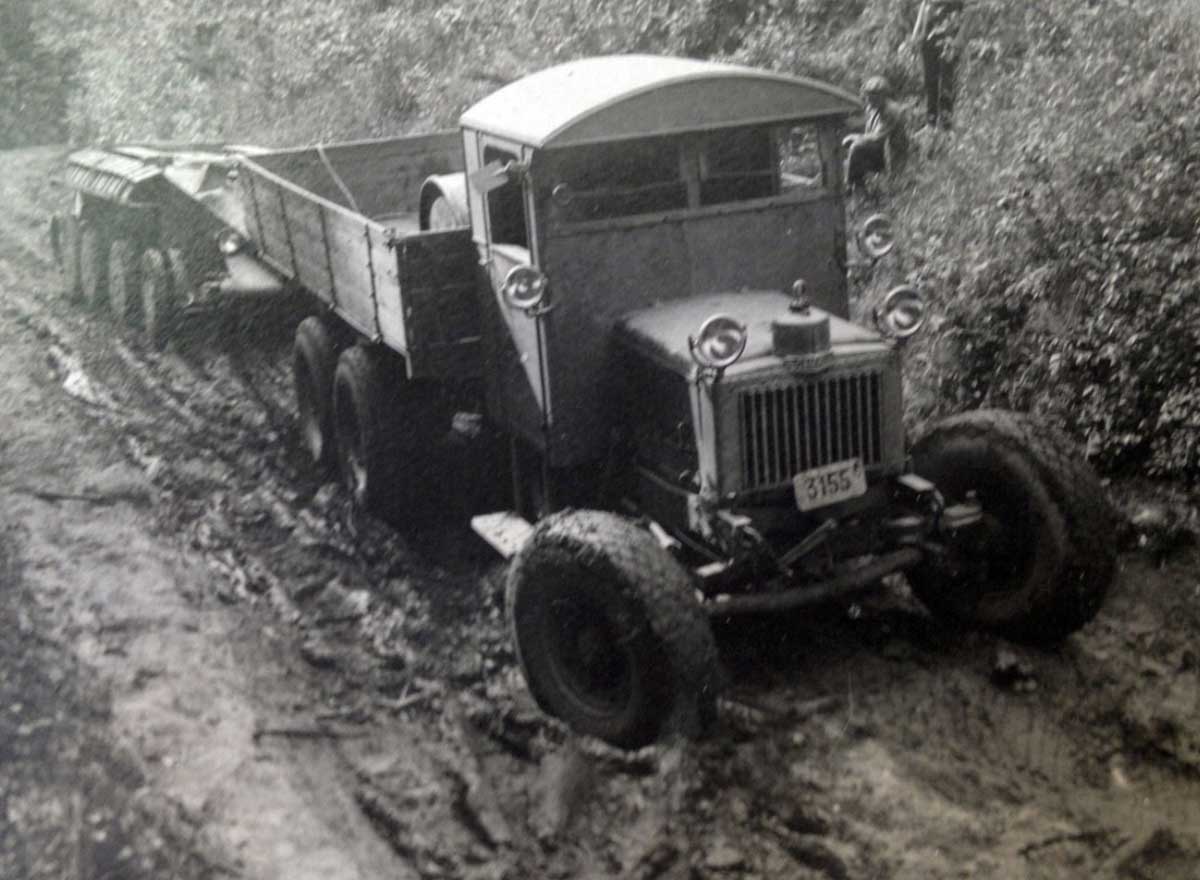
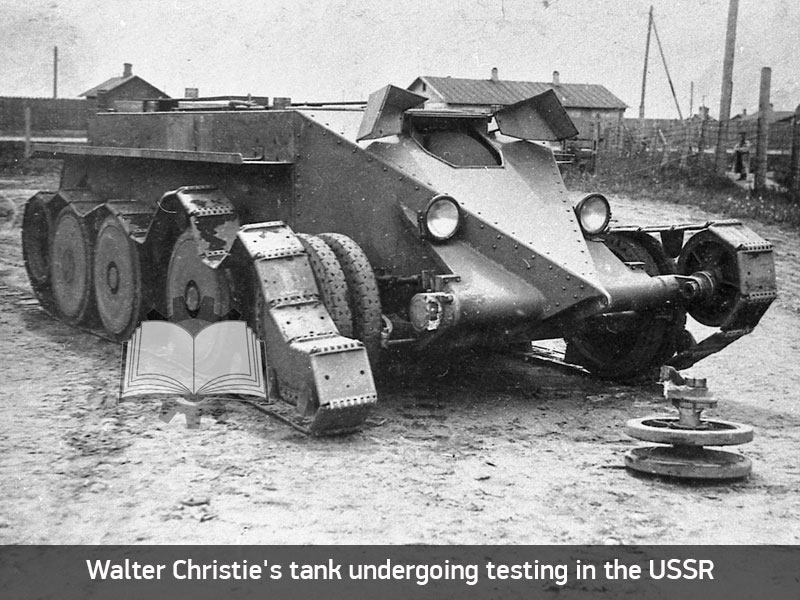
The Soviet version of the Christie tank was named BT – fast tank (fast in Russian «Bystro»). On wheels it reached a speed of 72 km/h, on tracks – 52 km/h.
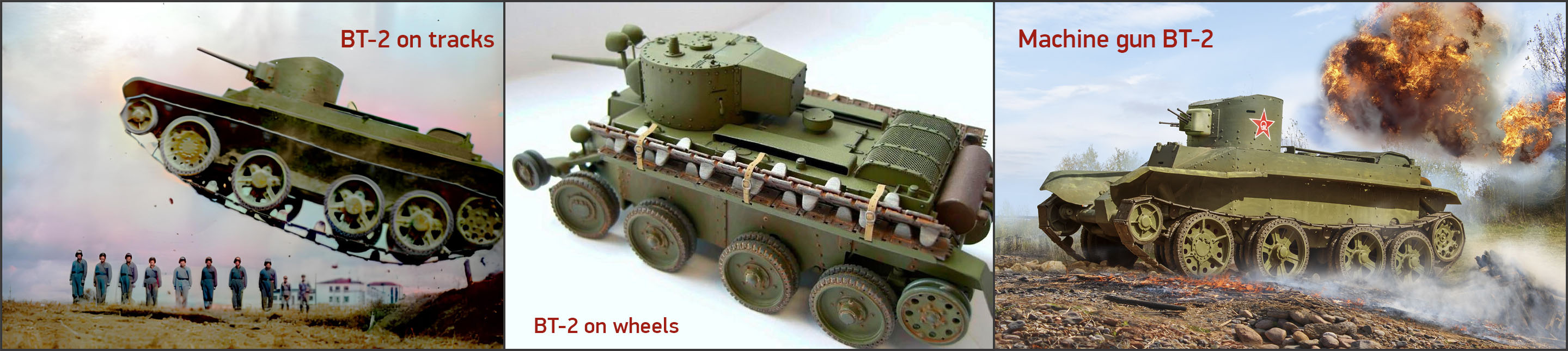
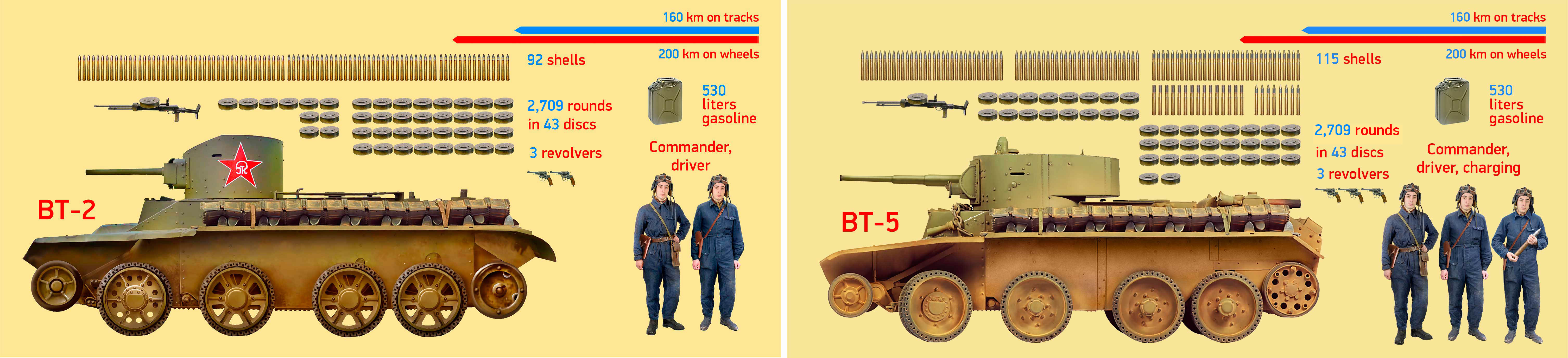
In 1932 and 1933, the USSR built 617 BT-2 tanks, armed with a 37-mm cannon with a machine gun or only machine guns.
In 1933 and 1934, the USSR built 1,887 BT-5 tanks, armed with a 45 mm cannon and machine gun.
In 1935 and 1936, 1,546 BT-7 tanks were built with the same turret as the BT-5. The command tanks had a radio station, so they had 40 fewer shells.
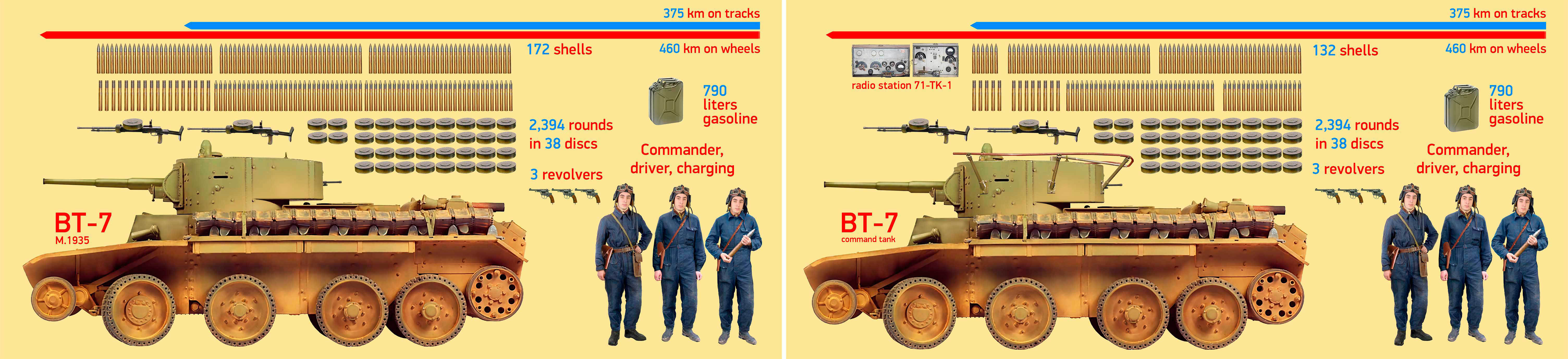
In 1938 and 1939, 3,244 BT-7s with a conical turret were built. From December 1939 to June 1940, 787 BT-7M tanks with diesel engines were built.
From 1934 to 1937, another 134 BT-7A artillery tanks armed with a 76mm cannon were built.
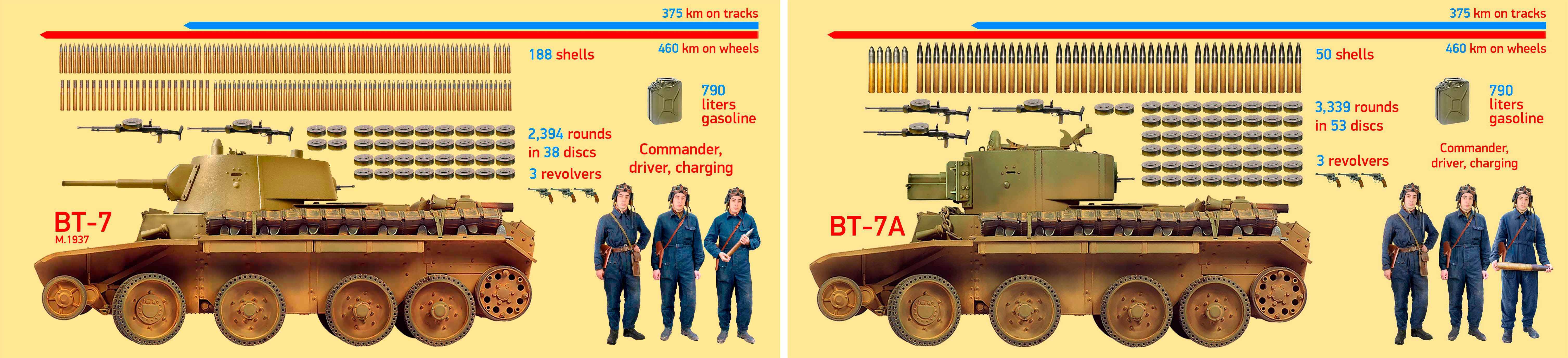
In total, 8,215 BT tanks of all modifications were produced, making it the second most produced pre-war tank in the USSR, behind the T-26 (11,368 tanks).

The BT-7 on the Stalin Line is a command tank. It had a radio and a handrail antenna around the turret. The antenna is made of copper, and its supports are made of textolite.

The BT-7 participated in military parades in Minsk and Kubinka, was used in historical reenactments at our complex and was featured in films and YouTube videos.
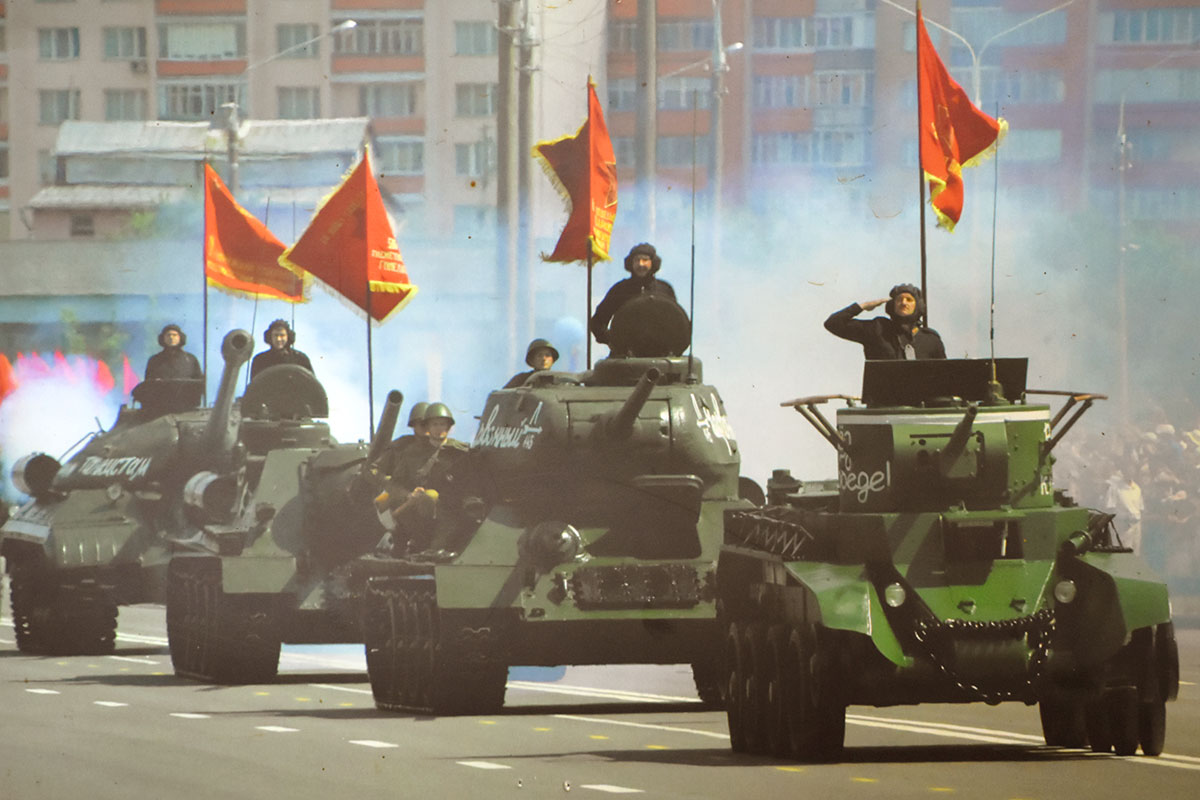
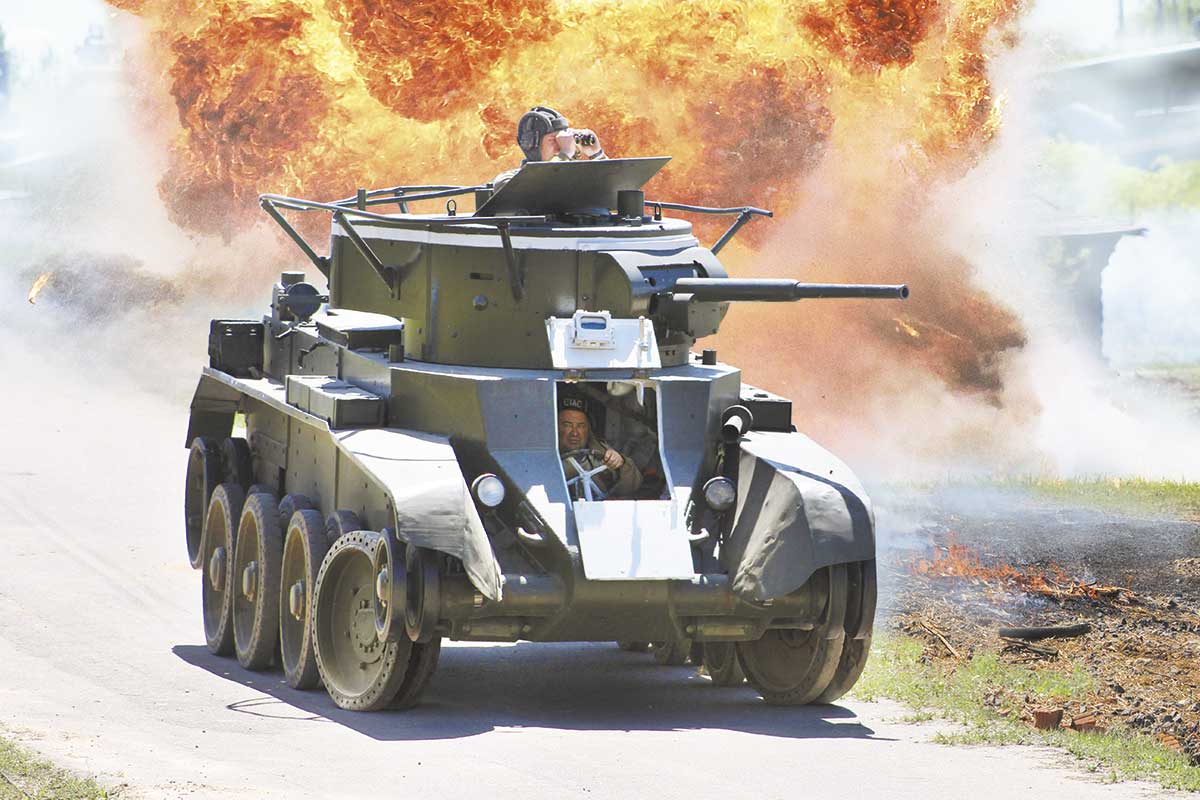
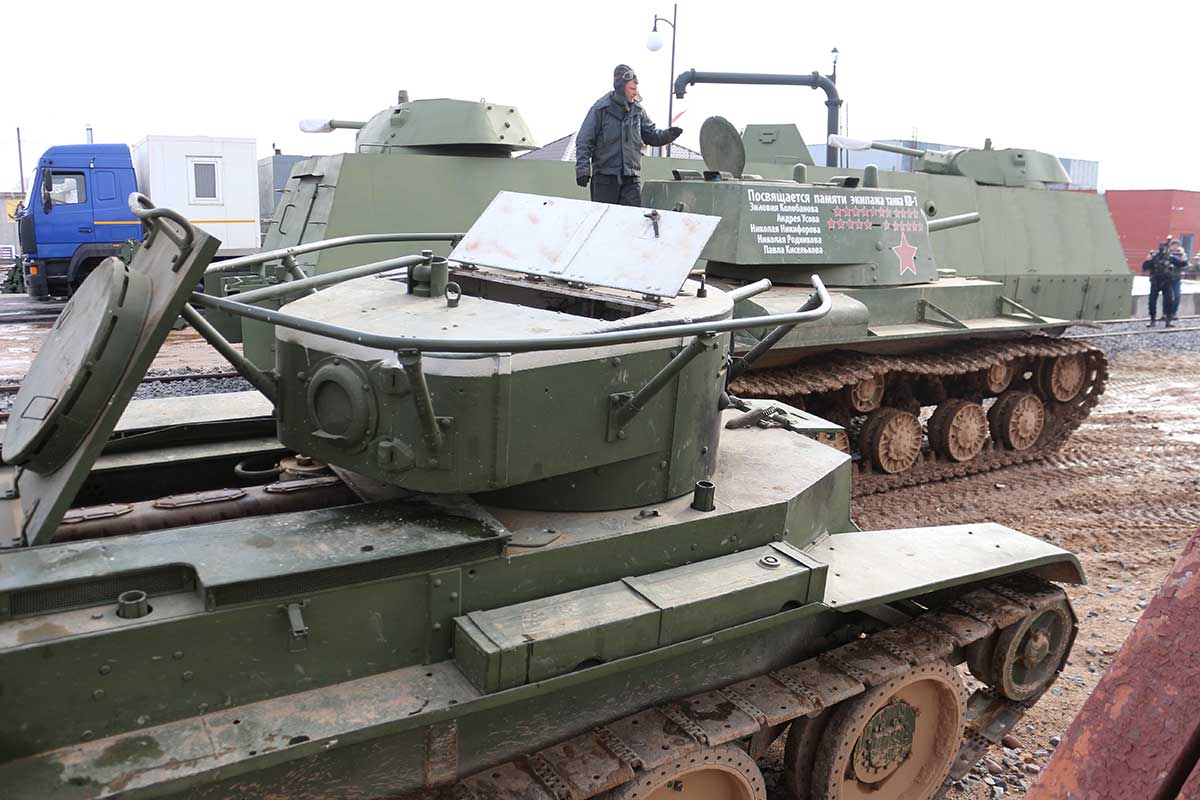
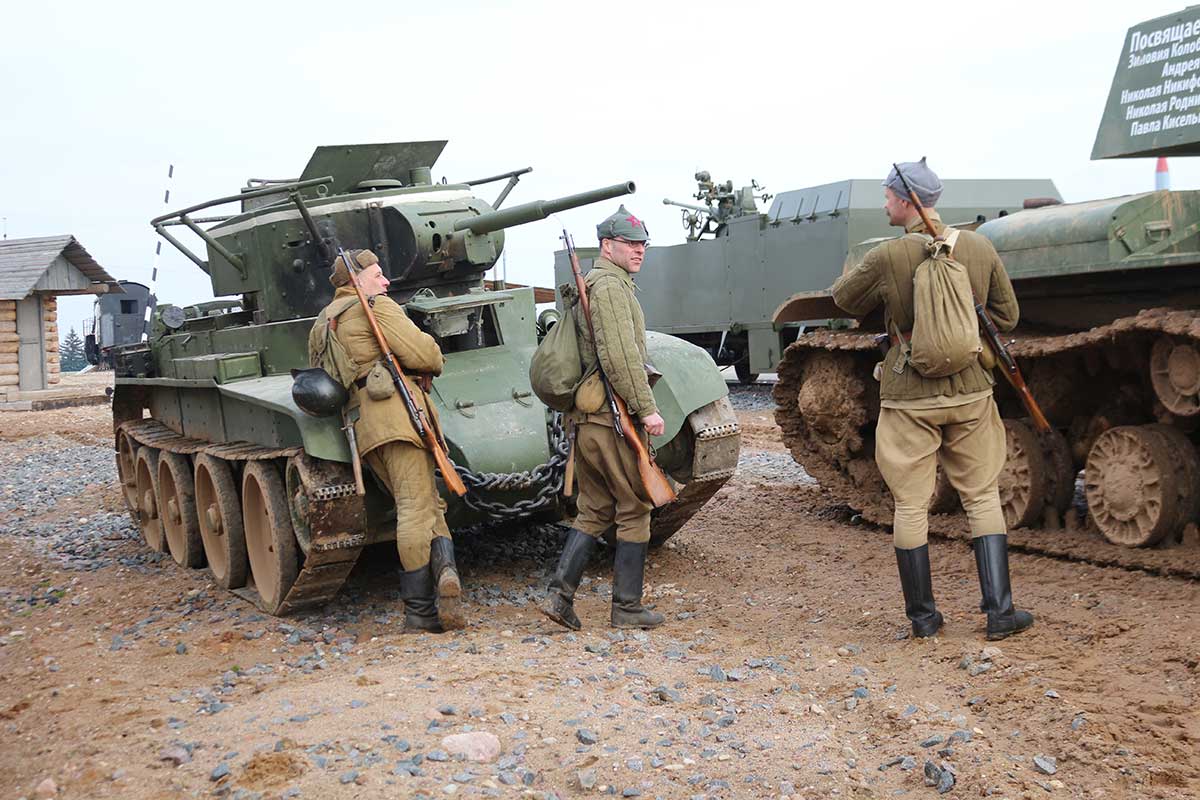
Our BT-7 appeared in the film "Tankman," which was shown in 2020.
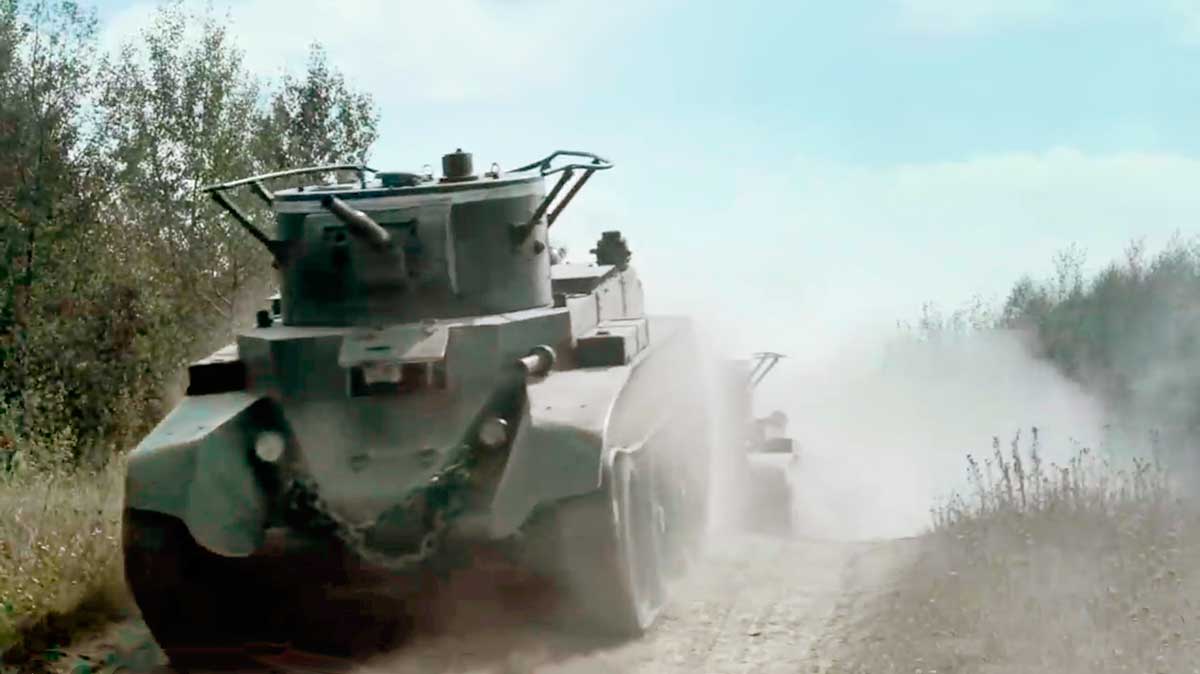
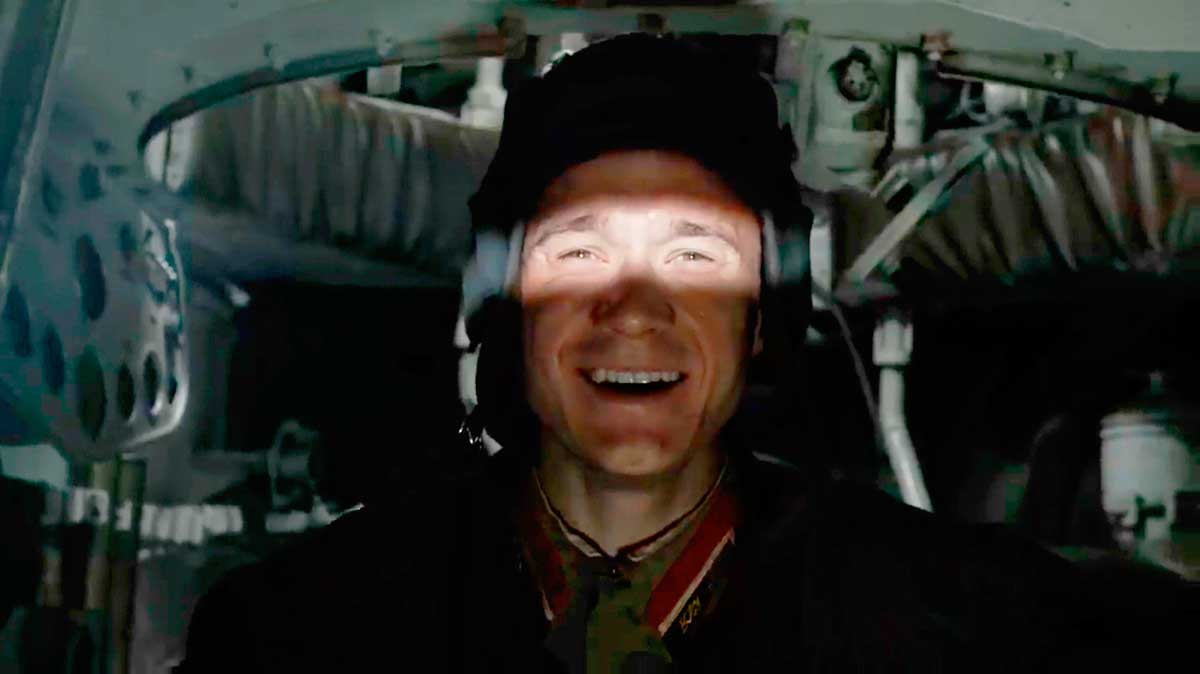
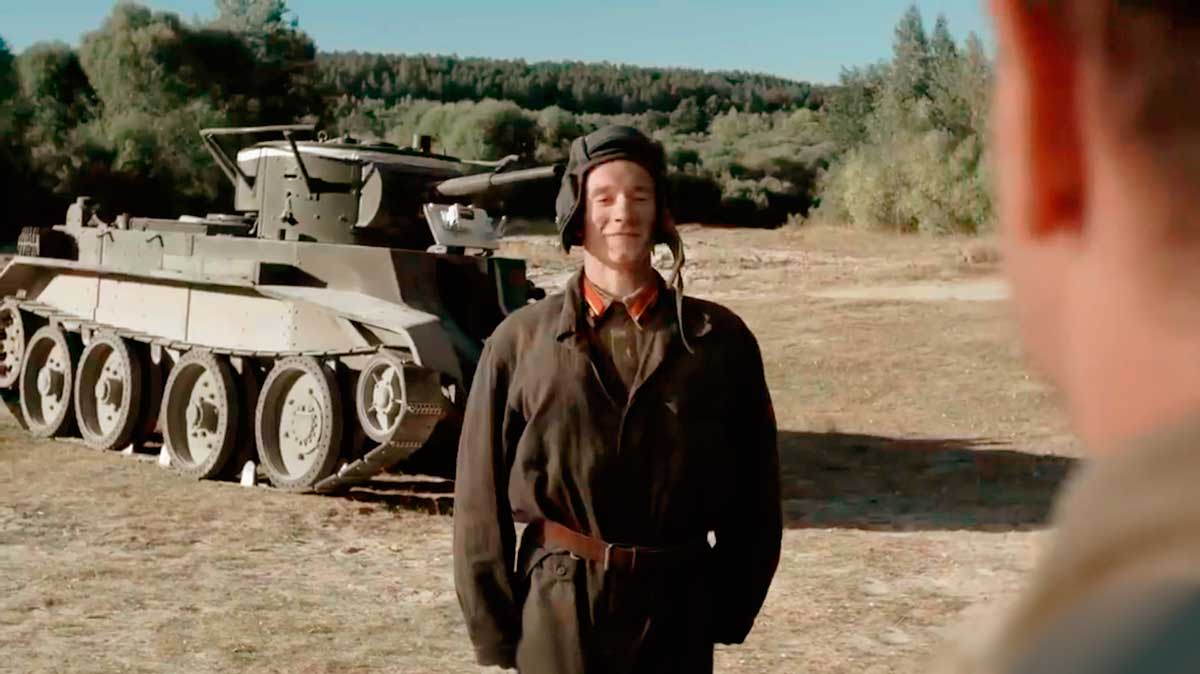
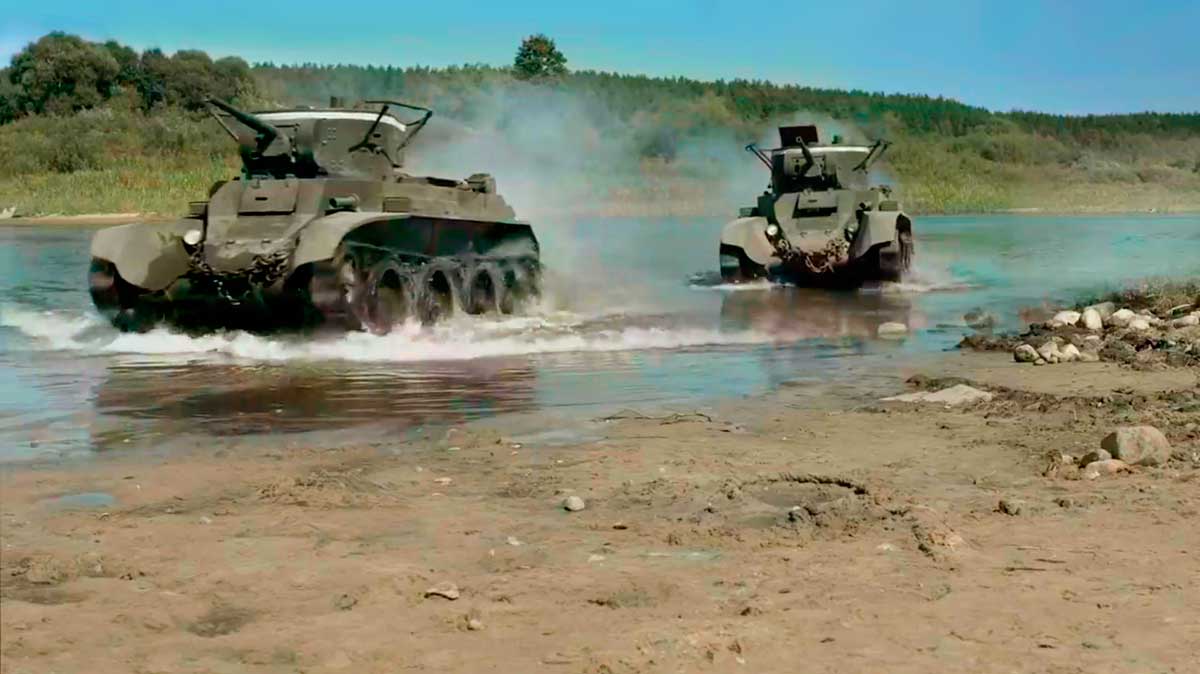
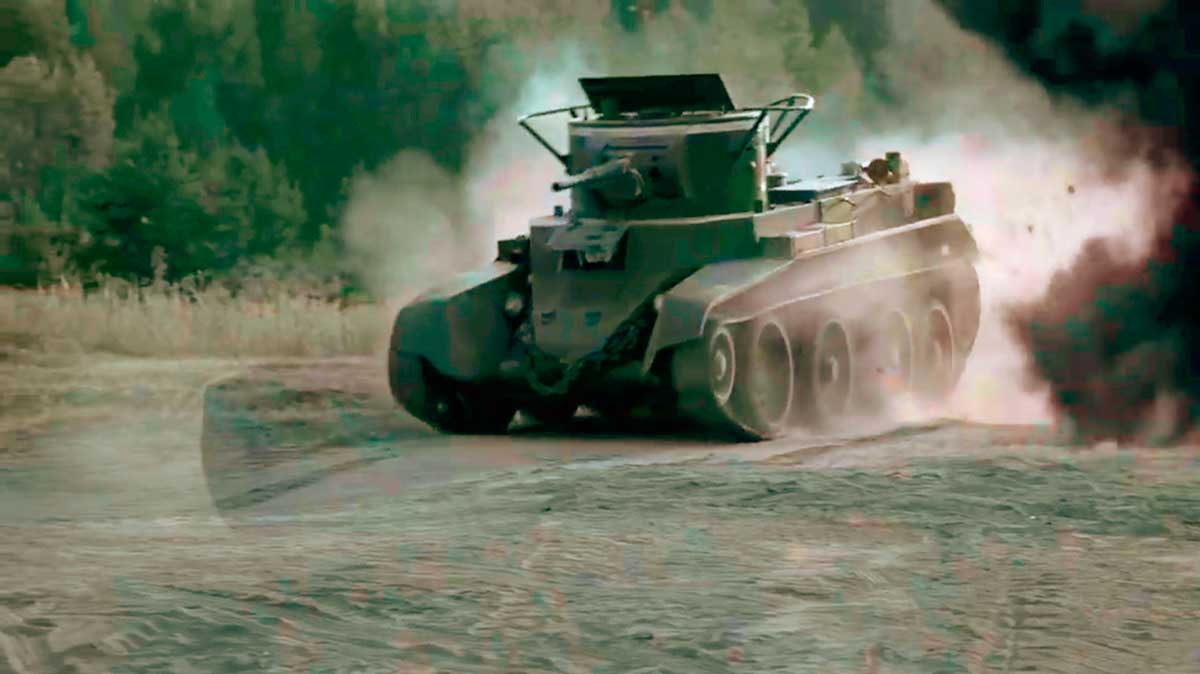
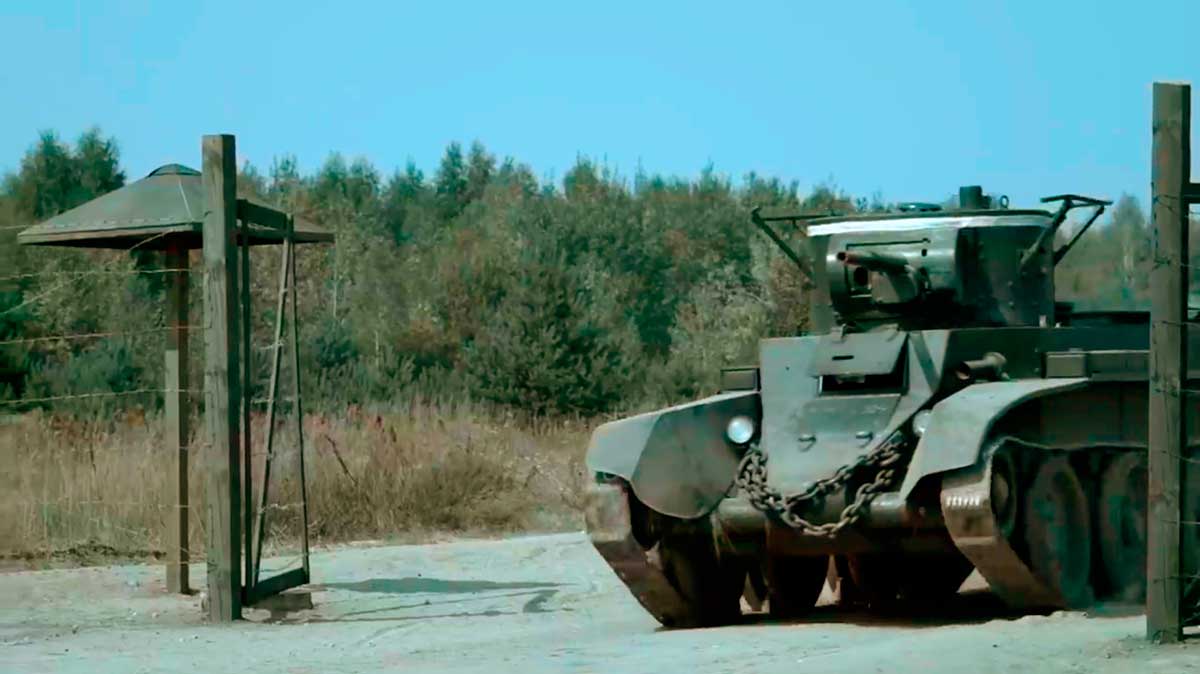
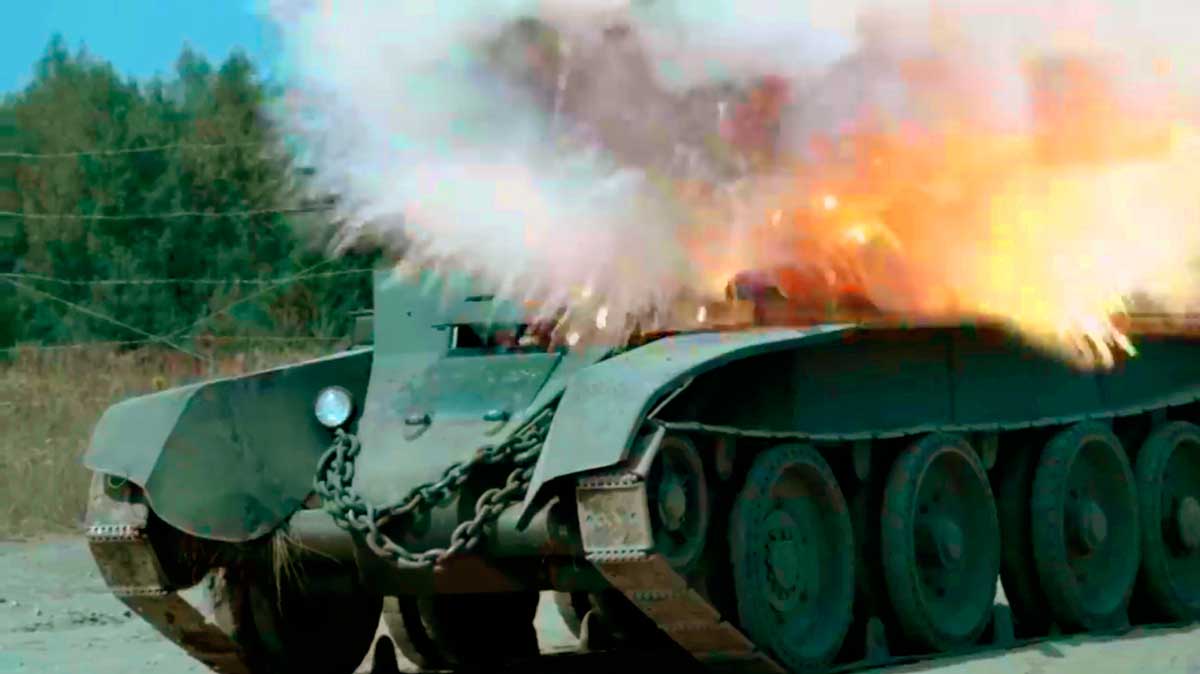
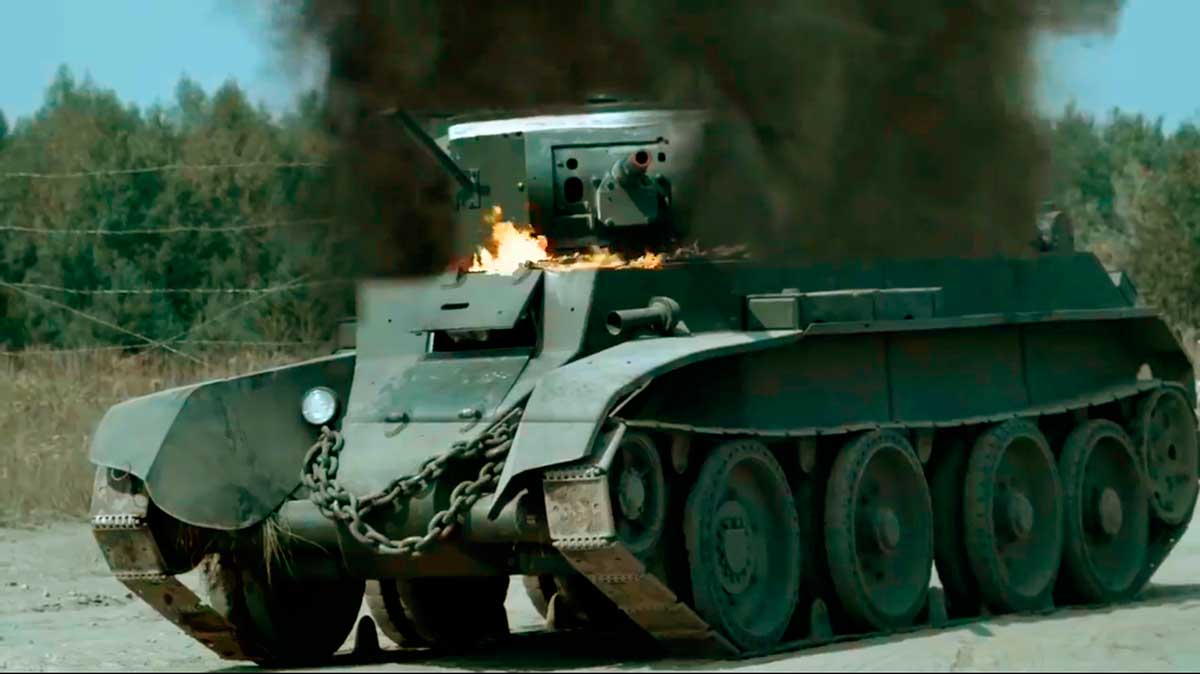
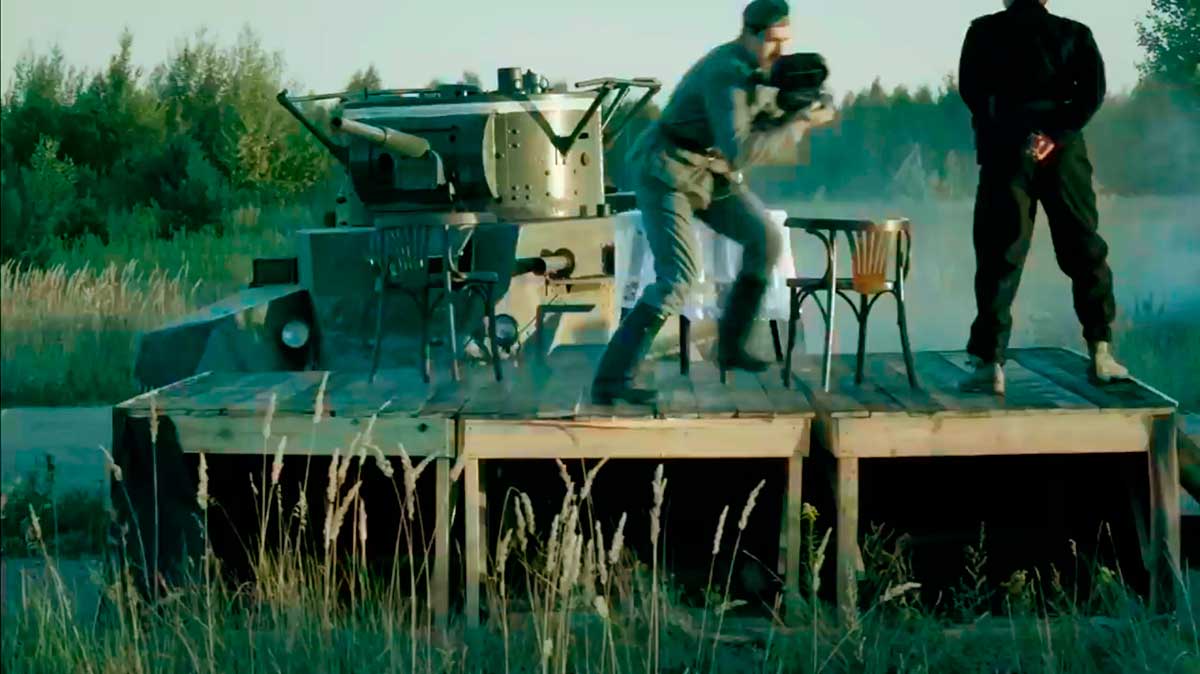
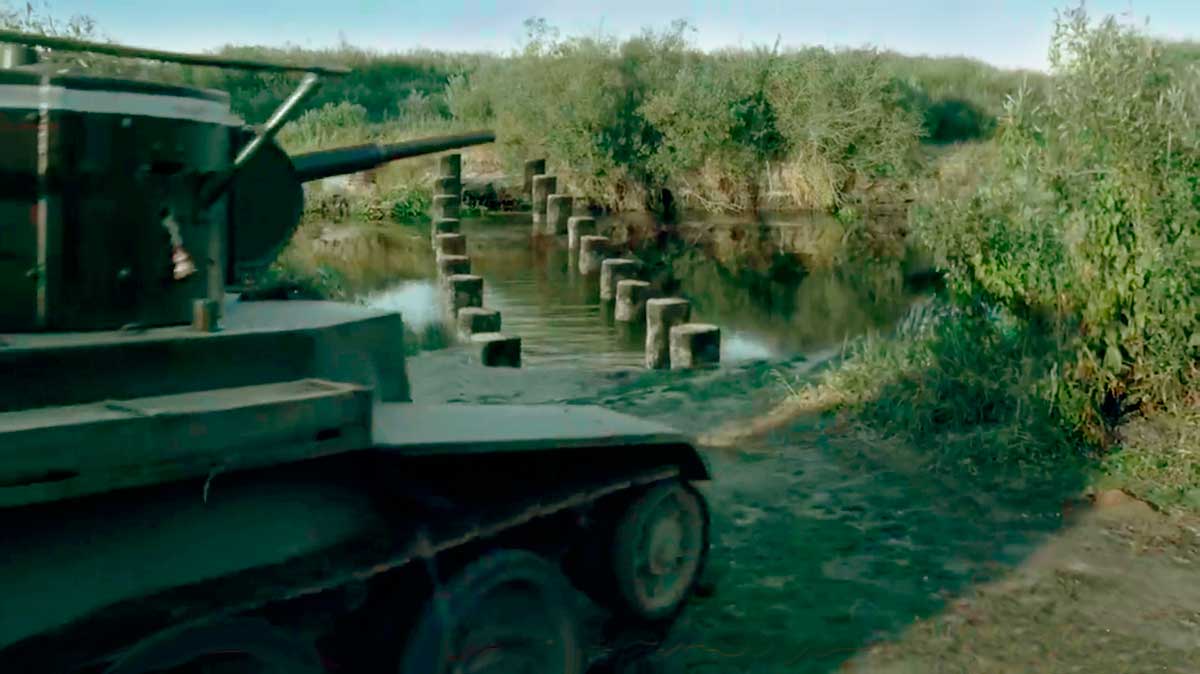
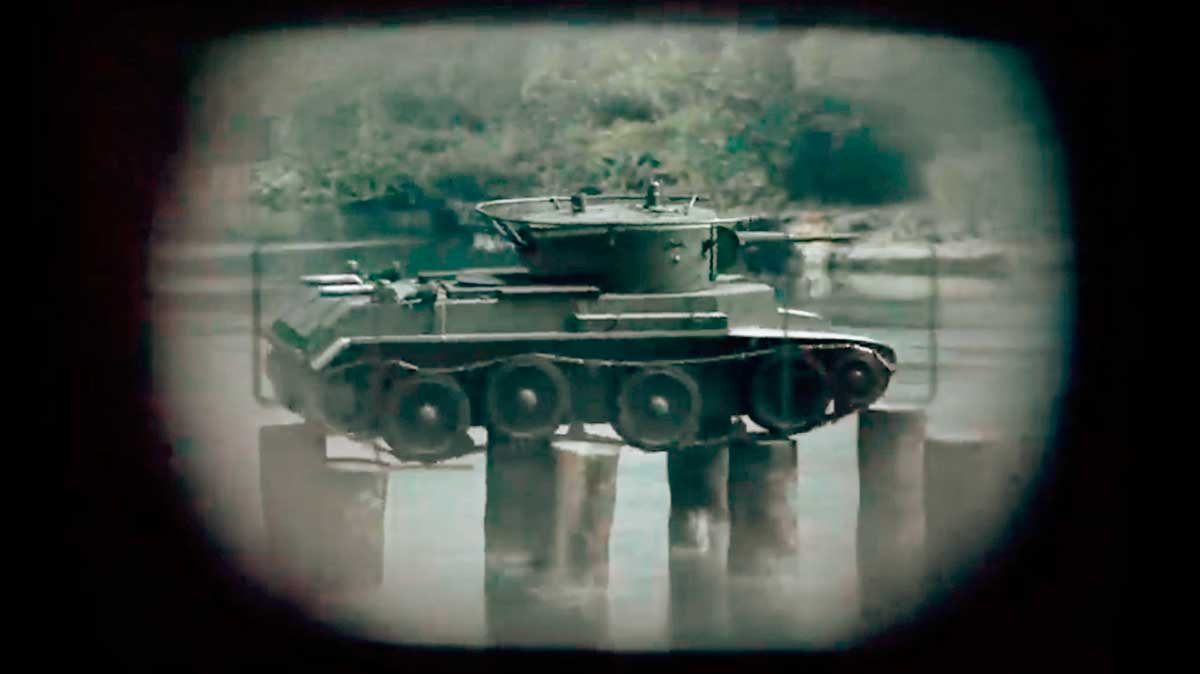
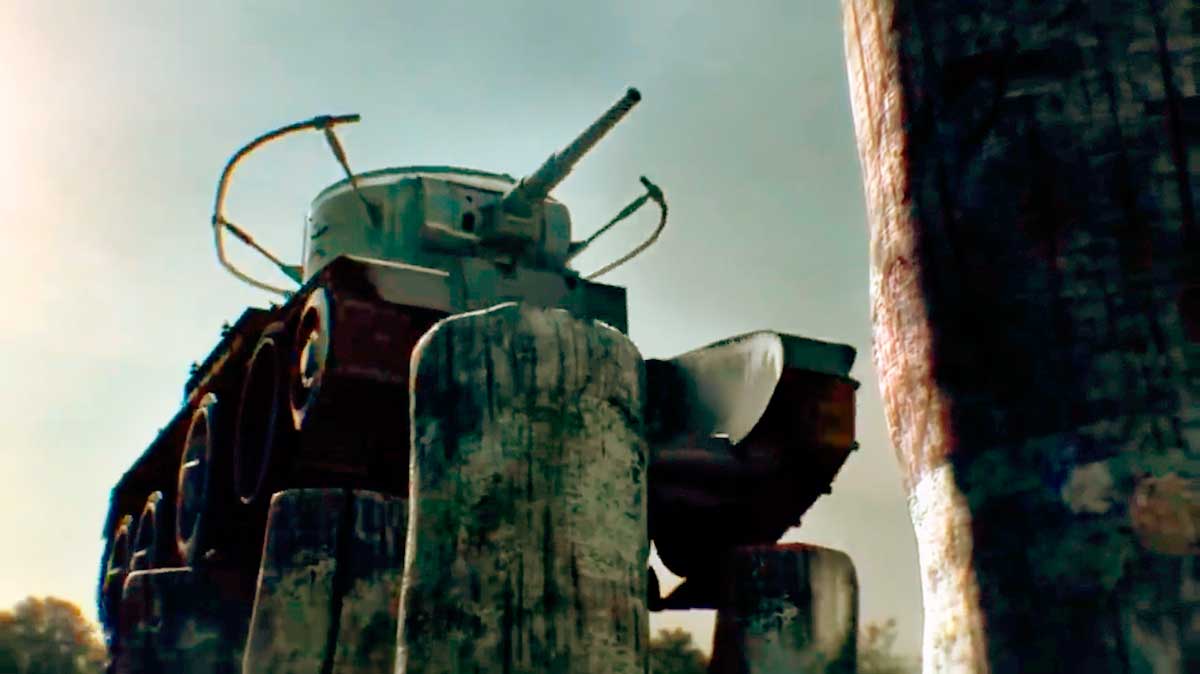
BT-7 appeared in a teaser for the film "Steel".
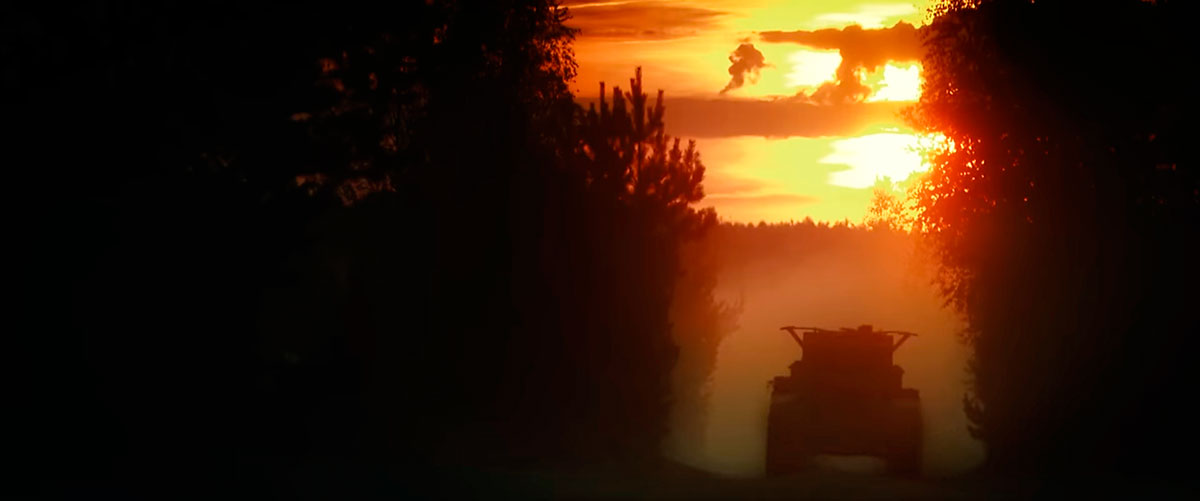
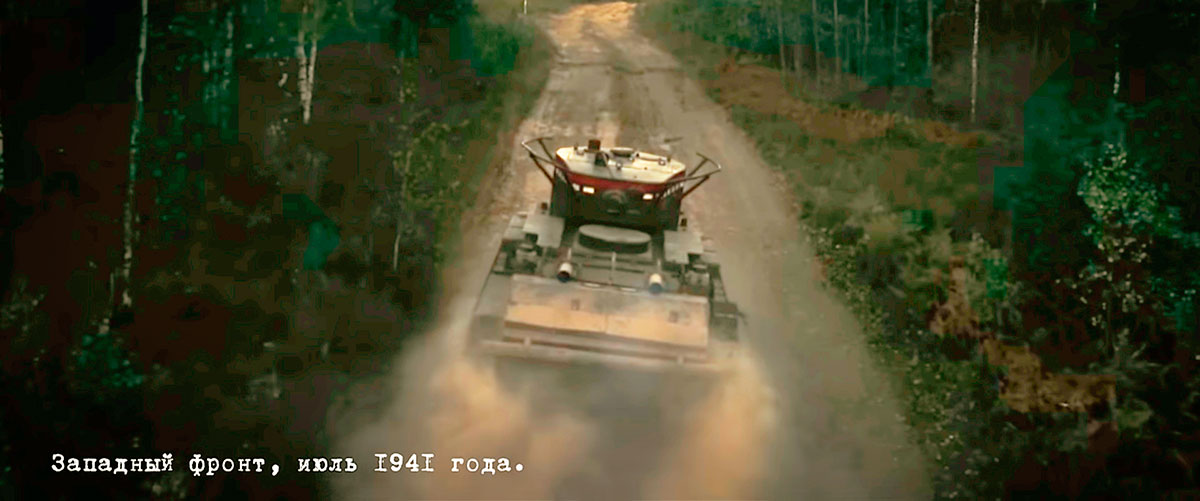
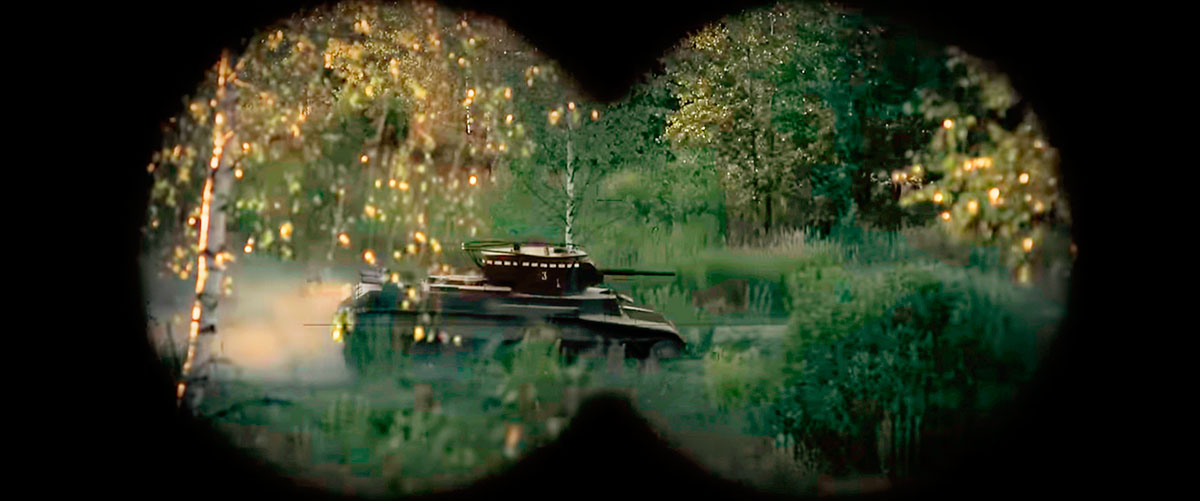
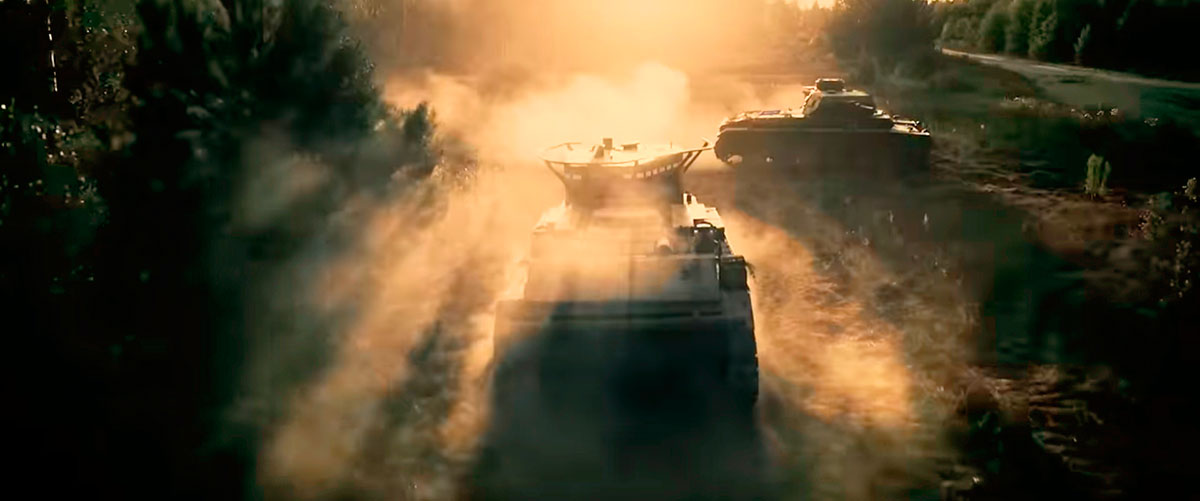
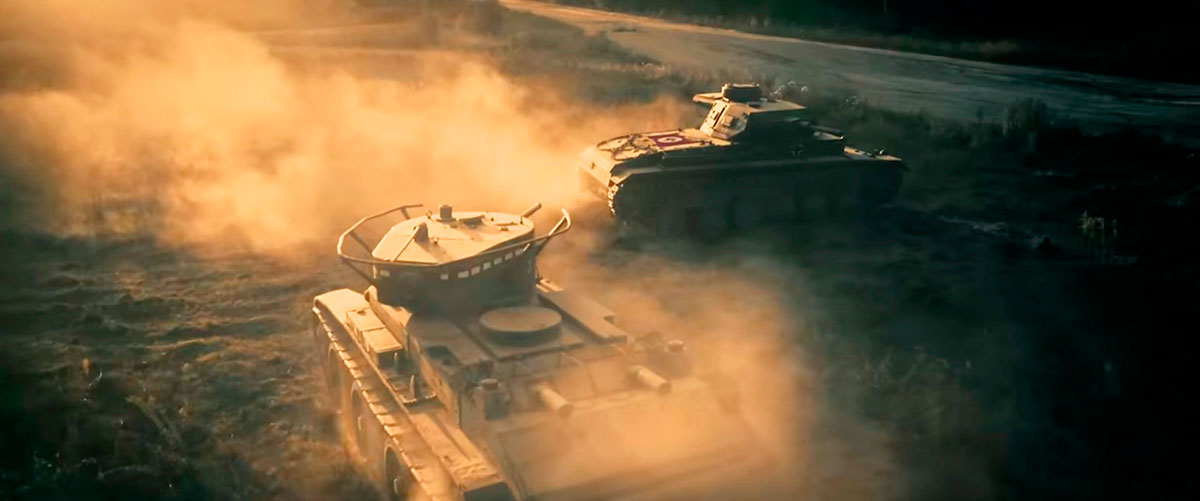
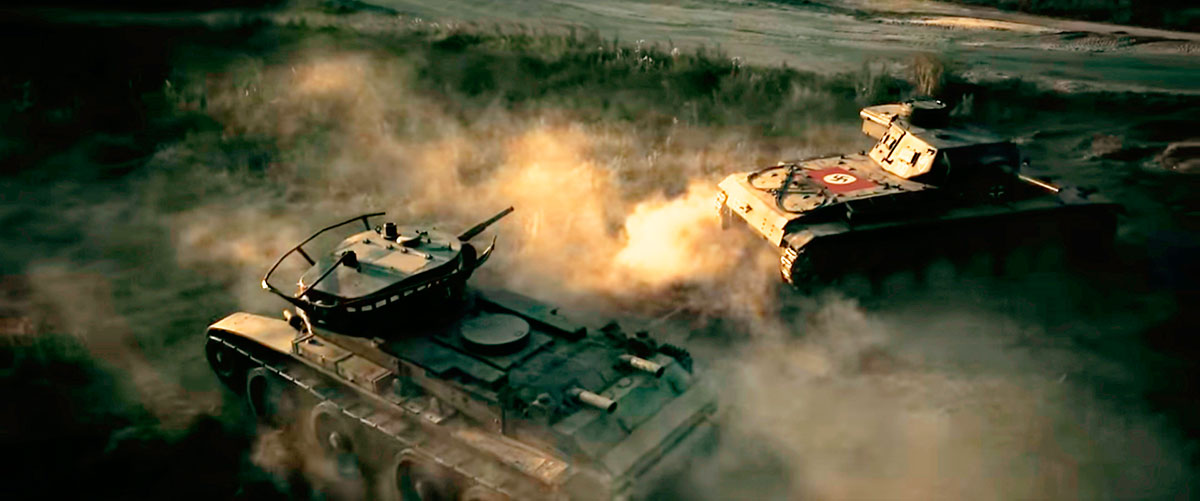
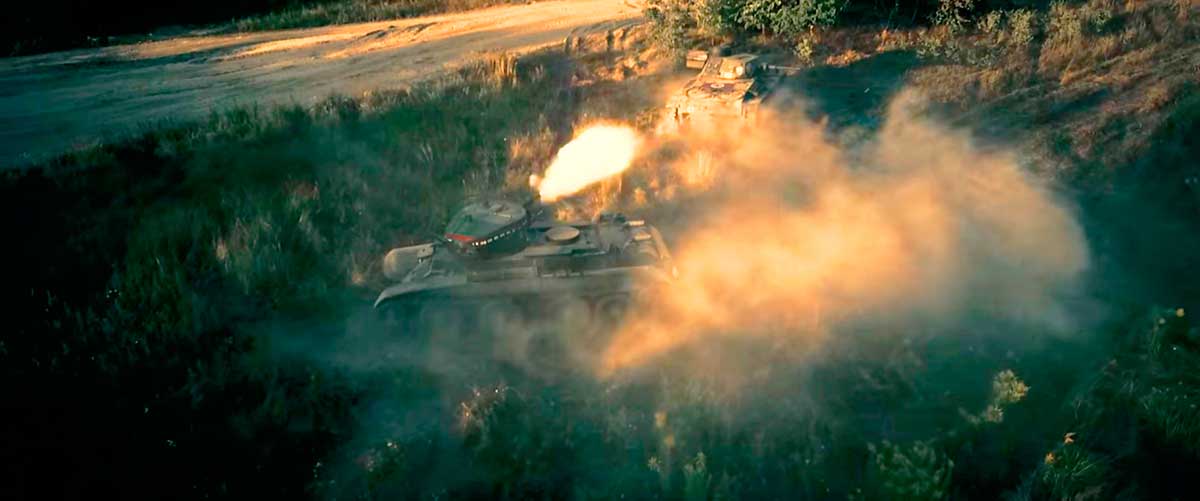
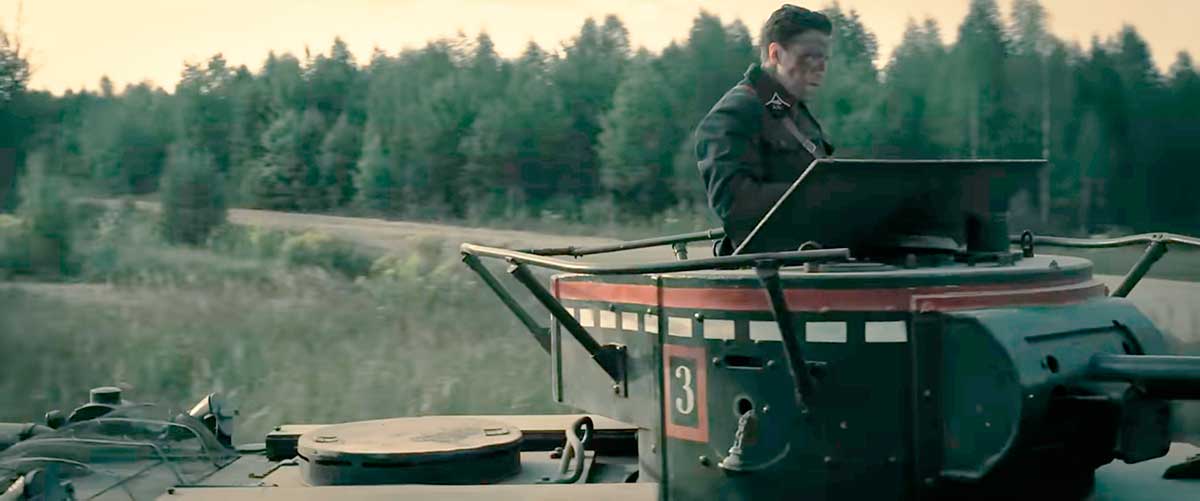
BT-7 starred in the 2009 film "Pop" (Priest).The third photo from this film clearly shows flames coming from the exhaust pipe. This is a characteristic of the M-17Т carburetor engine. When the engine was turned off, flames would emerge.
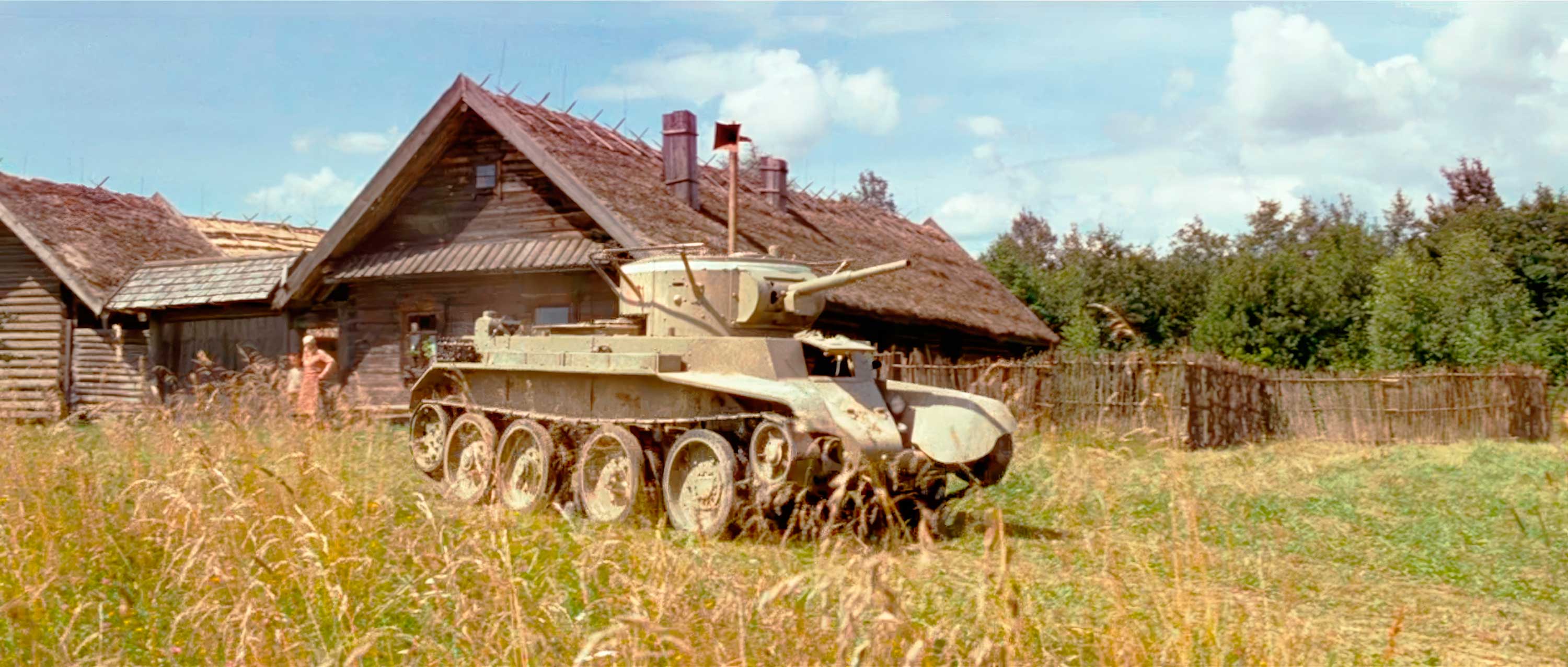
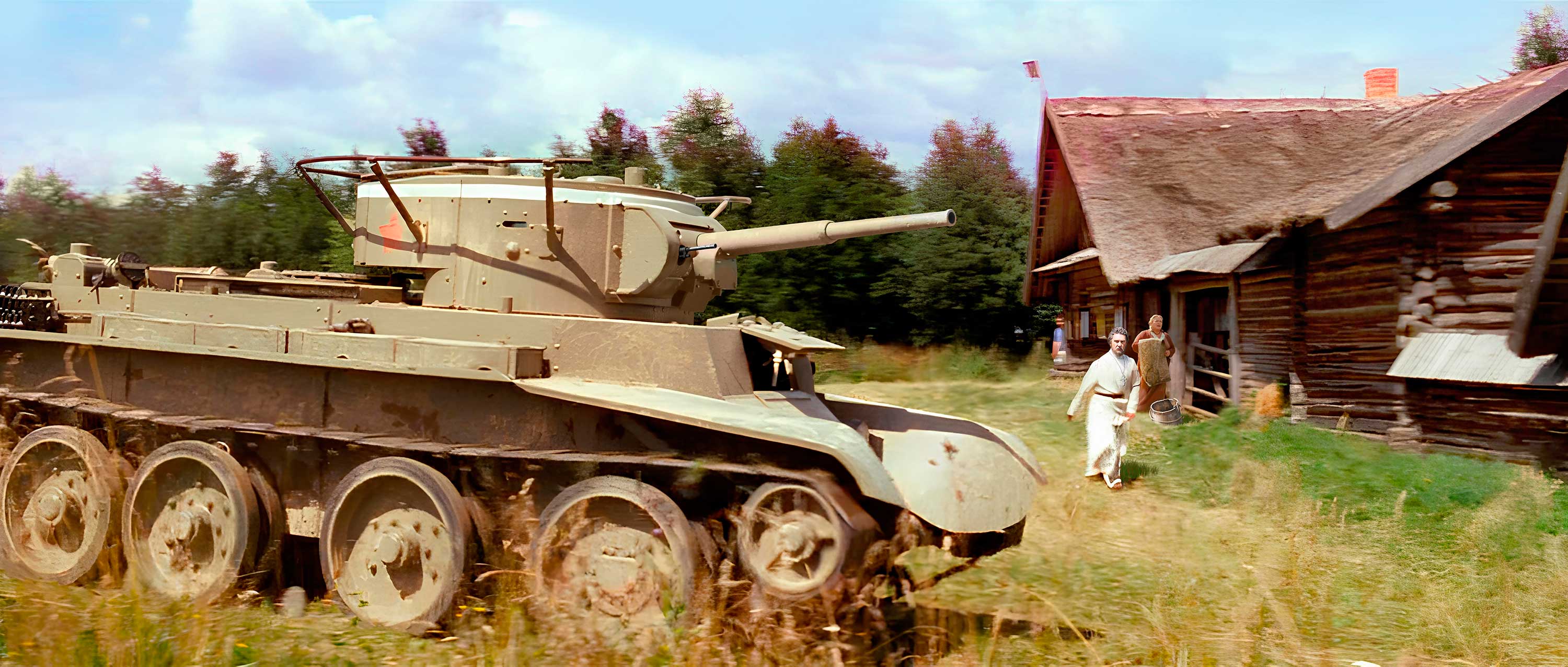
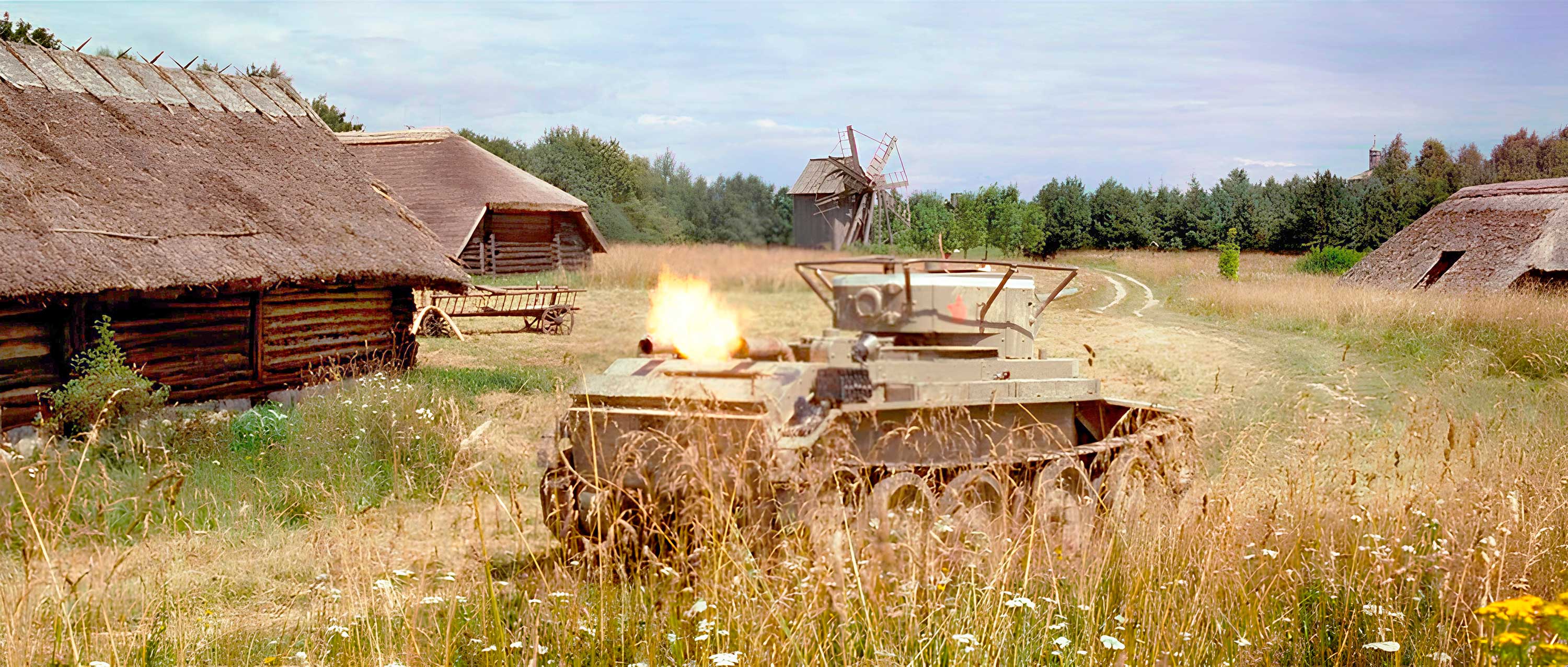
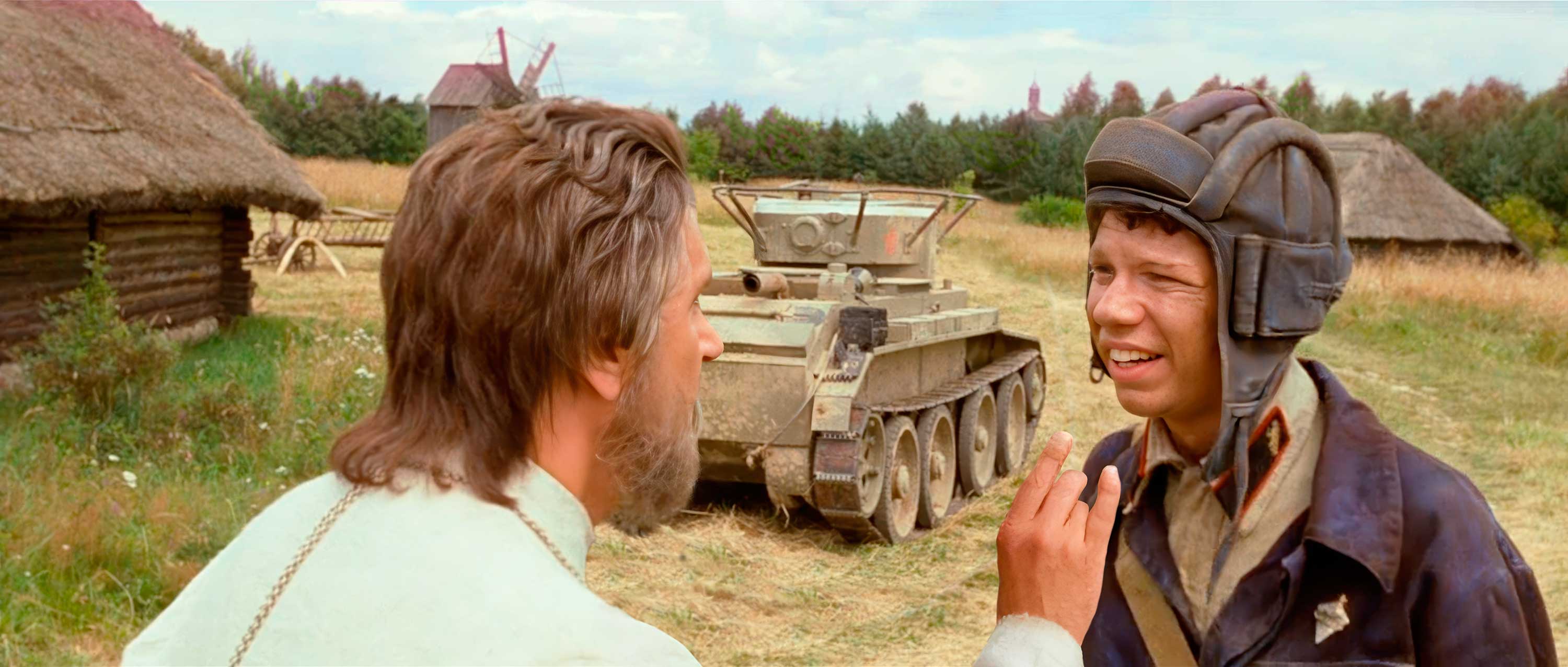
All BT tanks had the fire-prone M-17T carburetor engine. Our BT-7 caught fire three times because of it. Therefore, the M-17T on the Stalin Line was replaced with a diesel engine from a PT-76 tank.
In 2021, a BT-7 tank underwent a major overhaul at the Stalin Line. A report about it can be found here:
https://stalin-line.by/nashi-proekty/proekty/tanki/item/763-kapitalnyj-remont-bt-7-na-linii-stalina